

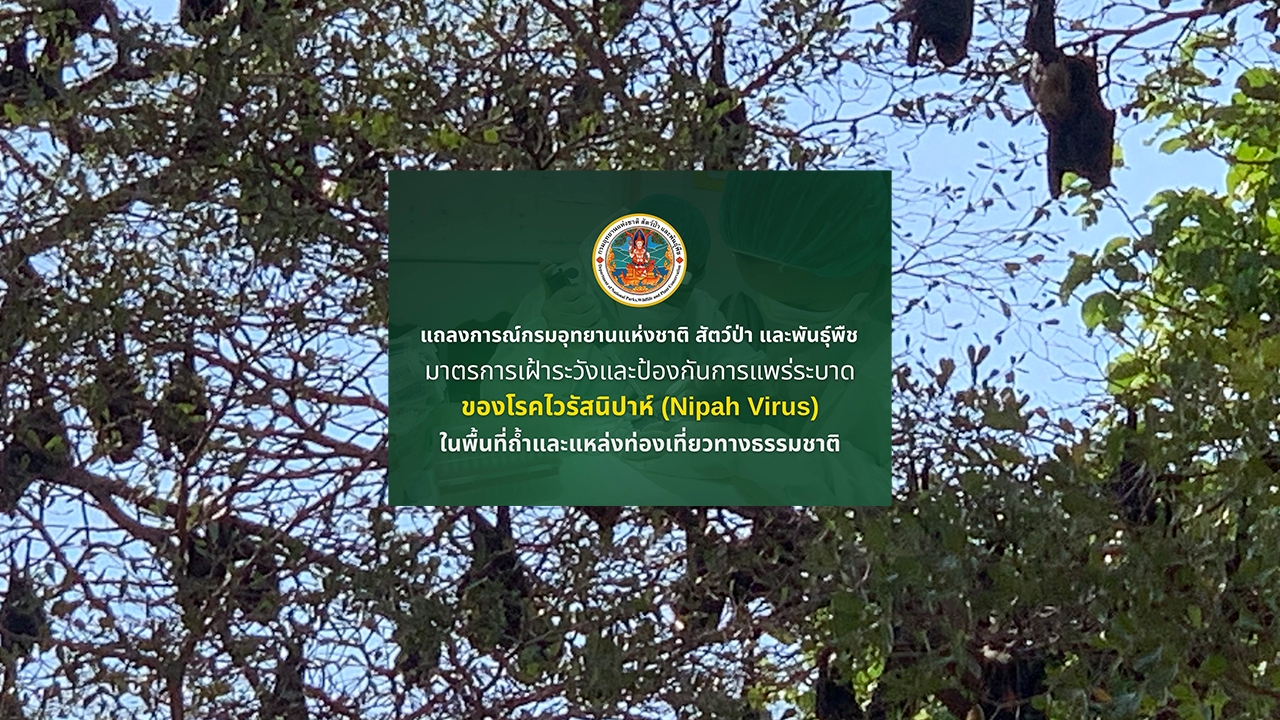
The Department of National Parks issued a statement on measures to monitor and prevent the Nipah virus in cave and tourist areas. It clarified that the virus found in 10-16% of Thai bats is a normal occurrence in wild bat populations, with very low chances of transmission to humans. It emphasized that so far, no infections have been found in people or pigs in Thailand.
On 25 January 2026, the Department of National Parks, Wildlife and Plant Conservation issued a statement regarding surveillance and prevention measures against the spread of the Nipah virus in caves and natural tourist sites.
It noted that there have been reports of Nipah virus outbreaks abroad, particularly recent cases in India, Malaysia, and Bangladesh in January 2026. The virus is a dangerous zoonotic disease with a mortality rate of 70-100%.
The Department clarified facts to ensure correct understanding of the situation in Thailand. It has collaborated with academic partners such as Chulalongkorn Hospital, Faculty of Medicine at Chulalongkorn University, and the Faculty of Forestry at Kasetsart University to conduct surveillance and research on Nipah virus in bats since 2002 until now.
Regarding the situation in Thailand, proactive surveillance found the virus in about 10-16% of Thai bat populations, which is a normal natural occurrence. These viruses are not dangerous to humans unless bats are hunted or consumed.
The Department of Disease Control and the Department of Livestock Development confirmed that no Nipah virus infections have been detected in humans or pigs in Thailand, and continuous monitoring is ongoing in cooperation with the Department of National Parks.
The rate of virus detection in Thai bats is about 10-16%. Compared to countries with human outbreaks such as Malaysia, India, and Bangladesh, where infection rates in bat populations reached 40%, the chance of transmission to humans or livestock in Thailand is lower. The virus in Thai bats is mostly found seasonally between April and May.
To build confidence and ensure safety under the "One Health" principle, the Department of National Parks has set preventive measures for tourists visiting caves or bat-inhabited areas as follows.
1. Preventive measures for tourists