

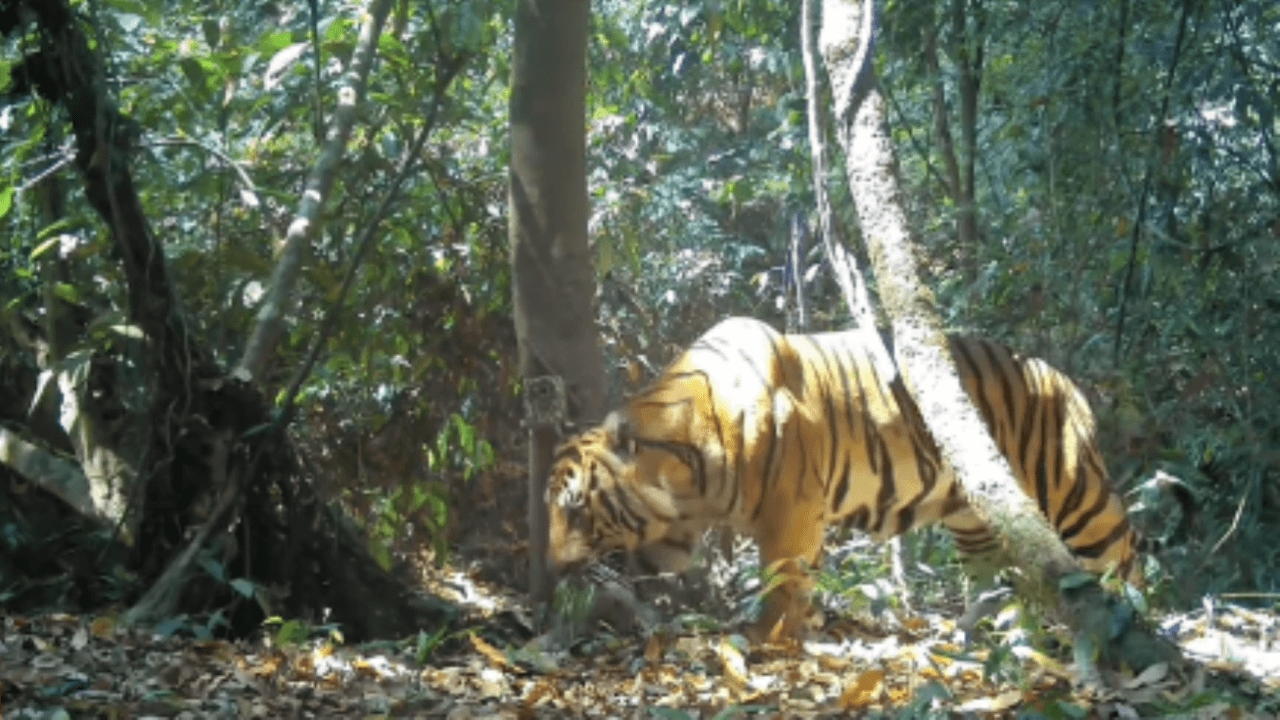
Wildlife camera trap reveals rare behavior. "Tiger Nadetch " is pairing up and found in love with a new female tiger in Kaeng Krachan National Park, seen as a positive sign for soon increasing the population of new tiger cubs.
On 17 Feb 2026, the Department of National Parks, Wildlife and Plant Conservation, together with the Wildlife Conservation Society (WCS) Thailand, announced results from an ecosystem survey of the upper Phetchaburi River conducted between 13–16 Feb 2026. They found indicators of the richness of the World Heritage forest through wildlife camera traps, revealing rare natural behaviors of tiger code KKT-002M, known as "Tiger Nadetch," pairing with a new female tiger code KKR-004F at the same location. This is expected to be a good sign for increasing the new tiger population soon.

Mr. Mongkol Chaiphakdee, head of Kaeng Krachan National Park, reported that during this fieldwork, the park’s academic team along with rangers and a specialist working group led by Ms. Chananrat Nuangkaew, a wildlife scientist, and Dr. Steven Platt from IUCN, installed and checked eight main wildlife camera trap points along the upper Phetchaburi River.
The data from camera traps is not just beautiful photographs but an important tool inanalyzingwildlife behavior, revealing movement routes and mating patterns of apex predators like tigers.
Additionally, the photos confirmed the presence of 14 rare wildlife species such as serow, sambar deer (protected species), gaur, sun bear, dhole, and wild elephants. The location and time data will be analyzed to plan "Smart Patrol" routes covering vulnerable areas and key spots to prevent poaching and habitat disturbance.
Mr. Mongkol added that besides monitoring mammals, the team found important signs of the "Thai freshwater crocodile" through feces and riverbank traces, crucial data ahead of a planned crocodile release back to the wild on 18 Feb.
However, during operations, staff discovered one wildlife camera trap missing. Evidence suggests human interference, posing a significant obstacle to wildlife research and protection. The park will use smart patrol data to strengthen surveillance at that location to better protect wildlife habitats effectively and guide conservation policy.
Thanks to information from the Facebook page of the Department of National Parks, Wildlife and Plant Conservation.