

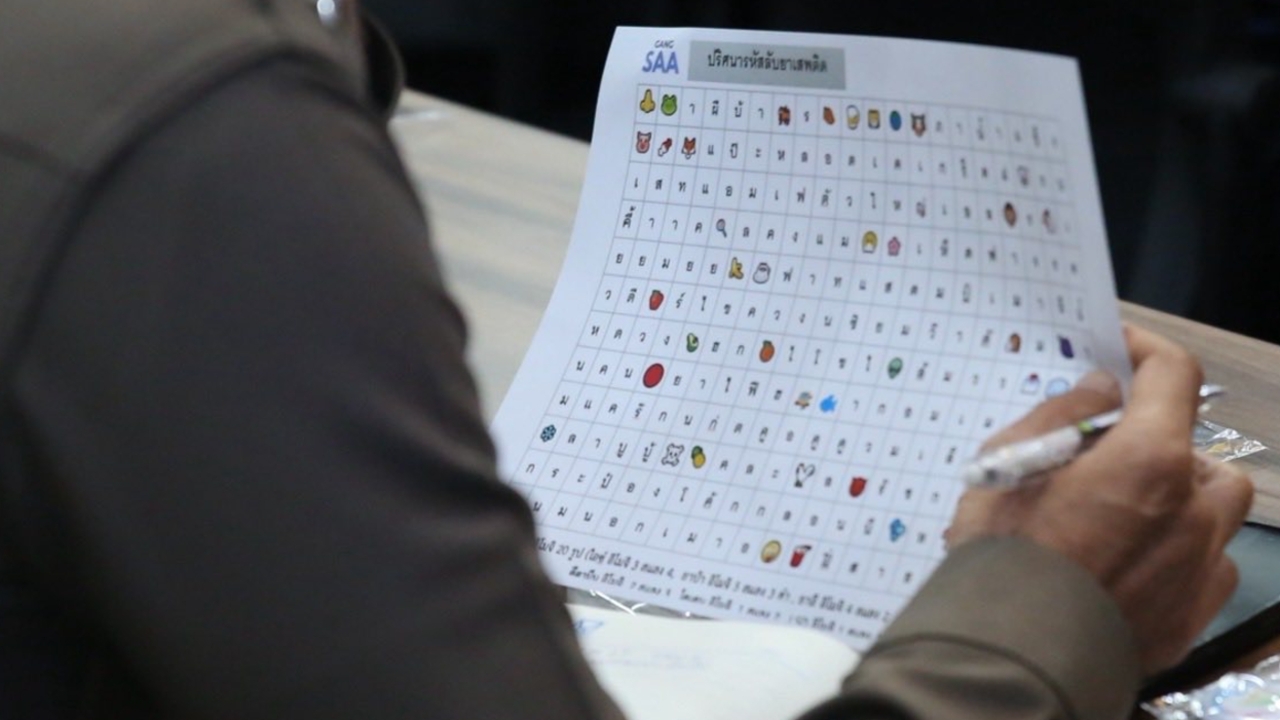
The Office of the Narcotics Control Board (ONCB) has teamed up with partner networks, educational institutions, and experts to expose secret "emoji-slang" codes used in online drug trafficking, providing intensive training for parents and teachers to recognize this hidden threat on social media.
On 23 Feb 2026 GMT+7, following the proactive policy of ONCB Secretary Pol. Lt. Col. Suriya Singhakamol emphasizing child and youth protection from online drug threats, a major awareness event titled “Opening the World of Drug Slang” was held at the ONCB office. This initiative united partner networks, integrating cooperation with educational institutions, civil society, and multidisciplinary experts to expose drug trafficking strategies that employ emojis and slang as secret codes to evade AI detection systems and more easily target children and youth.

Warning: “Emoji-Slang” Secret Codes Concealing Drug Trade on Social Media.
Data from the Narcotics Unit, Health Science Research Institute, Chiang Mai University for 2025-2026, presented by Ms. Kanittha Thaikla, revealed a worrying trend: drug trading has shifted from the dark web to public platforms frequently used by youth, such as X (formerly Twitter), Facebook, and Telegram.
Experts interviewed pointed out that dealers have turned to using emojis and slang primarily to bypass platform policies and AI systems that detect inappropriate language or illegal content.
They have created new slang terms widely used for communication, such as Red Chicken, Ice, Blue Tongue, or Lion, along with emojis representing objects, numbers, or snacks to deceive authorities, lessen the perceived danger, and attract the attention of children and youth.
Research statistics also show that arrests related to online drug sales have increased by 50-100 cases, with primary targets being children, youth, and small-scale dealers. The sales have evolved into e-commerce-like systems with clear pricing, specified delivery methods, emphasis on speed, and arranged pick-ups typically occurring between 8 p.m. and 1 a.m.
In response, Mrs. Papasi Kainan, Director of the Office for Drug Prevention and Solution Development, chaired the opening of the “Opening the World of Drug Slang” event to deepen understanding among parents, guardians, and teachers about these secret codes. The event featured in-depth discussions by experts from various fields, including:
1. Ms. Kanittha Thaikla presenting research on emoji codes in the online drug market (Health Science Research Institute, Chiang Mai University).
2. Mr. Puttipong Damrongpao, Director of Financial and Online Social Investigation Division (ONCB).
3. Ms. Natcha Hongto from the Access to Health and Social Support Promotion Group (APASS).
4. Ms. Donya Onlao, cognitive behavioral therapist and youth behavior modification expert from “Pa Ma Plus” (a spin-off organization of Mahidol University).

On the enforcement side, the ONCB, Ministry of Justice, has warned parents to closely monitor online parcels sent to their children, as these are the main channels currently used by dealers to deliver drugs.
Meanwhile, in prevention efforts, the ONCB, Ministry of Justice, plans to coordinate with the Ministry of Social Development and Human Security and the Ministry of Education to extend efforts into families and schools, focusing on providing knowledge and concrete monitoring guidelines for protecting children.
The ONCB, Ministry of Justice, reaffirms its commitment to rigorously implement all measures—prevention, suppression, and resolution of drug problems—with the primary goal of reducing public hardship.

Parents and guardians are urged to be vigilant: if they detect suspicious language or emoji symbols possibly linked to drug trading in their children’s communications, they should closely monitor their behavior to reduce the risk of drug use.
If there are any drug-related clues or suspicious behavior suggesting drug trafficking, people can immediately report to the ONCB hotline at 1386, available 24 hours a day. All information is kept secure and confidential.