

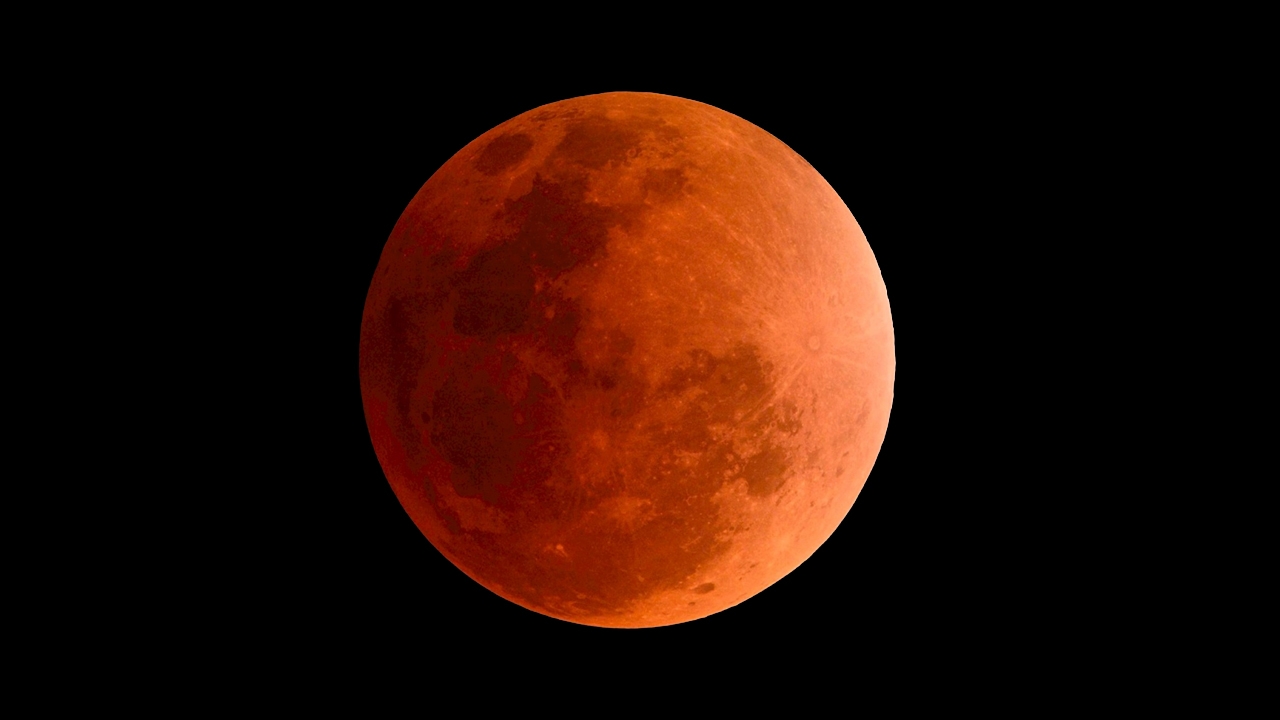
This rare phenomenon on Magha Puja night, 3 March 2026, a total lunar eclipse, if missed, the next occurrence will be at the end of 2028.
FacebookNARIT, the National Astronomical Research Institute of Thailand,posted a message stating "Did you know a total lunar eclipse is a rare event? If you miss this one, the next will be at the end of 2028." It said, "3 March 2026 is the nearest date we can observe a total lunar eclipse, when the moon will appear a brick red color fully visible to us. If you miss this event, you will have to wait nearly two years until the next one, which will occur on New Year's Eve, 31 December 2028 to 1 January 2029. For those who don't want to wait, get ready for the total lunar eclipse on Magha Puja night, 3 March 2026."
The phenomenon will happen from 15:44 to 21:23 (Thailand time, Bangkok). In Thailand, it will be visible to the naked eye from when the moon rises above the horizon around 18:23. The full moon will appear brick red until about 19:02, lasting 39 minutes. After that, you can continue watching until the event ends.
A lunar eclipse occurs when the sun, Earth, and moon align in the same plane, with Earth positioned between the sun and moon. It happens only on a full moon day or around the 14th-15th lunar day, when the moon passes through Earth's shadow projected into space. Observers on Earth will see the moon gradually become partially covered, then fully immersed in Earth's shadow, and then partially uncovered again as the moon moves out of the shadow. Ancient Thais called this phenomenon "Rahu swallowing the moon."
Although the moon orbits Earth every month, lunar eclipses do not occur every full moon because the moon's orbital plane is tilted about 5 degrees relative to Earth's orbital plane. This tilt causes the moon to often pass above or below Earth's shadow each month. On average, lunar eclipses happen at least twice a year. However, visibility depends on geographical location, and the exact dates, times, and viewing areas can be accurately predicted in advance.
Thanks to Facebook of NARIT, the National Astronomical Research Institute of Thailand.