

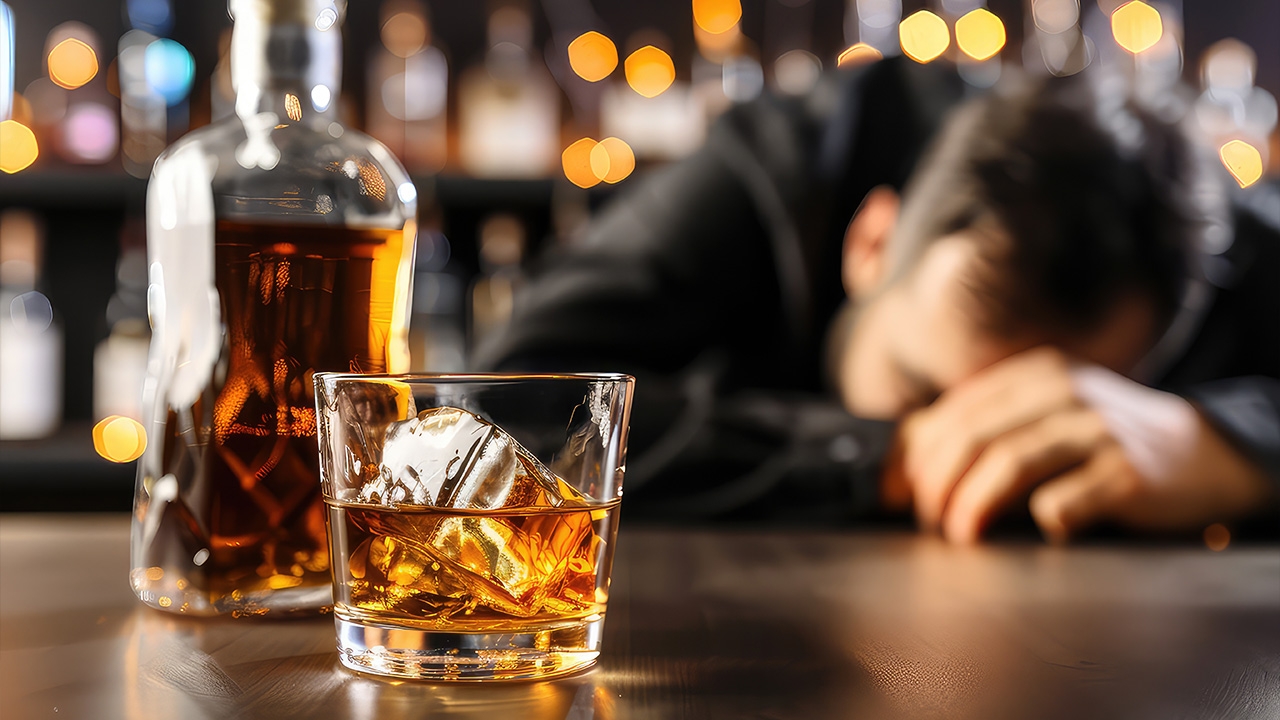
The Royal Gazette published a notification from the Department of Disease Control detailing criteria and methods for assessing intoxication symptoms, enabling retailers to check customers before selling alcohol. Violations of these rules are against the law.
Following the Alcohol Beverage Control Act B.E. 2551 (2008), as amended by the second amendment in B.E. 2558 (2015), Section 29(2) prohibits selling alcoholic beverages to individuals who show signs of intoxication. This requires issuing subsidiary regulations within 180 days after the law’s enforcement.
Recently, the Royal Gazette website published the Department of Disease Control's notification titled “Criteria and Methods for Assessing Intoxication Symptoms B.E. 2569 (2026),” stating that it is appropriate to set criteria and methods to assess intoxication symptoms. This enables alcohol sellers to check customers’ intoxication status as necessary, under the authority granted by Section 29, paragraph two (2) of the Alcohol Beverage Control Act B.E. 2551, as amended by the second amendment B.E. 2568 (2025). The announcement was issued by Mr. Montien Kanasawat, Director-General of the Department of Disease Control.
Key points Individuals exhibiting any of the following symptoms shall be considered "Persons showing signs of intoxication"
1. Persons who have consumed alcohol in quantities sufficient to cause obvious impairment in balance and body movement control (such as staggering or difficulty standing), or behavioral or verbal expressions that may cause harm to themselves or others or disturb public order.
2. Persons who have the smell of alcohol on their bodies and also exhibit any of the following symptoms:
2.1 Clearly observable physical symptoms include:
2.2 Verbal and behavioral symptoms
Methods to assess intoxication symptoms can be conducted by one of the following procedures:
1. Nose Touch Test: The suspected intoxicated person closes their eyes, extends their arm forward, and points their finger. Then, bending the elbow, they attempt to touch the tip of their nose without opening their eyes. If the person cannot touch the tip of their nose within a one-centimeter margin of error, or shows obvious hand tremors while trying, they are considered intoxicated.
2. Heel-to-Toe Walk: The suspected person walks ten steps forward in a straight line with the heel of one foot touching the toe of the other. Then they turn using one foot and walk another ten heel-to-toe steps back. If two or more of the following abnormalities occur during the test, the person is considered intoxicated:
3. One-Leg Stand and Counting: The suspected person stands straight, raises one foot about fifteen centimeters off the ground, and counts aloud from one thousand one onward (1001, 1002, …) until thirty seconds pass. If two or more of the following abnormalities appear during the test, the person is considered intoxicated:
This notification has been effective since 28 March 2026.
In fact, this notification is not only essential for retailers but may also help "drinkers" self-assess to avoid legal violations.
Source:The Royal Gazette