

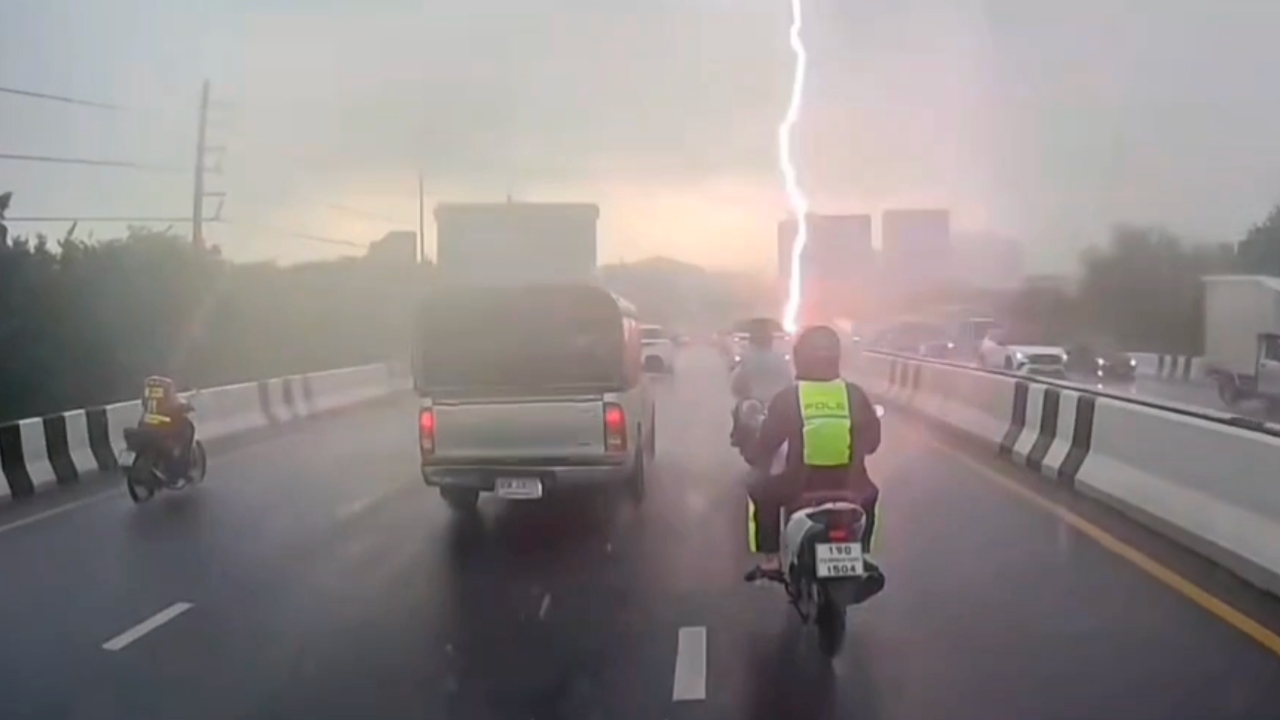
Professor Jes analyzes the cause of the lightning strike on a rider while riding a motorcycle on the Ratchavipha overpass, noting that no object acted as a lightning rod
Regarding the incident of a lightning strike on a rider while riding past the Ratchavipha overpass that struck the helmet, breaking the necklace and injuring the rider, who was rushed to the hospital for treatment, as previously reported.(Lightning strike injures rider at Ratchavipha overpass; helmet struck and necklace broken)
On 2 June 2026, Professor Dr. Jesda Denduangboriphan, a faculty member of the Department of Biology, Faculty of Science, Chulalongkorn University, and a science communicator, posted a message titled "Lightning strike on rider while riding" stating that
"Regarding the motorcycle struck by lightning causing severe injury to the rider, and various comments suggesting it was because the rider wore a necklace that attracted the lightning, or because of the helmet, mobile phone, or rear storage box—some comments raised doubts. That’s not the case. No object acted as a lightning rod or attracted the lightning. It was simply bad luck that the motorcycle was at a high, exposed point (an elevated bridge) and happened to pass under a lightning strike. If not this motorcycle, then another passing vehicle at the same spot might have been hit.
The materials and equipment on this motorcycle rider do not attract lightning. If metal attracted lightning, the entire motorcycle frame would be more likely to attract it. But by coincidence, the motorcycle was in an open area on a high bridge during rain, which is a high-risk area for lightning strikes, because elevated points allow electric charges in the air to travel along the shortest path to the ground, often passing through the highest objects in the area.
The burn marks seen on the victim’s body along the necklace line, which made people think the necklace attracted lightning, actually resulted from the metal necklace conducting electricity, causing heat buildup and severe burns—similar to how mobile phones can burn or explode when struck by lightning. This is a result of the lightning current, not because the phone attracted the lightning.
It is clear that riding a motorcycle during thunderstorms is much more dangerous than riding a car. When a car is struck by lightning, its metal frame acts like a Faraday cage, allowing the electric current to flow around the car and safely to the ground without harming the passengers inside. Motorcycles lack this protective structure, so the rider is at risk of taking the full force of the lightning.
Therefore, during the rainy season, motorcycle riders should avoid riding on prominent elevated locations like overpasses or open areas such as isolated roads or fields. If possible, they should stop and take shelter in safe places such as sturdy buildings or under bridge structures. They should avoid sheltering under trees or billboards, which are risky and can be struck by lightning or even collapse.
Regarding mobile phone use, as emphasized, neither the phone itself nor its signal attracts lightning as commonly misunderstood. However, if lightning strikes nearby and induces electric currents in the air, the phone can short circuit or explode, posing a danger to the user’s face during use."
Thanks to the Facebook page "Oh, So That’s How It Is" by Professor Jes