

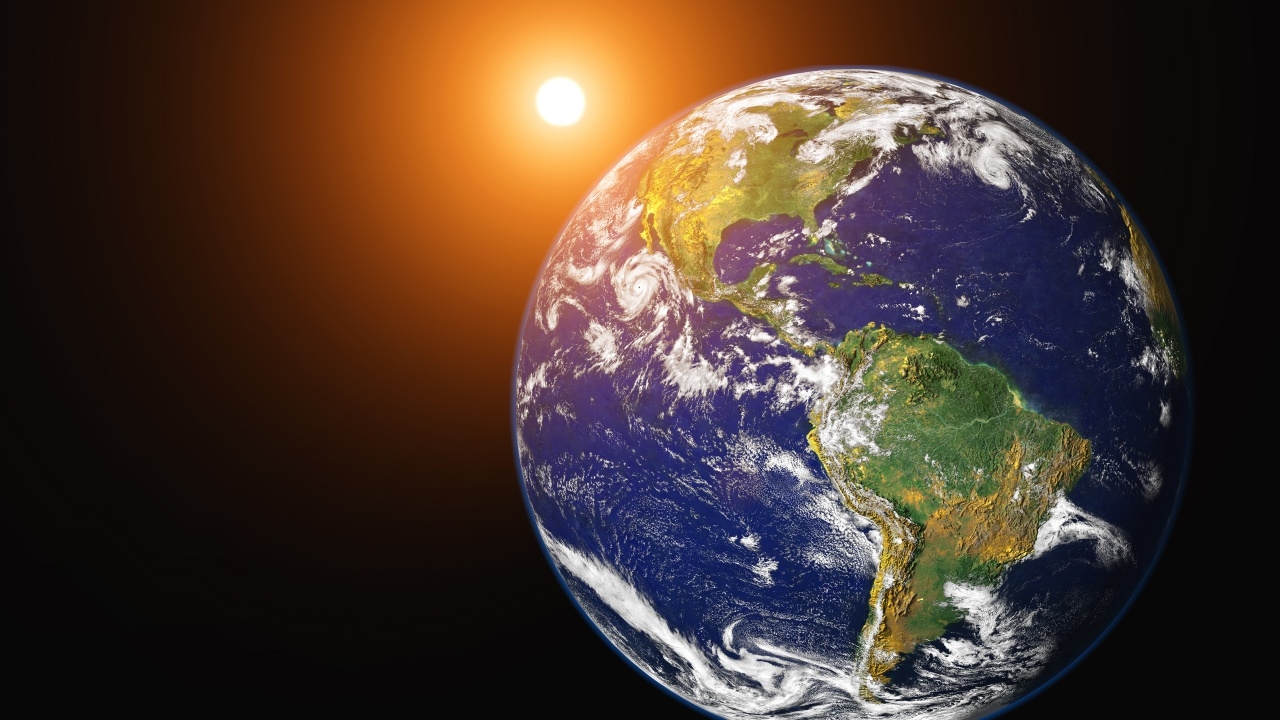
On 7 July 2026, Earth will be at its farthest point from the Sun this year, at a distance of about 152,087,775 kilometers.
On 7 July 2026, the Facebook pageNARIT, the National Astronomical Research Institute of Thailand,posted a message stating: 7 July 2026 | Earth is at its farthest distance from the Sun this year.
Did you know? Earth's orbit around the Sun is elliptical, not circular, which causes each year to have a closest point to the Sun (Perihelion) and a farthest point (Aphelion).
In 2026, Earth will be at its farthest from the Sun on 7 July 2026 at 00:30 (Bangkok time), at a distance of approximately 152,087,775 kilometers.
On that day, the Sun will rise at 05:55 and set at 18:49 (Bangkok time).
Many may think that when Earth is farthest from the Sun, it is winter, but in fact, Earth's seasons are not caused by distance from the Sun. They result from Earth's rotational axis being tilted about 23.5 degrees relative to the perpendicular to the orbital plane, causing different angles and durations of sunlight at various locations, which affects temperature, day length, and seasons.
Currently, the Northern Hemisphere receives more sunlight (longer daytime than nighttime) and more direct sunlight than at other times of the year, making it summer there, while the Southern Hemisphere receives less sunlight, resulting in winter.
For Thailand, although in the Northern Hemisphere, its proximity to the equator and monsoon-influenced climate mean its seasons are defined mainly by weather patterns. Therefore, when Earth is farthest from the Sun, Thailand is still in the rainy season.
Thanks to the Facebook page of NARIT, the National Astronomical Research Institute of Thailand, for the information.