

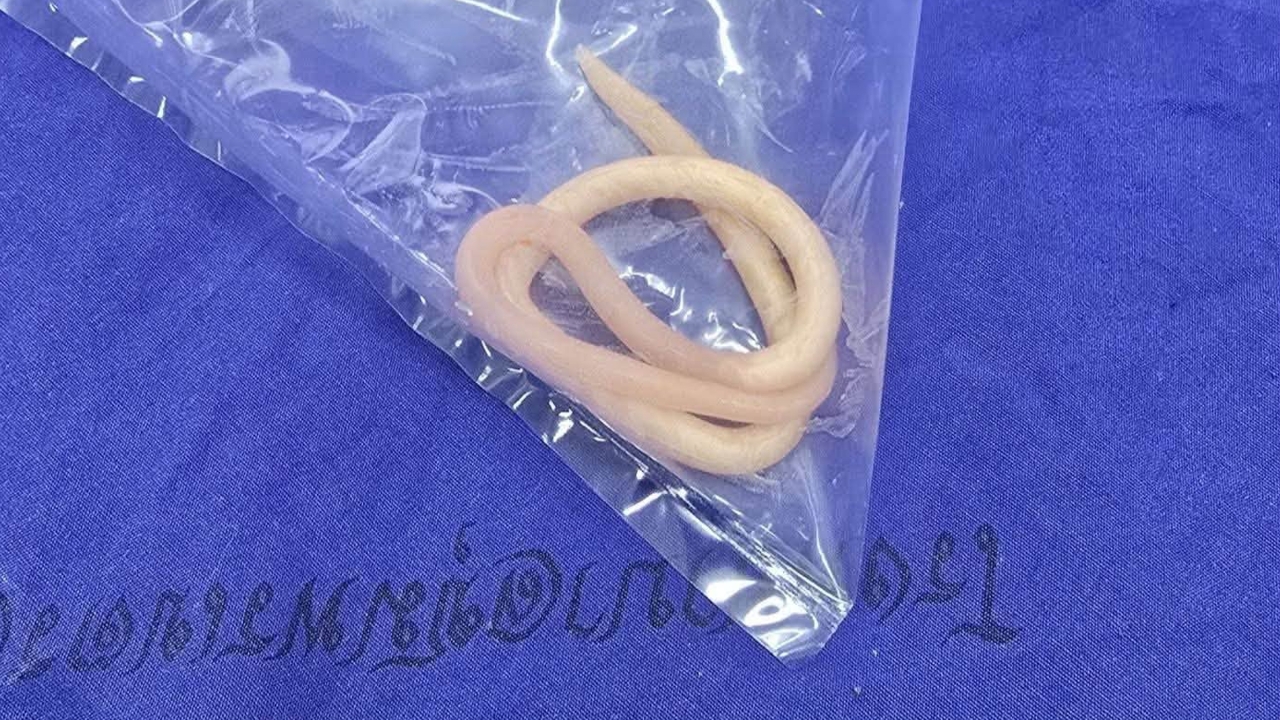
A 2-year-old child was brought to the hospital after continuous vomiting, where "roundworms" were found coming out of the mouth. A popular Facebook page revealed the cause, suspecting many more worms remain in the intestines, and advised prevention methods emphasizing thorough handwashing before meals.
On 12 Jul 2026 GMT+7, a report stated that a Facebook userSirinthon Homnakposted images and a message: “A 2-year-old child came to the hospital after vomiting over 10 times around noon, appearing lethargic and pale. While preparing to give saline, the child vomited again, with what seemed like a string across the mouth, wriggling. Using a cloth, it was pulled out. OMG!!!!! A roundworm about 15 cm long.
While waiting lying down, another one came out. I can’t imagine how many hundreds might be inside. This is why children must wash their hands before eating or playing.”
Subsequently, the Facebook pageParasite storiesposted educational information about the case, noting many asked, “Why can roundworms come out through the mouth?”
Based on the general shape, it is likely the roundworm species Ascaris lumbricoides, which normally inhabits the small intestine.
However, when the body has a fever, is severely ill, takes certain medications, or experiences violent vomiting, the worms may move abnormally, traveling backward from the intestines through the stomach to the esophagus, and emerge via the mouth.
In children with heavy infections (many worms), this event is more likely because multiple worms reside in the intestines.
In this case, it is possible the child has a heavy roundworm infection. Vomiting and stomach contractions stimulated the worms to move upward. The worms seen, about 15 centimeters long, are mature adults. Finding more than one worm suggests many remain in the intestines.
Typically, once the patient’s condition stabilizes, doctors will consider appropriate deworming medication such as Albendazole and monitor for complications like intestinal blockage or worm migration into the bile ducts, which occur in heavy infections.
Roundworms are not directly contagious from person to person but are transmitted by ingesting eggs contaminated in soil, water, food, or on unclean hands. The eggs exit the infected person’s feces and require about 2–4 weeks in soil to develop into infectious stages. When ingested, larvae hatch in the intestine, migrate through the liver and lungs, and return to mature in the small intestine.
Therefore, washing hands before meals, cleaning fruits and vegetables, using hygienic toilets, and deworming according to local health advice are the most important prevention methods.
Information from Facebook pages Sirinthon Homnak and Parasite stories