

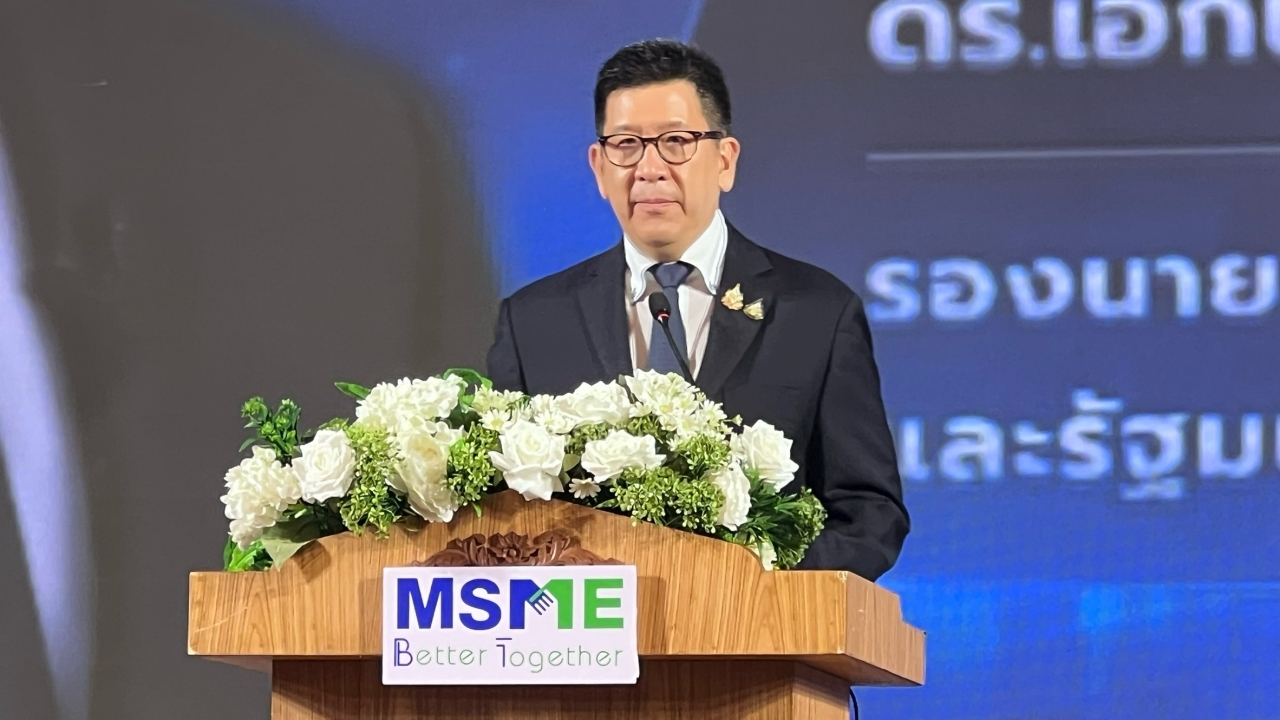
Ekniti revealed that this Monday, the Cabinet is preparing to consider extending the usage period for existing poor card holders by two months, emphasizing that the public need not worry as they will have more time to verify their eligibility.
On 26 Jul 2026 GMT+7, reporters reported that Mr. Ekniti Nitithanprapas, Deputy Prime Minister and Minister of Finance, disclosed updates on adjusting the criteria for the State Welfare Card program. He said the Cabinet meeting on Monday will consider related measures. The government has decided to extend the rights of 13.18 million existing State Welfare Card holders to continue using their benefits for an additional two months—August and September 2026—to allow sufficient time to verify beneficiaries' eligibility.
He also emphasized, “The public need not worry,” as the government has listened to feedback and wants to ensure thorough verification of data before implementing the new criteria.
At the same time, reopening registration is an important opportunity for low-income individuals who have been excluded from the system, since the State Welfare Card program has not accepted new registrations for about five years, resulting in many eligible individuals still lacking assistance.
Moreover, the new round’s State Welfare Cardholder database is more detailed, enabling the government to clearly segment data by age groups. Among over 9 million cardholders, more than 5 million are aged between 18 and 60, most of whom have no assets and no income.
The government will use this data to design targeted support policies, especially focusing on Upskill and Reskill initiatives to enhance vocational skills, create income opportunities, and improve the quality of life for working-age State Welfare Card holders, instead of providing welfare assistance alone.
“With more precise and detailed data, we can design assistance measures that better meet the needs of each group and provide closer care to the public,” said Mr. Ekniti.