

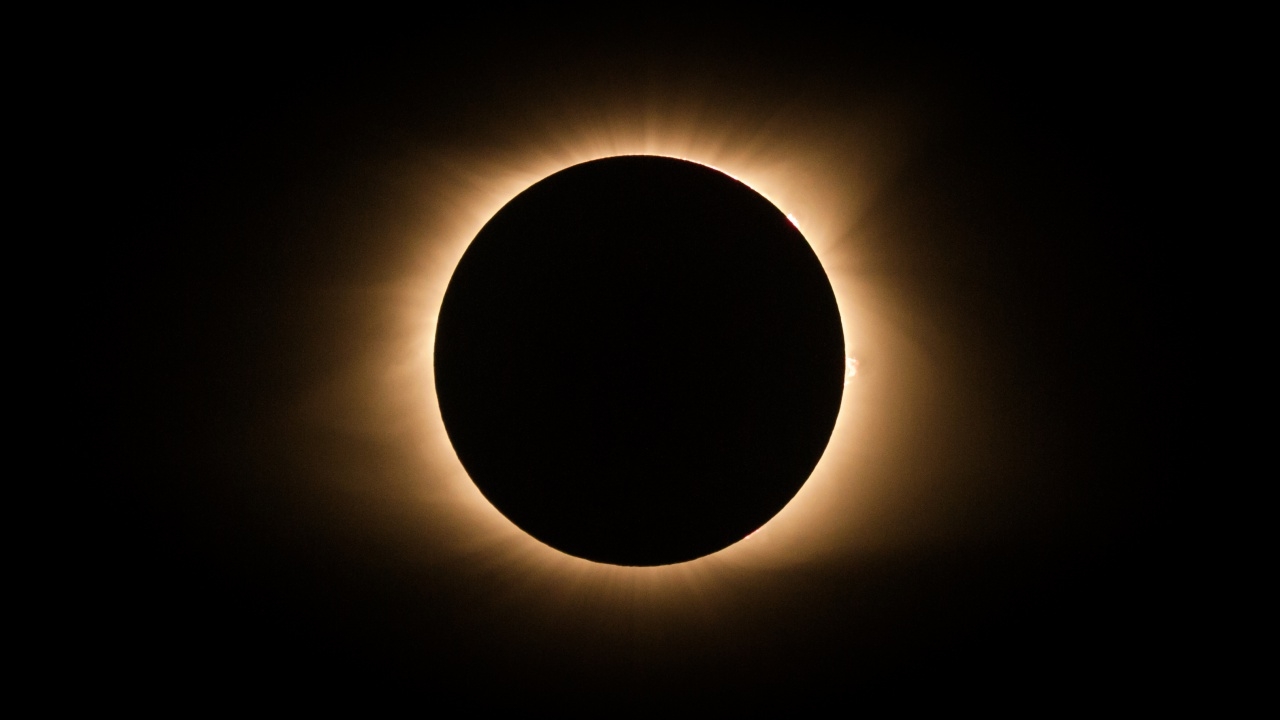
NARIT reveals that on 12 August 2026, a phenomenon will occur known as a "total solar eclipse." The moon will cover the sun completely, causing total darkness for up to 2 minutes and 18 seconds, but this will not be visible in Thailand.
On 11 August 2026, the Facebook pageNARIT, the National Astronomical Research Institute of Thailand,posted that the total solar eclipse on 12 August will not be visible in Thailand.
On 12 August 2026, a "total solar eclipse" will occur, marking the 48th of 72 eclipses in Saros series 126. The path of totality will cross northern Russia, the Arctic Ocean, Greenland, Iceland, northern Atlantic Ocean, Spain, and parts of Portugal. It will pass over key cities including Reykjavik (capital of Iceland), Valencia, and Zaragoza (Spain's third and fourth largest cities). Thailand is not in the path of totality, so it will not be visible here.
The location with the longest total eclipse (Maximum Eclipse) will be over the North Atlantic Ocean, off Iceland's west coast, where the moon will fully cover the sun for 2 minutes and 18 seconds (approximately 17:44:47 to 17:47:05 UTC), corresponding to about 00:44:47 to 00:47:05 on 13 August 2026 Thailand time.
A "total solar eclipse" occurs when the sun, moon, and Earth align in a straight line with the moon in the middle. As the moon gradually obscures the sun, observers on Earth see the sun’s disk become crescent-shaped until it is completely covered. This eclipse happens when the moon is near its closest point to Earth, appearing larger than the sun and fully blocking it. This rare event offers astronomers a valuable chance to study the sun’s corona and analyze elements in its chromosphere in detail.
The next total solar eclipse will take place on 2 August 2027, with the path of totality crossing the North Atlantic Ocean, southern Europe, northern Africa, the Middle East, and the Indian Ocean. Countries affected include Spain, Gibraltar (UK territory), Morocco, Algeria, Tunisia, Libya, Egypt, Sudan, Saudi Arabia, Yemen, Somalia, and the British Indian Ocean Territory. Thailand will be able to observe a partial solar eclipse during that event.
Information courtesy of the Facebook page of NARIT, the National Astronomical Research Institute of Thailand.