

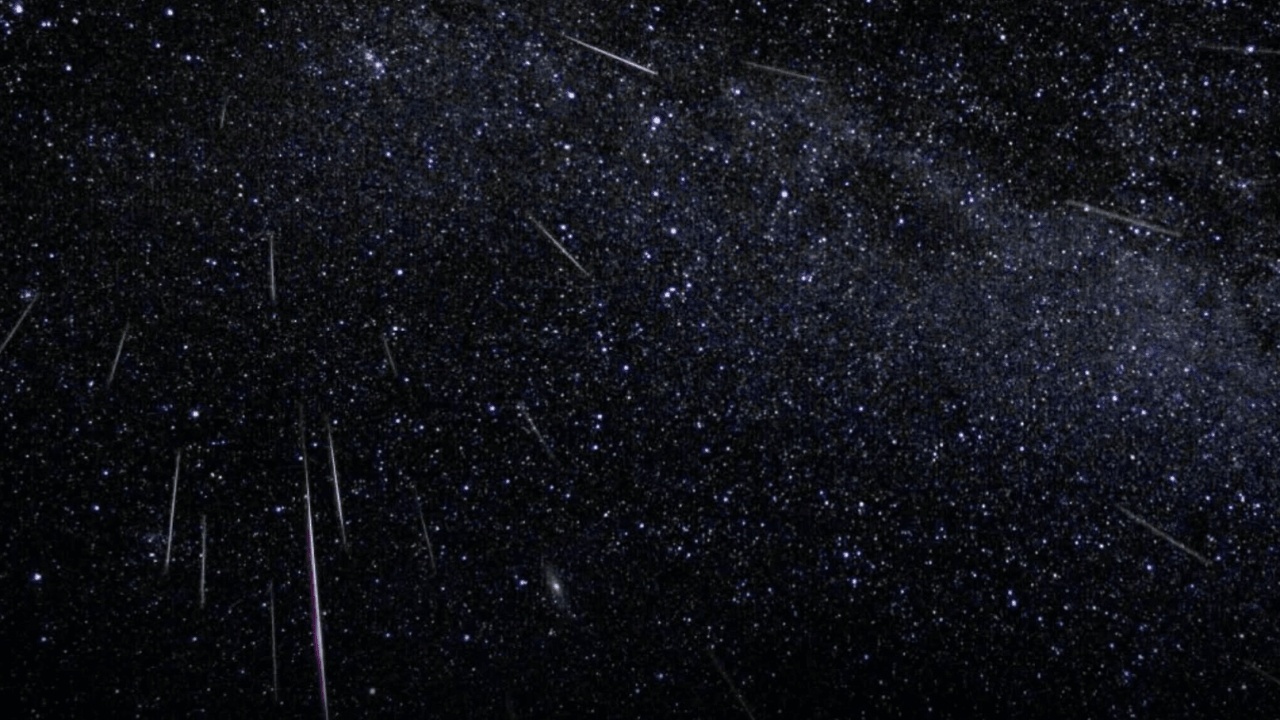
Tonight, 12 August 2026, look forward to watching the Perseids Meteor Shower. It is expected to have a peak average rate of about 100 meteors per hour. This year, there will be no moonlight interference, making it ideal for naked-eye viewing.
FacebookNARIT, the National Astronomical Research Institute of Thailand,posted that from the night of 12 August 2026 until the early morning of 13 August 2026, the Perseids Meteor Shower will occur, commonly called the 'Mother’s Day Meteor Shower.' The radiant point is in the Perseus constellation, rising from the northeastern horizon around 11:00 PM on 12 August 2026, and can be continuously observed until dawn on 13 August 2026. The peak rate is expected to be about 100 meteors per hour.
This year, there will be no moonlight disturbance during the event, making it excellent for observation. It is recommended to watch from areas away from cities or where there is no light pollution. The best way to observe the meteor shower is to lie down and watch with the naked eye toward the radiant area. If the weather is clear and rain-free, the beauty of the Perseids can be enjoyed nationwide.
Currently, Thailand is in the rainy season with heavy rain in many areas. If you miss this event, you can still catch other meteor showers, as these phenomena occur annually.
However, the Perseids is the second brightest meteor shower after the Leonids, visible annually from 17 July to 24 August, usually peaking on 12–13 August. It features colorful meteors caused by dust debris left by the Swift-Tuttle comet (109P/Swift-Tuttle). When Earth passes through this debris, the particles enter the atmosphere and burn up, producing bright streaks in the sky. This natural event has no impact on Earth.
Thanks to Facebook page NARIT, the National Astronomical Research Institute of Thailand.