

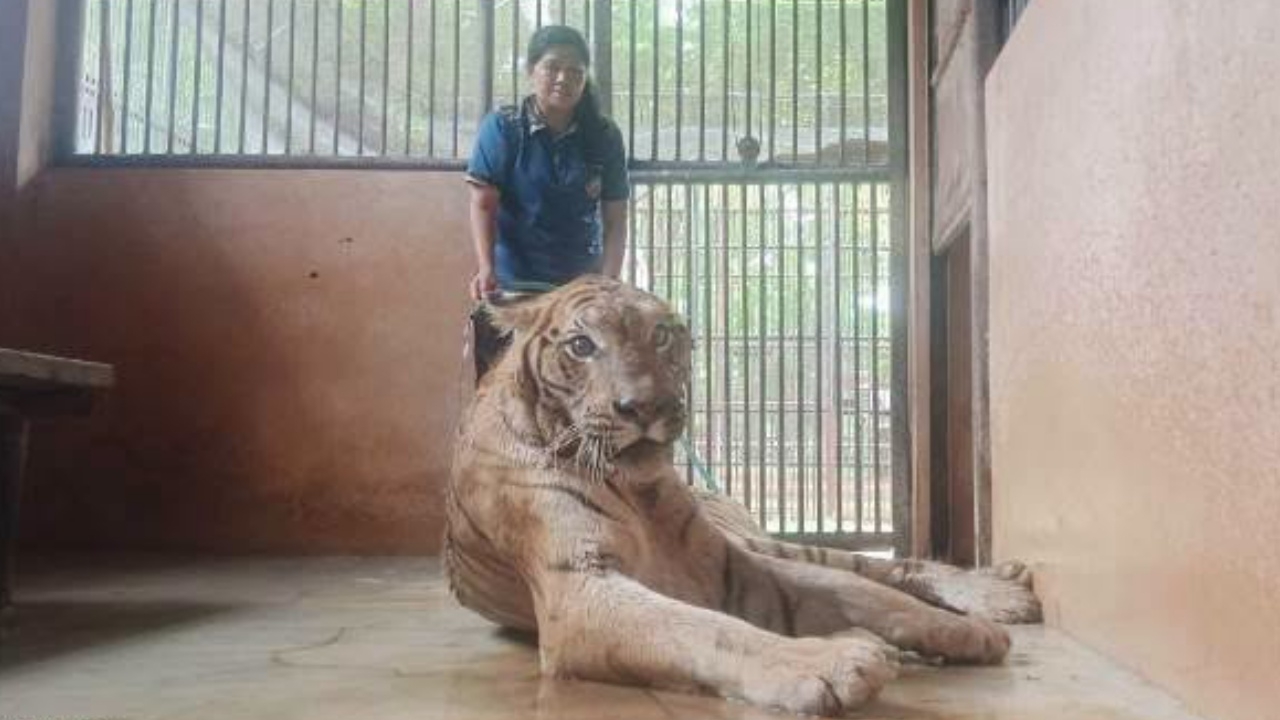
Sick but still fighting "Grandma Khao Khua" An almost 19-year-old tiger suffers from old age and cannot walk, while "Bueng Chawak Veterinarians" provide close 24-hour care.
On 23 August 2026, the Bueng Chawak Wildlife Management Development Center, under the supervision of the Protected Areas Regional Office 3 (Ban Pong), Department of National Parks, Wildlife and Plant Conservation, reported on the health monitoring of "Khao Khua," a female tiger aged 18 years and 11 months. She is facing age-related physical decline. Since 14 August, veterinarians and staff moved the tiger into a special care enclosure within Bueng Chawak Wildlife Sanctuary to facilitate medication, fluid administration, and close monitoring of her excretion.
Over the past two months, monitoring revealed Khao Khua’s walking coordination and balance have deteriorated. By mid-August, she was unable to stand or walk but could still support herself, crawl, turn over, and lift her head. Laboratory tests showed kidney function values above the normal range and a slight increase in white blood cells, typical in wild animals entering advanced old age.
Dr. Nattanon Panpetch, a specialist veterinarian and head of Bueng Chawak Wildlife Sanctuary and Development Center, stated, "The veterinary team has implemented a comprehensive palliative care plan involving oral and injectable medications, along with subcutaneous fluid supplementation. Although her body is naturally declining, Khao Khua remains spirited and responds well to care. She can eat three kilograms of fresh chicken breast daily, fed by staff, and her urinary and bowel functions remain normal."
Illness due to aging is a natural process for living beings. Wild tigers typically live 10 to 15 years on average. Khao Khua’s nearly 19-year lifespan reflects the excellent care and attention she has received throughout her life.
Going forward, the veterinary team and staff at Bueng Chawak Wildlife Management Development Center will continue to provide 24-hour care for Khao Khua. They will focus on nutritional management and improving comfort in her enclosure to reduce stress and maintain the best quality of life for this senior tiger. Progress updates will be shared with the public regularly.
Thanks to the Facebook page of the Department of National Parks, Wildlife and Plant Conservation