

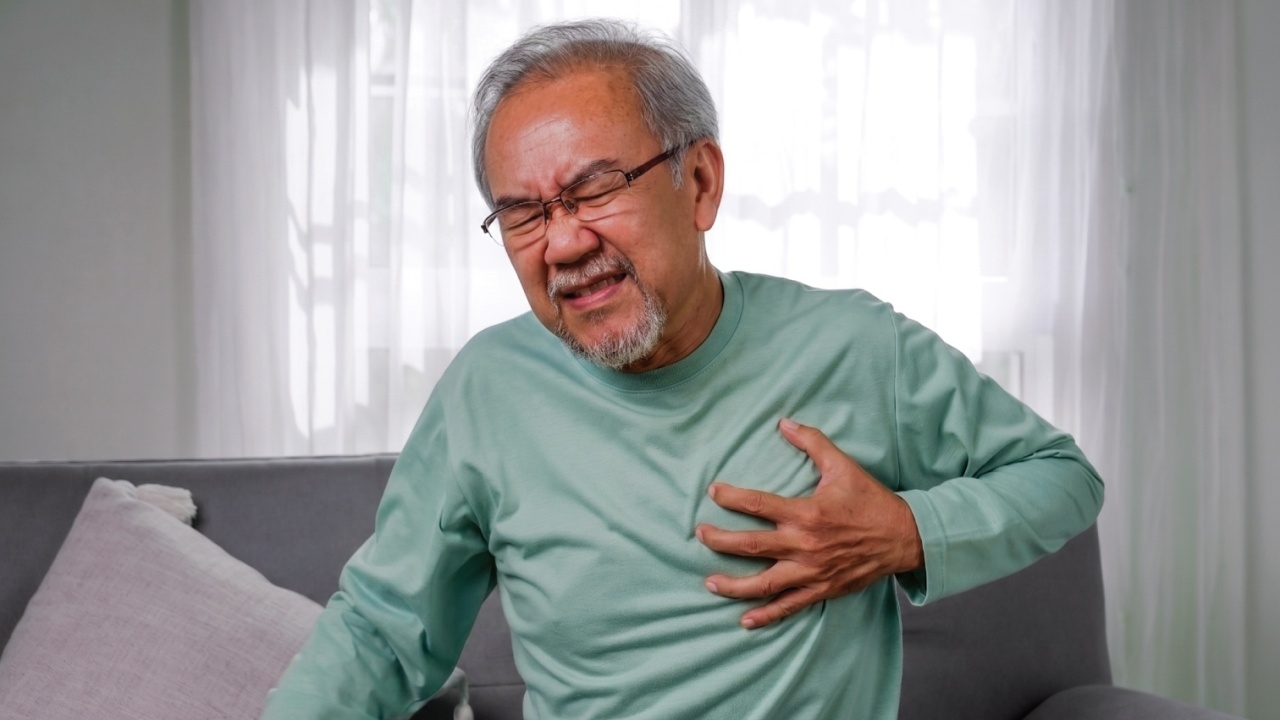
Check 10 warning signs before symptoms appear. "Sudden myocardial infarction" Meanwhile, "Cardiologist" reveals risk factors and prevention methods.
Dr. Nahathai Chatsing, a cardiology specialist at the Heart and Thoracic Center, Nawavej Hospital, explained 10 symptoms of sudden cardiac arrest, discussing causes, risk factors, and prevention methods to guide self-monitoring and care for others, aiming to reduce heart attack risks.
Sudden cardiac arrest is when the heart suddenly stops working, preventing blood circulation to organs. As a result, the brain and vital organs start to lack blood and ultimately lead to death.
Sudden myocardial infarction (heart attack or myocardial infarction), commonly called a "heart attack" by the public, usually happens when blood flow to the heart muscle sharply decreases or stops. A key mechanism is rupture or change in arterial plaques causing blood clots that block vessels, leading to oxygen deprivation in the heart muscle.
Sudden cardiac arrest is when the heart stops pumping blood; the patient loses consciousness, becomes unresponsive, and stops breathing normally, leading to death. Sudden myocardial infarction and sudden cardiac arrest are different conditions, but the first can trigger the second. Both are emergencies requiring immediate medical intervention.
1. Chest pain is the most common symptom. It may feel like tightness, pressure, pain, burning, or squeezing in the chest. The pain often occurs on the left side but may also affect the neck, shoulder, arm, throat, or teeth.
2. Easy fatigue may occur during activities such as climbing stairs, walking uphill, or exercising.
3. Difficulty breathing may happen during physical activity or when lying flat.
4. Nausea and vomiting can appear alongside chest pain or before or after it.
5. Sweating usually occurs with chest pain or may appear before or after it.
6. Palpitations may happen together with chest pain or before or after it.
7. Cold hands and feet often accompany chest pain or may occur before or after it.
8. Dizziness may happen with chest pain or before or after it.
9. Lightheadedness can occur with chest pain or before or after it.
10. Weakness may be an early sign of a heart attack and can worsen to cause loss of consciousness.
Currently, cardiovascular disease is the leading cause of death in Thailand and worldwide. Besides prevention and risk monitoring, it is crucial for everyone to learn first aid and basic life support, which significantly increase survival chances for sudden cardiac arrest patients, a condition that can affect anyone.