

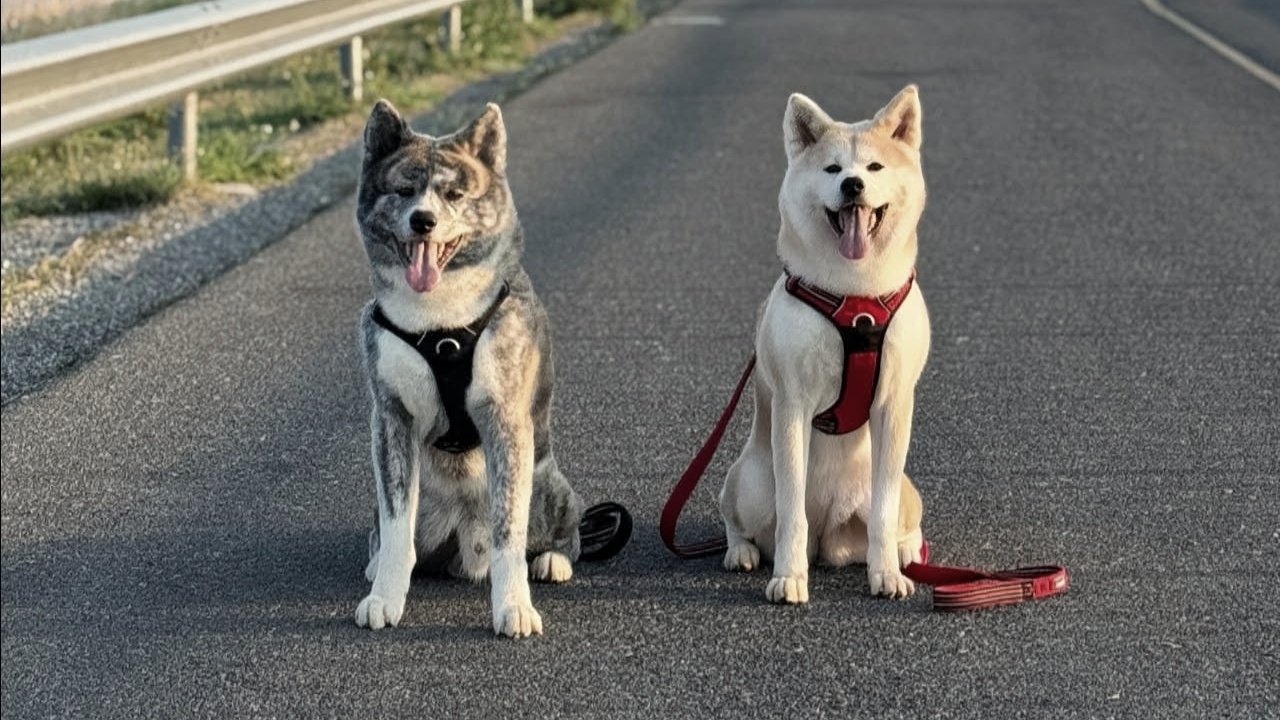
Still heartbroken, the owner shares a cautionary tale about two beloved dogs. "Sazen and Giant" passed away from "leptospirosis" after a vacation and forest hike.
A heartbreaking story emerged online when Facebook userNavaporn Siriposted a warning about "Sazen and Giant, my two beloved dogs, passed away from leptospirosis after a vacation and forest hike." She wrote, "I still can't come to terms with it, but today I’ve gathered my thoughts and decided to share the entire story. My intention is for Sazen and Giant's case to serve as a warning and provide information to all parents about the risks of taking children on forest hikes, and to raise awareness about leptospirosis and its severity."
The story began when she took the dogs camping and hiking in Kanchanaburi. At the time, she had no idea that this trip would expose them to something so severe that it would take their lives. About 12 days after returning from the forest (the incubation period can last 3–4 weeks without symptoms), both dogs became lethargic, weak, and lost their appetites without other severe symptoms. Giant showed symptoms for less than a day, while Sazen grew weaker quickly. Within 30 minutes of noticing Sazen's decline, she took him immediately to an emergency animal hospital.
The veterinarians promptly started treatment with antibiotics for leptospirosis and medication for blood parasite infections from the first day after gathering the history. The veterinary teams from two of the three animal hospitals where the dogs were treated shared that there have been multiple prior cases of dogs contracting leptospirosis after hiking in the same province. From that day, events escalated rapidly, faster than anyone could prepare for.
What began as mild lethargy quickly turned critical. Once the bacteria entered the body, it multiplied and spread through the bloodstream, affecting vital organs. The dogs experienced a rapid drop in platelet counts, requiring multiple blood transfusions. The infection then severely impacted their kidneys and liver, leading to kidney failure that required dialysis, marked liver enzyme spikes, jaundice, and yellowing of the body.
The disease led to severe complications. In the dogs' cases, this included Disseminated Intravascular Coagulation (DIC), a serious disorder where blood clotting mechanisms fail, making dialysis extremely risky and causing bleeding in various organs, eventually resulting in multiple organ failure. All this developed from initially mild symptoms of lethargy and weakness, turning fatal within days.
Both Sazen and Giant tested negative on the initial test kits on day one. The hospital proceeded with PCR testing by sending samples to a lab, awaiting results for 3–5 days. Usually, treatment starts immediately without waiting for test results if there is a risk history and symptoms. Even with various tests, some cases may not detect the bacteria early on. Thus, a negative initial test does not necessarily mean no risk.
Vaccination does not guarantee complete safety. The dogs received annual leptospirosis vaccines, but these do not cover all Leptospira strains found in nature, especially some strains differing from those covered by the vaccine. Vaccination remains essential and reduces risk, but it should not be relied upon as a reason to take pets into risky areas without caution.
Leptospirosis is treatable, but the damage to the body can be severe. Clearing the infection and repairing organ damage are different matters. Recovery does not necessarily restore the body to 100%. Some organs may recover over time with treatment and strict care, while others may suffer irreversible damage. Thus, eliminating the bacteria does not end the problem. Post-treatment monitoring and supportive care for affected organs are crucial.
Leptospirosis is a zoonotic disease that can also be severe in humans. During that forest hike, Toon invited a family with young children. Fortunately, that family and their dogs did not contract the infection; otherwise, he said he could never forgive himself.
If Sazen and Giant's story can prompt even one family to research before taking their children hiking, prevent one child from infection, or lead to earlier treatment for one child, it will mean a great deal. We should not allow ignorance or insufficient information to cause irreversible loss."
Thanks to Facebook user Navaporn Siri