

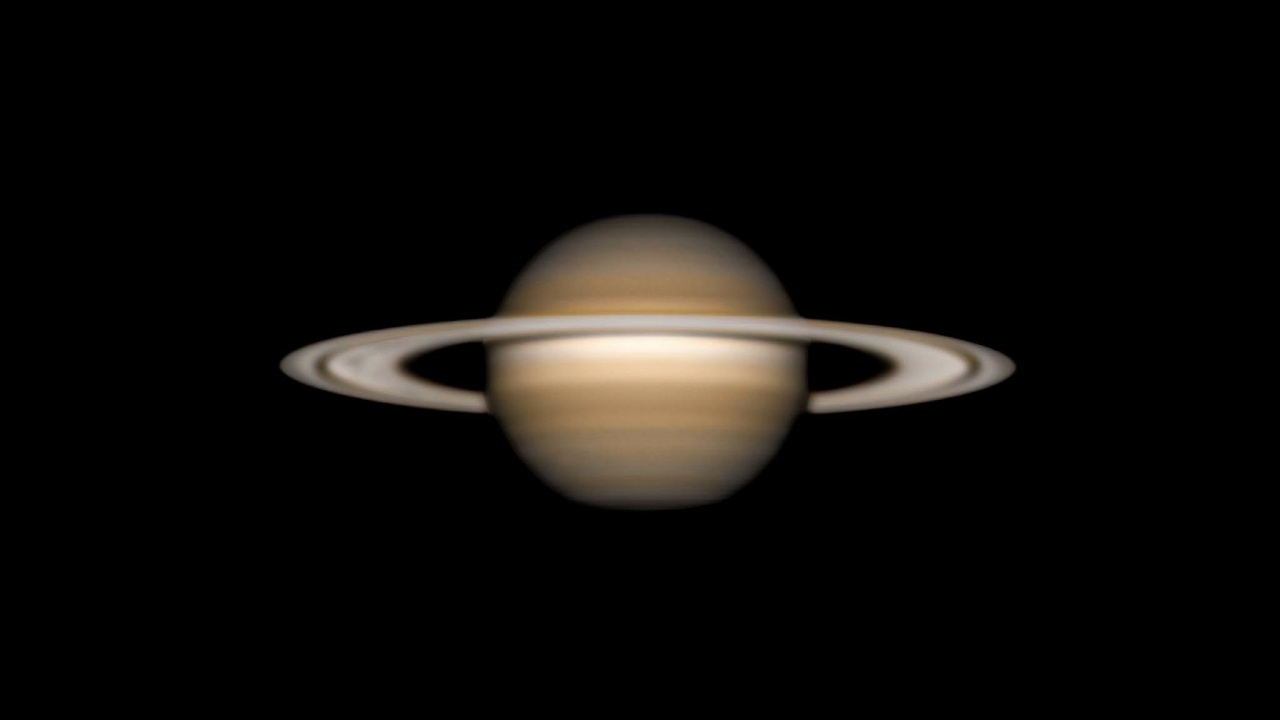
NARIT revealed images of "Saturn closest to Earth this year," at a distance of approximately 1.261 billion kilometers, showing Saturn's rings with the Cassini Division and rings A and B clearly visible from that distance.
On 5 October 2026, it was reported that the Facebook pageNARIT, the National Astronomical Research Institute of Thailand,released images of "Saturn closest to Earth this year," stating that these were recorded by a 0.7-meter diameter telescope at the Chalerm Phrakiat 7th Cycle Birthday Anniversary Observatory in Chachoengsao. The images clearly show Saturn's rings, including the Cassini Division, as well as rings A and B.
On the night of 4 October 2026, Saturn reached the position opposite the Sun (Saturn Opposition), where the Sun, Earth, and Saturn align with Earth positioned between the Sun and Saturn. This made Saturn closest to Earth this year at about 1.261 billion kilometers. This period is ideal for observation, as Saturn appears in the sky from sunset in the east and remains visible all night until dawn. Through a telescope, the rings are seen clearly. The angle of Saturn's ring plane this year, as viewed from Earth, varies annually.
Additionally, observers could see the "Cassini Division," a clear gap between the two main rings, the outer bright ring A and the inner bright ring B, distinctly separating the rings. Another interesting detail is the Saturn ring spokes—dark radial patches on ring B. These spokes arise from interactions between the solar wind (charged particles from the Sun) and Saturn's magnetic field, generating electrostatic conditions in the rings. Small particles (ice and dust) temporarily acquire charge and lift above the ring plane, reducing their light reflection and creating the dark spokes over the otherwise bright main rings.
Regarding NARIT's observation activity for Saturn’s closest approach on 4 October 2026, despite heavy rain and cloudy skies in some areas, many people enthusiastically joined the event, especially around telescope stations for viewing Saturn and other celestial objects, which attracted significant public interest. Additionally, a live broadcast of the event on NARIT’s Facebook page drew thousands of online viewers.
After 4 October, Saturn remained visible in the evening sky for observation until about February 2027. The next closest approach of Saturn to Earth will occur on 18 October 2027. Interested individuals can follow upcoming astronomical events through all NARIT communication channels.
Information courtesy of the Facebook page of NARIT, the National Astronomical Research Institute of Thailand.