

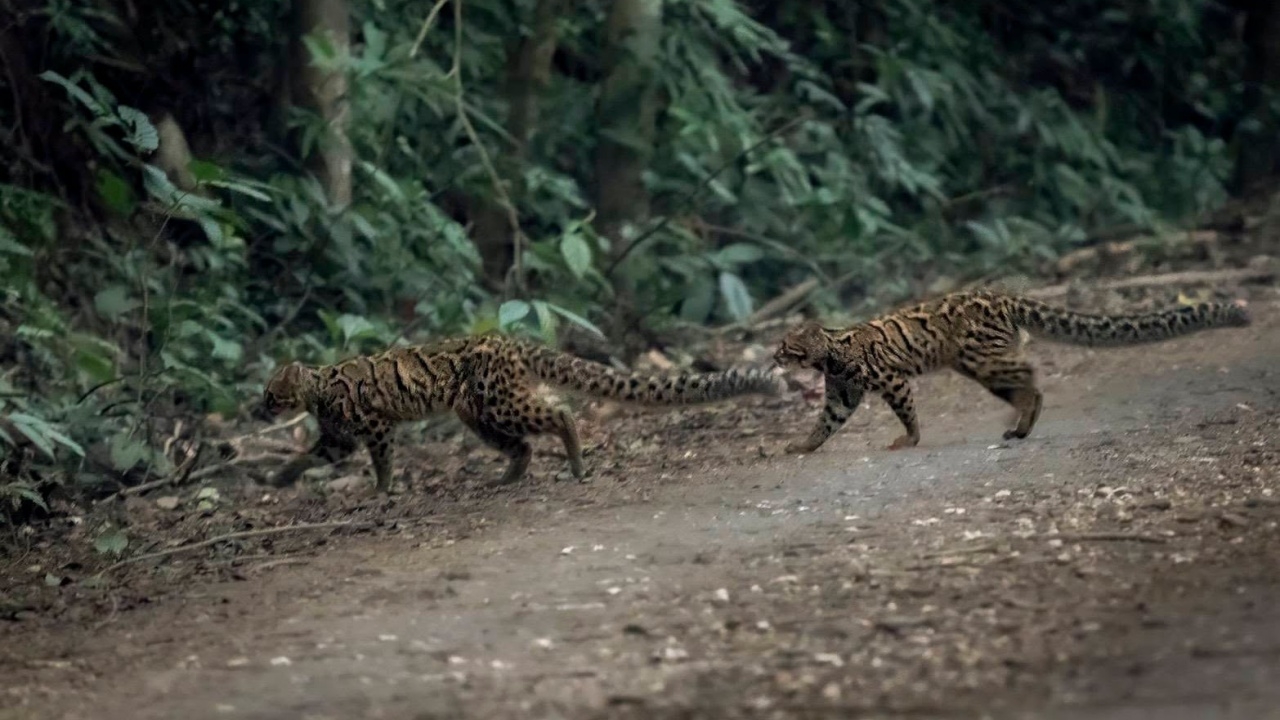
Kaeng Krachan National Park reveals images of the "marbled cat" showcasing itself in the forest at kilometer 23, reflecting the richness of the World Heritage forest
On 21 Nov 2026, Mr. Mongkol Chaiphakdee, head of Kaeng Krachan National Park, announced positive news on wildlife conservation after receiving reports and confirmed photos of the "marbled cat" a rare protected wild animal. Mr. Jirayu Ekkul captured the images near kilometer 23 inside Kaeng Krachan National Park, Phetchaburi Province, on Saturday, 14 Nov 2026. The appearance of this small predator is key evidence indicating ecosystem balance and the safety of the conservation forest area.
Mr. Mongkol Chaiphakdee explained the importance of this discovery: "The clear capture of the marbled cat along a regular trail is very encouraging. This species is shy and cautious. Their willingness to appear shows Kaeng Krachan’s forest is peaceful, undisturbed, and offers abundant food sources sufficient for the survival of rare wildlife.
The marbled cat (Marbled Cat) is a protected species under the Wild Animal Reservation and Protection Act B.E. 2562 (2019) and is listed as Near Threatened on the IUCN Red List. It is similar in size to a domestic cat, notable for its long, bushy tail nearly as long as its body that aids balance. Its body markings resemble marble patterns, helping it camouflage in moist evergreen forests. It usually lives and hunts in tree canopies at night.
Thus, it is rarely seen in the wild. The sighting at kilometer 23, a crucial ecological corridor linking Kaeng Krachan forest clusters, demonstrates the success of SMART Patrols that consistently protect biodiversity.
Kaeng Krachan National Park plans to record the sighting coordinates and times in wildlife population databases to plan close monitoring and behavioral tracking. Officials also request tourists to drive carefully, obey speed limits, avoid loud noises, and refrain from feeding wildlife to help preserve the environment and ensure the survival of rare species.
Thanks to the Facebook page of the Department of National Parks, Wildlife and Plant Conservation