

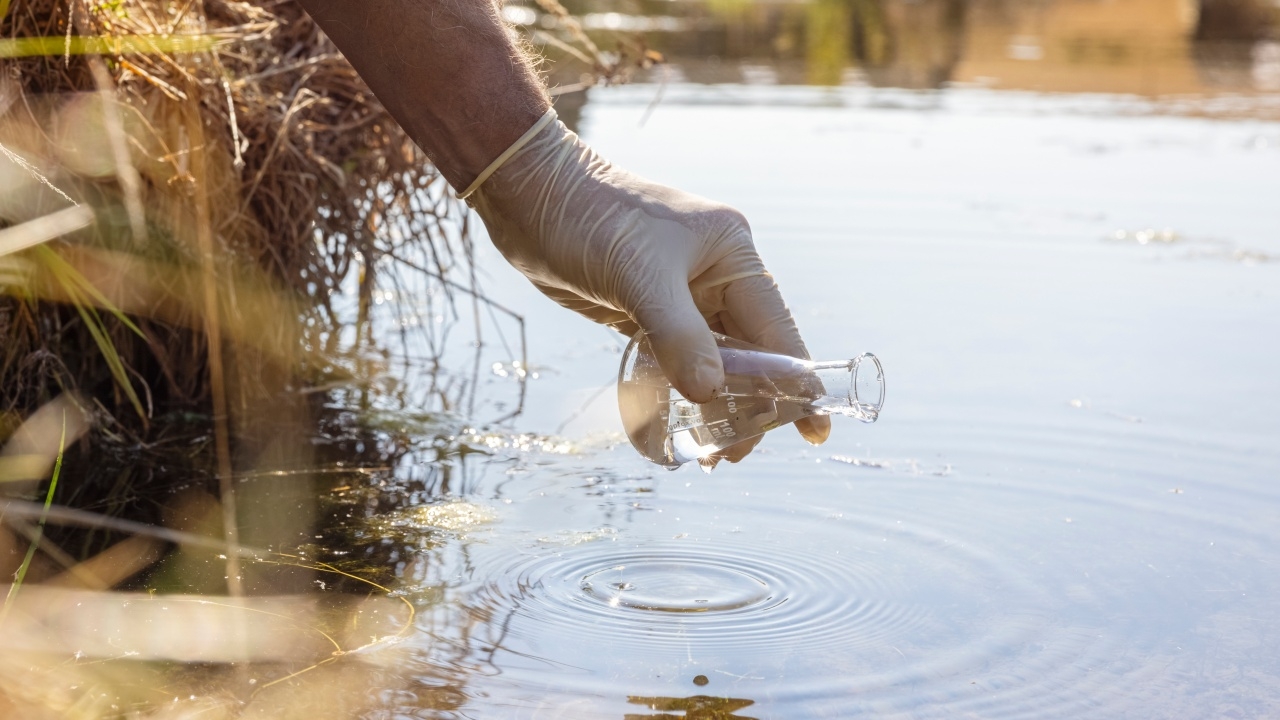
"Department of Disaster Prevention and Mitigation" warning. Warns of five contaminants in natural water sources that require monitoring, along with self-protection methods to reduce contamination risks.
On 25 Nov 2026 GMT+7, Nirat Pongsitthathaworn, Director-General of the Department of Disaster Prevention and Mitigation, revealed that contamination levels exceeding standards and unusually high turbidity have been detected in northern natural water sources. Long-term accumulation in the body may pose life-threatening dangers.
The Department of Disaster Prevention and Mitigation is concerned for public health, especially for residents in high-risk areas, urging strict adherence to recommendations to reduce exposure to or consumption of pollutants from natural water sources. For safety, the department advises the public to monitor five contaminants in natural water.
These are as follows:
1. Arsenic, classified as a heavy metal, with toxic inorganic forms found in mining industries, natural water, soil, pesticides, and industrial chemicals. Normally, the body can eliminate arsenic, but large and prolonged exposure can be toxic and life-threatening.
2. Lead, a toxic substance commonly found in air pollution from vehicle use and industrial wastewater. It can enter the body through respiratory, digestive systems, or skin contact, impacting bodily functions and causing cancer.
3. Chromium, a heavy metal used in industry, can enter the body via the digestive tract. While the body usually expels it, some accumulates. Long-term accumulation causes poisoning and health effects.
4. Cadmium, a hazardous contaminant from industries such as mining, alkaline battery production, and solar cells, can accumulate in the body for many years, causing lung fibrosis, emphysema, and kidney dysfunction.
5. Mercury, released from factory wastewater, is a severe toxin that accumulates in the brain and spinal cord, causing Minamata disease. Accumulation harms the central nervous system, muscles, speech, and can cause pneumonia, chest pain, breathing difficulties, and death.
Therefore, the public should avoid using water from sources with contamination warnings for cooking and opt for bottled water that meets quality standards. Avoid water activities in contaminated areas. If exposed, promptly wash the body with clean water and soap, and seek immediate medical care if abnormal symptoms develop.
Thanks to the Department of Disaster Prevention and Mitigation Facebook page (DDPM).