

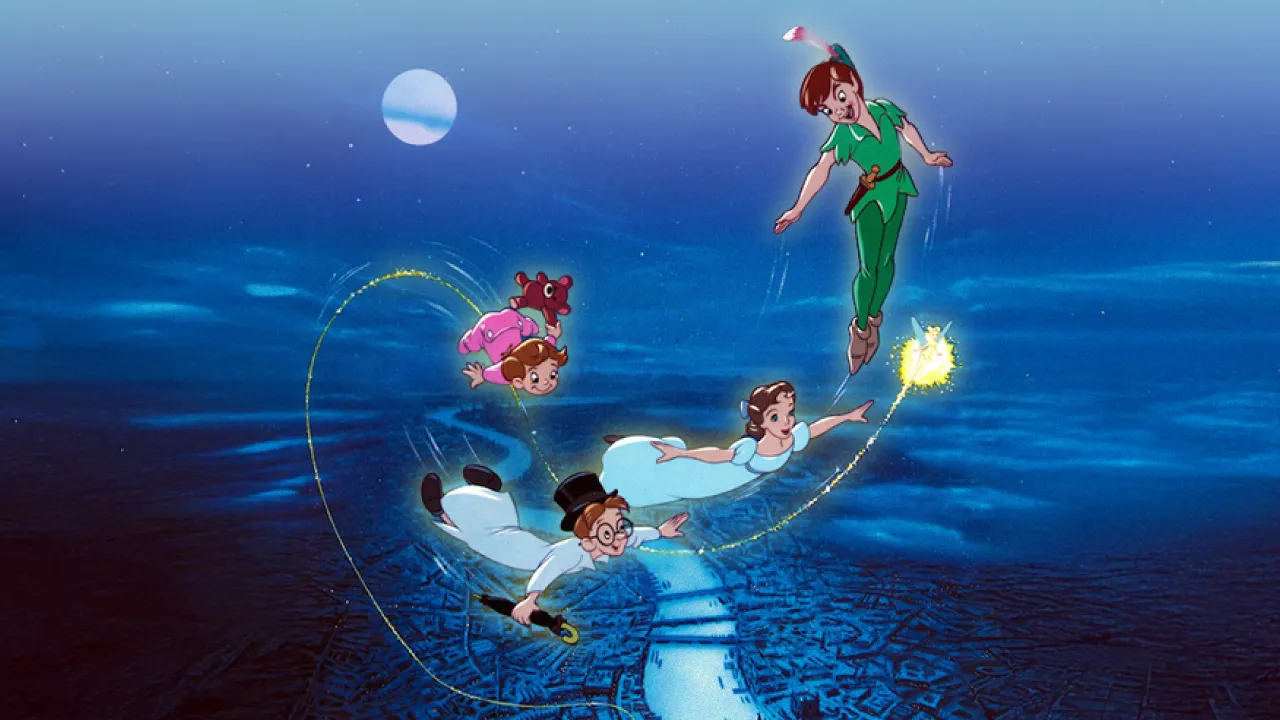
Seventy-three years ago, the classic animated film Peter Pan, created by Walt Disney Productions, premiered in theaters on 5 Feb 1953 GMT+7. It then became one of the immortal literary works, full of symbolism and interpretations, telling the story of a boy who refuses to grow up and adventures in Neverland with Wendy and friends.
‘Peter Pan’ is a masterpiece by Scottish author James Matthew Barrie. Originally, Barrie wrote about a baby who flew out a window simply because he did not want to grow up. Behind the true origin of this work lies a tragic event: Barrie experienced the death of his older brother in an accident just two days before his 14th birthday. His mother comforted herself by believing that her son would remain a child forever, never having to face the harshness of adulthood.
The adventure begins when Peter Pan invites the Darling children to Neverland, a place where children don’t have to grow up and can escape chaos. In Neverland, Captain Hook represents the fearful adult, while a crocodile with a ticking clock inside symbolizes time relentlessly following and devouring human life. As we grow, time serves as a reminder that life will eventually end in death.
Also featured is Tinker Bell, a fairy symbolizing imagination. Western belief holds that every child is born with a fairy protecting them from evil. But at a certain age, children stop seeing and eventually forget their fairies.
A key turning point occurs when Wendy is ready to grow up to be a good mother, but Peter Pan refuses to leave Neverland, unwilling to lose the magical powers and endless imagination of childhood. His refusal to grow up causes him to miss opportunities to gain experience and live in the real world.
In Peter Pan’s world, flying represents freedom and escape from social conventions, symbolizing childhood where we enjoy fun, brightness, and can avoid harsh responsibilities. Yet as we mature, belief in imagination fades, forcing us to accept reality and live in the present. The story ultimately teaches us that while we must grow up, we should never forget the happiness of childhood.
Neverland is an imaginary land shaped by children’s interpretations. Though much seems like fantasy, it carries truths, insights, and social critiques. Thus, Peter Pan remains an immortal literary work and an animation that entertains children, but when revisited as adults, offers new understandings of the world.
Besides the original 1953 film, Disney has produced a sequel, Return to Never Land (2002), and a live-action version.