

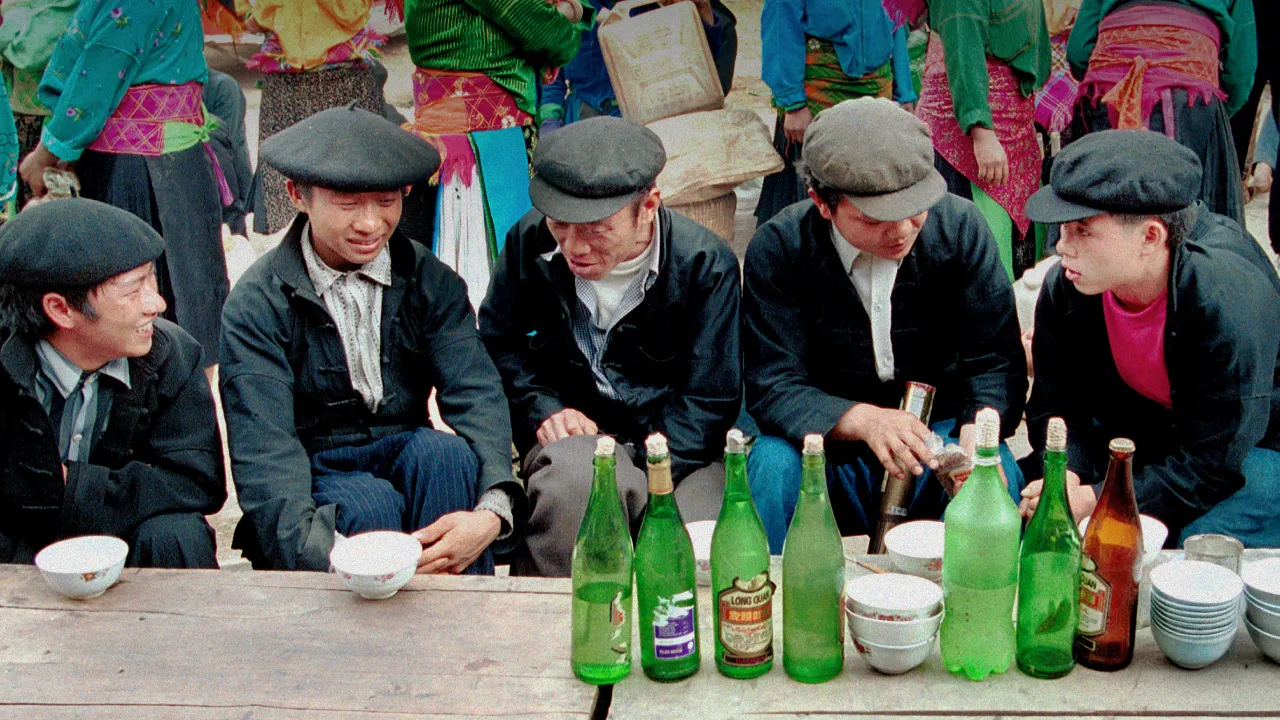
Asia is often referred to as the 'rice culture region,' encompassing areas where rice is the staple food, such as Japan, China, India, and Southeast Asian countries like Thailand, Laos, Myanmar, and Vietnam. Rice culture did not emerge simply because Asians like to eat rice; rather, rice thrives as a primary food source due to favorable geography.
It is estimated that domesticated rice cultivation began 8,000 to 10,000 years ago around the Yangtze River by separating wild rice strains. Subsequently, rice farming culture spread to various areas including parts of Japan and Southeast Asia. It is easy to understand that rice fills the stomach quickly, grows easily with the seasons, and yields good harvests. Naturally, people in these Asian regions place great importance on rice, developing beliefs and traditions hoping for consistent good yields throughout the year.
In Japan, ceremonies such as Niiname-sai and Daijosai honor rice offerings to deities, with such importance that the emperor participates. Japanese beliefs include animism, where rice is thought to house gods or Kami. The Japanese hold a strong belief that rice must not be wasted, and before eating, they say itadakimasu, often translated as “let’s eat” or “I will eat,” but actually meaning “I humbly receive this.” This is not merely polite manners but a respect to the Kami who bless the rice and all food we consume.
Similarly, Thailand has many rice-related ceremonies, especially in the Isan region, sharing cultural traits with northern Lanna, Shan state, Yunnan, Laos, and northern Vietnam. Collectively called the Tai-Thai group, they hold animistic beliefs akin to the Japanese. Instead of gods or spirits, the Tai-Thai see 'kwan' as an invisible life-giving force. Later, the concept of kwan in rice was influenced by Hinduism, transforming into the goddess Phosop—whose name derives from 'puspa,' meaning abundance.
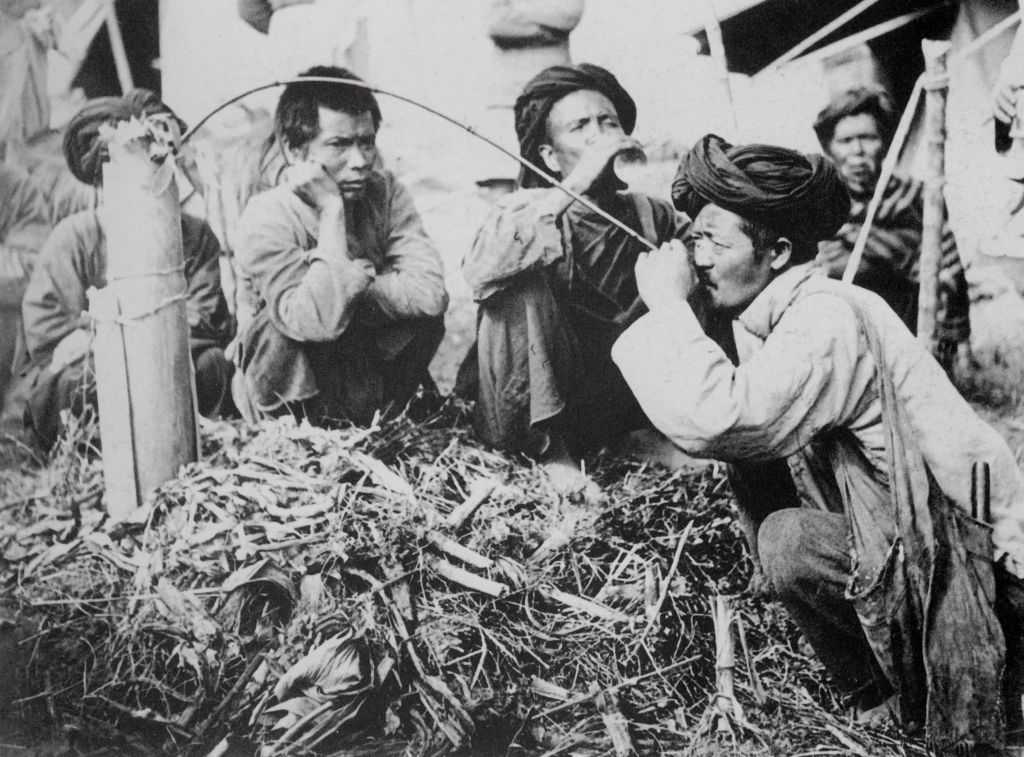 People in Yunnan are seen drinking merai during their leisure time.
An interesting question arises: during ceremonies, offerings, or paying respect to ancestors or kwan, why must the offering be liquor or white spirit? Why not rare meats or wild game from deep forests?
One possible answer is that since rice is the energy source for life, white spirit liquor represents a distilled form of that energy. Also, humans tend to offer things that require effort and complex processes to important persons or occasions. Historically, making white spirit was not easy—it involved planting, fermenting, and distilling. Thus, merai was likened to a nectar, a precious liquid surpassing ordinary water.
As seen in Hindu myths, 'soma' is frequently mentioned—for example, the god Indra favored soma. Soma is an ancient ritual drink predating Indo-Aryan migrations into northern India, originating from the Andronovo Culture before splitting into Persia (modern-day Iran) and northern India. Made from a plant whose exact identity historians debate, it likely involved extracting juice from stalks, adding mushrooms and other plants causing psychoactive effects. Thus, soma was not alcohol but a ritual psychoactive drink, difficult to make at the time. Both soma and alcohol may have been offered to deities to bring joy. The fusion of Tai-Thai beliefs with Hindu influence transformed soma into liquor, often pictured as a type of merai since that concept is easier to visualize.
We observe that merai’s important context has shifted from sacred to communal and commonplace. White spirit appears at celebrations and important traditional events vital to life, such as among the Loloish or Yi peoples in southern China and northern Vietnam. Although they speak Tibeto-Burman languages, they hold housewarming dances with white spirit drinking circles and ancestral offerings, similar to Tai-Thai people here. These shared cultures in Southeast Asia understand white spirit as a potent, valuable force, which may explain why Europeans call alcoholic drinks 'spirits'.
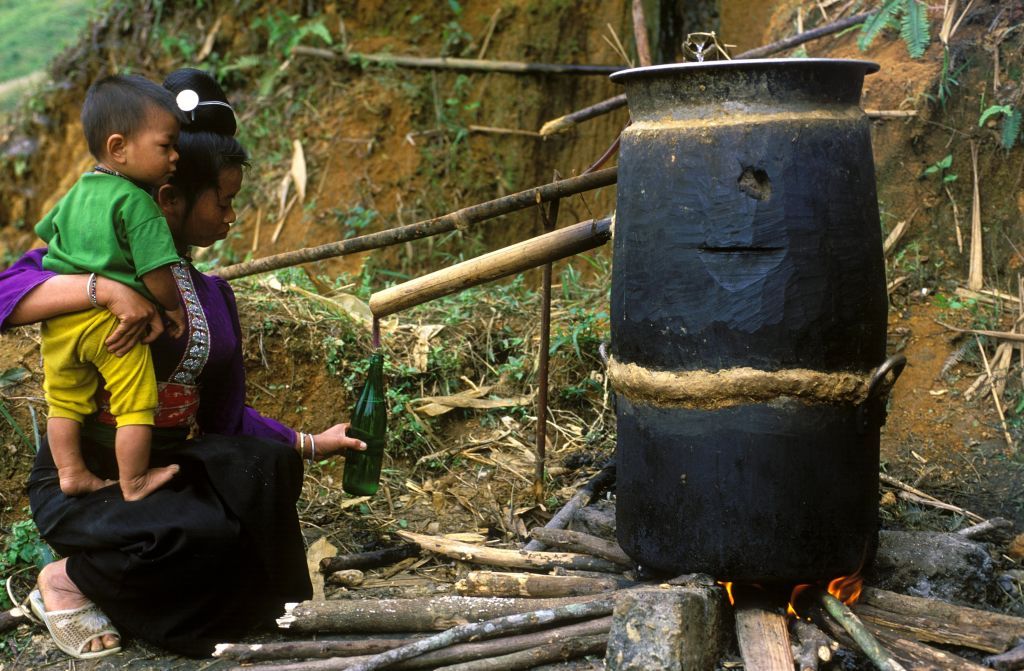 Tai Dam people are seen pouring merai from a distillation barrel.
However, sometimes the significance of a drink may not be about intoxication. In South America, for instance, the Maya's important ceremonial drink is not merai but chocolate, made by grinding cacao beans with spices and flowers. Chocolate drinks were reserved for elites or priests and used to welcome honored guests. This suggests that the importance of ceremonial drinks may lie in their complex preparation rather than their intoxicating effects. Making fine chocolate powder from raw pods is a time-consuming process, as anyone who has seen chocolate-making videos can attest.
Over time, the processes and contexts of merai liquor have gradually changed but remain connected to the past. We still have the custom of pouring liquor for elders first. Special occasions have shortened to designated days for social gatherings. Liquor's context has shifted to accompany festivities, though it is not associated with Buddhism because of its precept forbidding intoxication. This is due to animist influences predating Buddhism in Southeast Asia. We cannot deny the close relationship between Tai-Thai culture and white spirit liquor. Across regions, there are as many as 300 different fermentation and distillation recipes, with well-known types including white spirit, Usato, and Namtanmao.
Later, alcoholic drinks became markers of social class, especially after other types like beer, whiskey, brandy, and wine arrived during King Rama V’s reign. High social classes associated themselves with Western-style drinks, seen as refined and costly, turning these beverages into status symbols. Meanwhile, white spirit was downgraded to a drink for the working class or rural lower levels. This distinction was not about poor taste of white spirit drinkers but because these drinks were cheaper and easier to obtain, as white spirit brewing was traditional. White spirit thus symbolized rural, traditional lifestyles considered less civilized by modern urban standards. Migrants from remote regions working in cities were also stereotyped this way.
Thus, the context of merai or alcoholic drinks in culture has been scaled down from sacred objects to everyday items for common people. Drinks have been used to differentiate social classes, yet today few people judge others by drinking preferences. In fact, alcohol has become a medium to bridge social classes. We see supervisors adapting to subordinates through social drinking events, companies breaking down barriers for open communication. Alcohol appears to be one of the beverages that support and drive human social life from the past to present.
References:
Hathai Chanok Intrakamhaeng, Suwat Kumpitak. Local Liquor: The Wisdom of Community Self-Reliance. Nonthaburi: Sustainable Agriculture Foundation, 2004.