

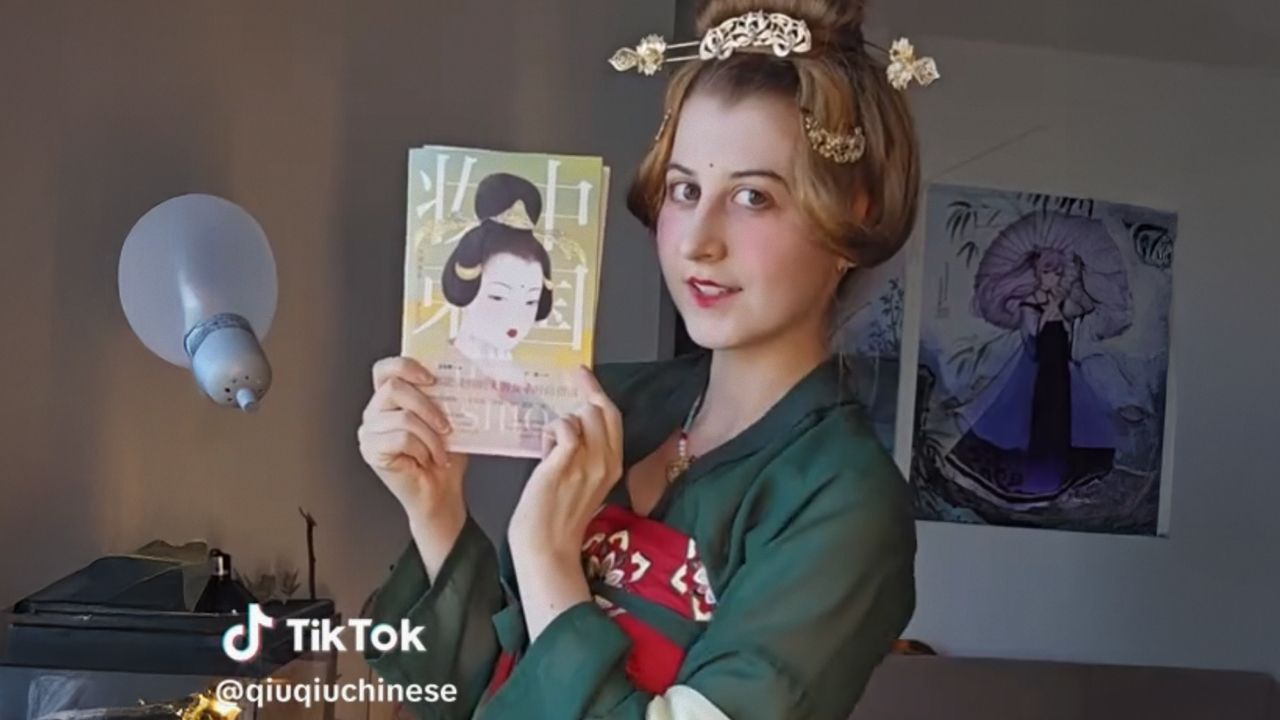
Images of American youths sipping tea, wearing traditional Chinese clothing, or practicing Tai Chi have appeared continuously on TikTok feeds since early this year, accompanied by the catchy phrase, “You met me at a very Chinese time in my life,” used as the headline for countless clips. These videos often depict traditional Chinese lifestyles, from drinking hot tea and eating Chinese food to retro-style dressing, becoming a viral meme that many users enthusiastically join in this trend.
This phenomenon is called ‘Chinamaxxing,’ meaning Western youth immerse themselves in the online image of Chineseness and express a symbolic attachment to China as if it were their motherland, shifting from iced coffee to holding hot tea cups instead.
From another perspective, although clear evidence or research is still limited, Afra Wang, a Chinese-American writer, sees the American dream gradually fading, as some young people in the land of freedom feel weary of the old narratives and choose to look toward another culture instead.
Beneath the fun of making memes, these trends may stem from some youths’ desire to escape reality. In modern societies filled with economic and quality-of-life uncertainties, seeing peaceful lives with stable cultures offers a comforting refuge amid confusing times.
Before the trend of wanting to be Chinese was called Chinamaxxing, the wave of clips shared on TikTok began with Chinese-American creators sharing accessible and enjoyable aspects of Chinese culture such as clothing, makeup, music, food, and family relationships.
Subsequently, others began sharing videos emulating this lifestyle, filming themselves living in Chinese style while using the phrase “You met me at a very Chinese time in my life,” borrowed from a line in the movie Fight Club. The phrase’s structure and rhythm mimic the film’s scene, giving it a dramatic feel. Although many do not know its origin, most now use it as an internet joke rather than referring to the movie.
However, for Chinese people, participating in these trends is mostly positive, unlike earlier memes that mocked Asians, especially Chinese, such as social credit memes, which caused dissatisfaction among many Chinese.
Part of the positive reception comes from the fact that most creators who started these clips are Chinese diaspora who deeply understand the cultural roots. The American youths following the trend do so with respect and understanding, not political or social satire as before.
Behind America’s image as a superpower, the past decade has seen many political and social crises. Dr. Jennifer Beckett, a media scholar from the University of Melbourne, commented that in times of political uncertainty and intense identity debates, people long for a sense of community and belonging, which helps explain the fascination with other cultures.
Additionally, American society faces structural problems severely eroding young people's hope. A 2024 Wall Street Journal and NORC survey reflects that only 36% of Americans still believe the 'American Dream'—the idea that hard work leads to success—is true, the lowest figure in decades.
This aligns with Afra Wang’s observation that young people see their world stagnate while China builds cities and rises globally. The American dream fades as youth face rising living costs and soaring housing prices, making homeownership a distant dream for most Gen Z.
This fatigue is not only economic but also relates to life insecurity, described by Chinese netizens as the 'US kill line.' Living above this line means comfort, but for the middle class, a single illness or sudden job loss can cause bankruptcy or homelessness overnight.
This reflects the fragility of U.S. social welfare, which Westerners also feel. Thus, turning away from their immediate reality can ease insecurity, as the Chinese society they see appears to have stronger social safety nets through family systems and government welfare, or at least a cost of living that allows less pressured lifestyles.
In this context, the unique rhythm and everyday life of Chinese culture represent a meaningful alternative. This difference fuels the Chinamaxxing trend, as Western capitalism offers stress and debt, turning to hot water rituals becomes a mental coping mechanism to survive a bleak future.
Just decades ago, China was seen by Americans and the West as a political opposite: a strict communist country limiting freedoms and a formidable economic competitor behind the 'Made in China' label. The parallel between American liberalism and China’s rigid order seemed irreconcilable in people’s imagination.
Today, trends like Chinamaxxing, including Chinese-style makeup, fashion, and lifestyle, are discussed in a beautiful, modern tone, with politics removed, leaving images of progress and a dreamlike rhythm of life.
On screens, China shows bright skyscrapers, spacious, clean high-speed trains, highways filled with electric cars, and growth in green energy, robotics, and AI. Chongqing, once a global headline for crime scandals, now symbolizes a rapidly growing modern metropolis.
The contrast sharpens when Americans look at their own decaying public transport, crumbling bridges, and crowded airports. Thus, turning to Chinamaxxing is not just fashion but expresses distrust in Western capitalism, which some see as failing.
Meanwhile, this trend gradually expands Chinese soft power online, embedded in contemporary cultural details: young people worldwide buying Chinese-style Adidas jackets, watching Chinese short series, applying Douyin-style makeup, and adopting various lifestyles.
On the other side of the world, despite China’s polished image that Westerners envy, local Chinese youths face enormous pressures—from fierce educational competition to soaring unemployment—leading many to feel hopeless and question their future, similar to American youth.
The peaceful image Westerners see may be a longing lens, as this phenomenon reveals a truth: whether youth in New York, Shanghai, or Thailand, young people globally struggle intensely to find psychological safe spaces amid a harsh reality.
References: