

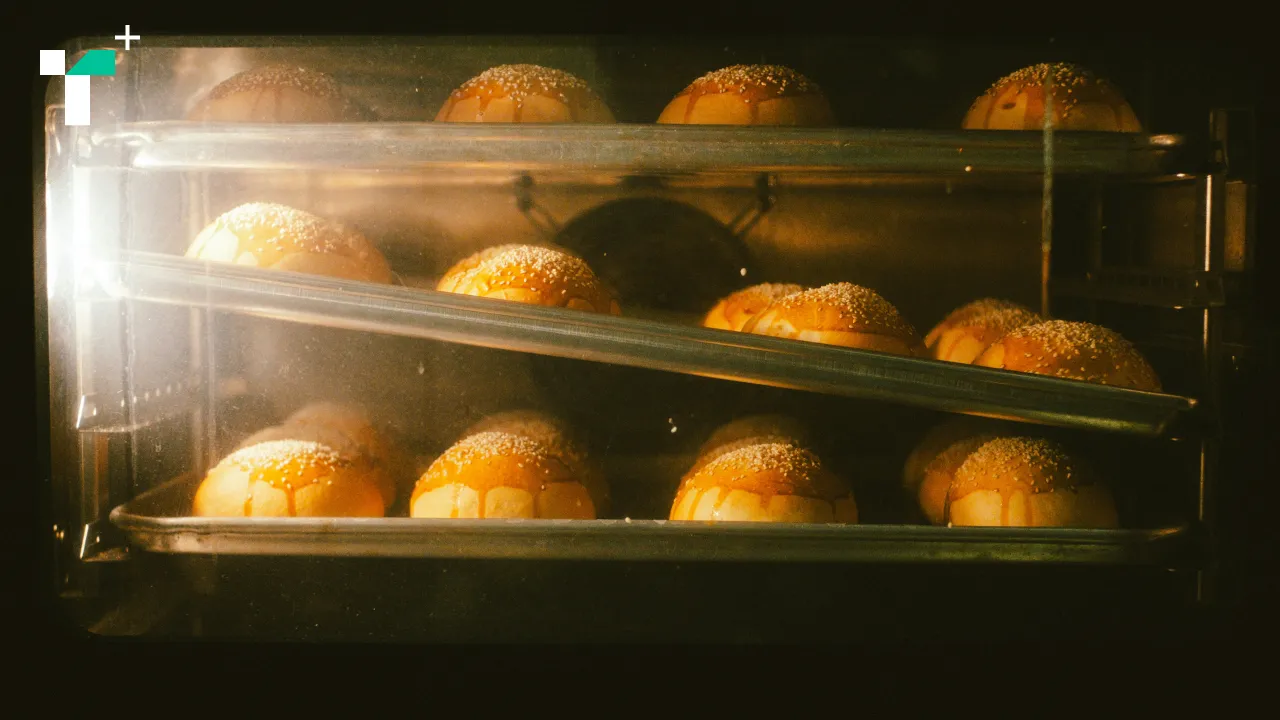
Have you ever eaten a dish, and its taste or texture brings your past vividly back to mind—childhood scenes emerging clearly as if happening right now?"}],
Although this experience has no specific name in Thai, French widely uses the phrase Madeleine de Proust, which refers to moments when smells, tastes, sounds, or certain sensations stimulate our senses and unintentionally awaken deeply emotional old memories.
This phrase originates from a scene in Marcel Proust’s 1913 novel Swann’s Way (Du côté de chez Swann), the first volume of À la recherche du temps perdu—a literary work deeply reflecting on memory, time, love, and the upper class.
In that scene, the narrator tastes a madeleine cake dipped in tea, and unexpectedly, the past floods back.
“When the tea soaked with madeleine crumbs touched the roof of my mouth, I was shaken unknowingly and felt something strange arising within me. In that instant, memories appeared— the entire town of Combray, its houses, streets, gardens, and people slowly forming, as if emerging from that cup of tea itself.”
From this small cake, the term Madeleine de Proust evolved into a phrase describing moments when the past comes alive through a brief sensory experience—what later became known as the Proustian moment. These moments reveal that the past is never far from the present but hidden in tastes, smells, and feelings waiting to be awakened.
The question is: why do smells or tastes have such power?
Neurologically, although sight, hearing, and touch can evoke memories, these senses’ signals must first pass through the thalamus, which filters information before sending it to the cerebral cortex for conscious analysis.
The olfactory system differs. Research by neuroscientists at Northwestern University shows the pathway between the olfactory system and memory centers like the hippocampus is direct, bypassing the complex processing required for vision or hearing. This allows smells to access memory stores more quickly and deeply.
At the same time, olfactory neurons connect to the amygdala, the brain’s emotional processing center. Together, this direct connection enables scents to powerfully trigger both memories and emotions simultaneously.
Therefore, it is unsurprising that certain familiar scents instantly stir the heart and transport us back to original moments vividly, as if the past never truly passed but simply awaits a small sensory cue to awaken it once again.
Because some childhood memories never disappear; they just hide in life’s small details, waiting for the right moment to return.
These experiences await discovery on the new show 'Tee Lang Wat,' which invites everyone to 'relive youth with Tee and explore history with Wat.' The program revisits childhood favorites, sharing stories and deeper understanding from an adult perspective, interwoven with historical facts and fun trivia that breathe new life and meaning into old memories.
Join the time-travel journey and uncover hidden stories from the past together on 'Tee Lang Wat,' airing every other Thursday at 7 PM on the channel.Thairath StudioThe first episode to awaken memories airs on 26 February.
References: