

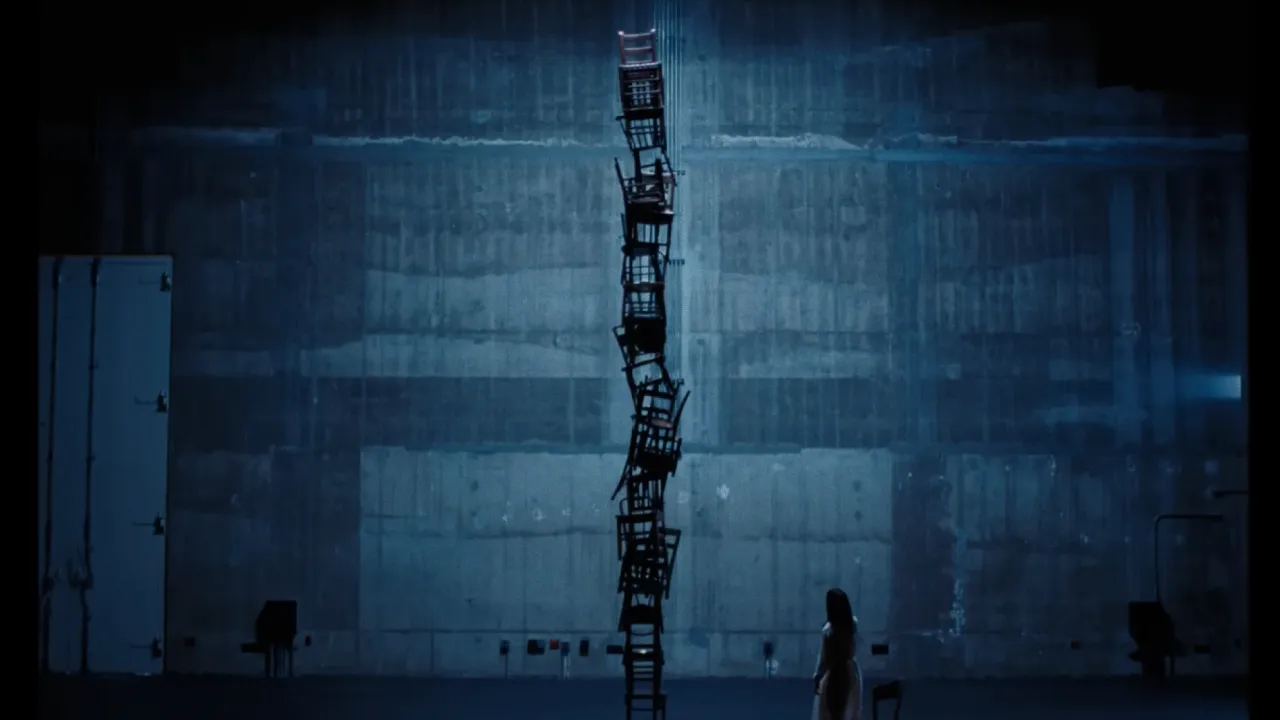
Having had the opportunity to see Mitski perform at the Fuji Rock Festival in 2019, what completely shattered my previous impression of this female singer-songwriter was her astonishing skill in both improvisation and performance art. This was very different from her quiet, reserved image offstage, as if she carried many complex stories hidden deep inside. Her songwriting and concert performances became her space of release.
Though nearly seven years have passed, what remains vivid in memory is Mitski’s spontaneous dance moves during the show, which seemed to harmoniously match the song’s content in a remarkable way. This aspect personally impressed me the most, making me eager to know more about her.
From the background of her songwriting, performance art, perspectives on herself and society, beliefs about love and politics, to her career as a Japanese-American female artist in the American music industry—where Asian artists often have to prove themselves much harder than American artists to gain recognition.
“Your Best American Girl” This song reveals her attitude toward social norms. It is one of the first songs you should listen to if you want to understand what lies deep within her, as it explores the conflict between “cultural identity” and “the desire to be loved.”
Mitski once gave an in-depth interview with NPR Music about this song’s meaning in terms of race and growing up in America. Being of Japanese descent, a culture that typically does not openly express deep emotions unless necessary, her true self was not fully expressed, and the love she longed for seemed out of reach.
She wrote this song to express the feelings of a Japanese woman trying to adapt to a lover who is an "All-American Boy." The song conveys her attempt to be the "best American girl" to be worthy of him, but ultimately she realizes her roots and identity are too different. This reveals inner conflicts related to cultural alienation and emotional insecurity that influence her experience of love.
Viewed this way, "Your Best American Girl" questions female identity in a male-dominated society, racial issues including anti-Asian discrimination in America, political contexts, and a lack of familial love and warmth—not her biological family, but being part of an "American family" socially—leading to a feeling of alienation.
Mitski does not stick to one musical genre but uses genres to serve the content of her songs. "Your Best American Girl" is a grunge song, a "symbol of whiteness," using heavy distorted guitar to express the frustration and anger of an Asian person trying to fit in. The distorted guitar in the hook expresses rage and discomfort in adapting, paralleling her use of foreign music styles to "claim space" in a land where she is seen as an outsider—namely, the U.S.
This song eerily predicted the governance of Donald Trump, as his administration’s policies have been arguably the most openly racially exclusionary and divisive in American history, rivaling even pre-Civil War times before Abraham Lincoln abolished slavery.
Though not a fortune teller, Mitski is highly sensitive in songwriting, connecting her personal beliefs with observations of an increasingly alienating society holistically. Her lyrics carry layered symbolism while remaining straightforward and seamless.
Mitski’s songwriting skill was not innate; she earned acclaim through life experiences that gradually refined and distilled her thoughts. Even now, her perspectives continue evolving, never settling.
Many artists regard Mitski as one of the most skilled female songwriters of her generation. Here are some notable endorsements.
Iggy Pop, punk legend from The Stooges, told BBC 6 Music in 2018 that Mitski is a rare talent. He considers her among the most progressive and avant-garde American songwriters he has ever known.
Michelle Zauner of Japanese Breakfast, a close friend, praised Mitski’s authenticity in singing and songwriting, saying watching her perform was inspiring. Phoebe Bridgers, often grouped with Mitski among the best female songwriters of the 21st century, also admires her. Lorde shared Mitski’s "First Love/Late Spring" on her personal playlist, helping Mitski rapidly grow her fanbase.
Harry Styles, who toured with Mitski, highly praised her music, inviting her to open for his major 2022 Love On Tour, according to Crack Magazine. Florence Welch of Florence + The Machine, who co-wrote "Buckle" with Mitski, called collaborating with her a valuable experience, admiring her creativity and discipline.
All these artists agree Mitski bravely reveals deep personal emotions through songwriting, even if it exposes private wounds. On stage, she uses every space to express inner complexity with vocal shifts, loosely structured music for improvisation, and freedom in movement.
Mitski’s real name is Mitsuki Laycock, born 27 September 1990 in Mie Prefecture, Japan. Her father is American, her mother Japanese (she now uses her mother's surname, Miyawaki). During childhood and adolescence, she traveled frequently due to her father’s diplomatic career, living briefly in Turkey, China, Malaysia, the Czech Republic, and Congo before settling in the U.S. In her teens, while visiting Japan, she worked with an entertainment manager who wanted her to become a pop idol due to her cute appearance. She sang in her high school choir. After writing her first song at 18, playing piano while living in Ankara, Turkey, she never stopped composing.
She enrolled at Hunter College in New York to study film but transferred to SUNY Purchase College’s Conservatory of Music to study songwriting and professional studio work. While a student, she released her first two albums—"Lush" (2012) and "Retired from Sad, New Career in Business" (2013)—both chamber pop focusing on piano and orchestral sounds, with hints of punk rock, lo-fi, and freak folk (a psychedelic folk subgenre). These albums deepened her understanding of classical music structure, which she later applied to her work.
After graduating, Mitski briefly sang for a progressive metal band called Voice Coils before releasing her third studio album "Bury Me at Makeout Creek" (2014). This album featured raw, aggressive guitar sounds, a clear departure from her earlier classical-based music. Although it sold poorly, it received unanimous acclaim from indie music critics in America and worldwide.
Diving deeper, Mitski’s music tells women it’s okay to cry, as tears help each woman understand herself uniquely. One day, every tear shed will lead a woman to her true identity. Mitski once said, “Women’s tears may taste similar, but the inner shapes of every drop are unlike the feelings in men’s tears. I learned life from that.” Her songs comfort women, helping them see their own worth.
Mitski’s music embodies the Female Gaze, creating art by women for women without judgment. Her songs are open-ended questions guiding listeners to reflect. Many reveal her clear view that women’s tears are beautiful scars hiding joy within pain.
“Class of 2013” This song symbolizes fragility at its most broken point. On the surface, it speaks of longing and missing something lost, but deeper, it expresses Mitski’s exhaustion growing into adulthood in a harsh world with limited freedom for women.
It feels like permission for everyone, especially women, to cry—like a troubled girl oppressed by society deciding to return to her mother’s embrace. The lyric “Mom, I'm tired. Can I sleep in your house tonight?” shows confusion and hidden tears, accepting that we don’t have to be someone we’re not. We don’t have to be strong all the time; sometimes the best comfort is daring to cry in a world where everyone tries to smile despite overflowing tears.
“Last Words of a Shooting Star” This song conveys the calm after a storm of tears has dried. The peace comes even after a home has fallen apart—a great loss, yet what endures through harsh storms is what truly shows our identity. The lyric “And did you know the liberty bell is a replica. Silently housed in its original walls” suggests discovering cherished objects, growth marks on walls that resist storm’s pull, and many things that even the worst cannot take from us. This represents finding freedom, self-worth, small joys, and hope remaining despite deep sorrow.
“I Bet On Losing Dogs” Mitski uses her experience of struggling to surrender to uncontrollable forces to tell a story reflecting the internal conflict everyone faces when bravely confronting pain mixed with fear to see hope one last time.
This song connects with the earlier idea that “Ultimately, tears help us understand ourselves.” Though tears initially distance us from self-knowledge, as we face more loss, their shape changes until it matches our true identity—like in this song. “Betting on a losing dog” doesn’t just mean placing money on an underdog but symbolizes relationship endings, possibly death or farewell.
Seen less deeply, it describes how people, especially women, often choose to love relationships they know will end. They seek not lasting happiness but familiar feelings from being the underdog.
She doesn’t flee the tears falling down her cheek; instead, she watches them, as the lyrics say, “Looking in their eyes when they're down” offering refuge to anyone feeling low, and “love” that continues caring for those she loves, even on their saddest days, watching them with understanding.
The shapes of tears from different feelings are not just abstract symbols in Mitski’s songs but have been physically observed. In 2008, American artist and photographer Rose-Lynn Fisher created an art project called “The Topography of Tears” which used light microscopy to examine the dried structure of tears.
Fisher asked herself, “Do tears of sadness differ from tears of joy?” She collected over 100 tear samples from herself and acquaintances in various situations. Detailed study showed tears from laughter are delicate and dispersed, tears from longing appear orderly yet vast, and tears from sorrow are dense and complex like tree branches.
This shows tears are not just ordinary eye fluid but an “emotional map” revealing the complex feelings hidden within humans—just like Mitski’s music, which tries to express intangible emotions concretely.
Mitski’s songs consistently explore love, loss, encouragement, irony, and fleeting happiness. Her music doesn’t convey these themes directly but reflects the “foundations of systems” underpinning life, weaving personal experiences into stories that invite listeners to interpret and question rather than provide answers. Beyond individuality, she uses music to express despair about politics, environmental destruction driven by capitalist exploitation, and major international conflicts causing irreparable diplomatic rifts—such as war and new colonialism.
Modern colonialism takes many forms, but Mitski’s music most strongly reflects “cultural imperialism,” a form that invades inner territories rather than external lands. It creates the illusion that if you are not fully American, you exist in a no-man’s land between opposing borders—unclaimed because it’s too risky to possess.
Cultural imperialism convinces foreigners, immigrants, and refugees to want to become part of a powerful country’s population. It is propagated through media to stir nationalism and dictate rules that diminish individual human value without their awareness.
This causes “mental colonialism,” where foreigners feel inferior about their roots and struggle to meet Western or imperialist cultural standards.
If you wonder whether Mitski’s music really reaches this depth, the answer depends on interpretation, but it’s undeniable she deeply contemplates ethnicity and the erasure of traditional racial and cultural identities.
"Be the Cowboy" (2018) is highly acclaimed, considered one of her best works. Though an indie rock and art pop album, its concept stems from imagining herself as a cowboy roaming the Western frontier—neither fully Western nor Eastern—and questioning whose land she truly travels on.
Mitski is a storyteller who always sees two worlds: the real world and how outsiders perceive us, which never fully align. Drawing from this liminal experience, critics say her music makes listeners feel they don’t own anything or clearly feel good or bad, inhabiting a middle emotional ground. Her songwriting skill creates atmospheres evoking existence in different worlds, places, or cultures, making listeners feel like wandering spirits in a world owned by no one.
Mitski once said, “I grew up moving constantly. It made me feel nothing was permanent. I’m from nowhere. Everything is temporary. This made me feel I truly own nothing.” This fuels her songwriting, which invites listeners as mediums to places she longs for but cannot reach.
One of the most frequent questions Mitski receives is about her songwriting process, her influences, and how her methods have evolved since her first song. She replied,
“It’s funny because after years of interviews, when I write songs now, a voice in my head is always thinking how to explain things. Deep down, I have all those interview questions swirling like endless scrolling info. Whenever I write or think, it flashes: ‘If you write that, you’ll be asked to explain it,’ or ‘If you write that line, you’ll be questioned about the symbolism.’ Now, I have massive info running through my brain while working, unlike university days when I could finish a song in 30 minutes.”
“I don’t know if that’s bad or maybe good because it makes me critique my work more. But I keep writing; my style has changed. I think it’s pointless to cling to old ways when we’re no longer the same people or in the same place.”
“I think it’s much better to understand how we write now and go with the flow. That’s more creative than clinging to old songwriting contexts because you can’t go back to who you were or unlearn what you’ve learned.”
"The Land Is Inhospitable and So Are We," released in 2023, blends Americana, country, folk, and orchestral pop. Critics praise it as a beautiful, emotionally naked album expressing Mitski’s essence. If "Be the Cowboy" was a mask for role-playing, this album removes the mask to accept the vast, lonely land with understanding.
The album’s concept explores love as the most enduring resource. Mitski said she wanted to explore the idea that “Some things in this world may be harsh and unwelcoming, but love is the one thing we truly own.” She compares that when people die, what remains is not themselves, but “the love we gave to everything.” Though the music carries the broad landscapes of America through folk and country sounds, Mitski views this from a narrow, alienated perspective, questioning how one can find a place in such an unwelcoming land. She seeks her own place in a space for the displaced, differing from "Be the Cowboy," where she portrayed herself as a wandering spirit not fitting in.
"My Love Mine All Mine" is the album’s most famous song, climbing global charts—#1 on the UK Indie chart and #26 on Billboard Hot 100—and gaining popularity across social media platforms after her song "Nobody" went viral on TikTok in 2020.
The melody is beautiful, with intentional ambiguity to reach everyone. One poetic lyric is: “Cause my heart, it's beating, I'm taking my heart to the night. And moon, tell me if I could send up my heart to you? So when I die, which I must do. Could it shine down here with you?”
Meaning: “Because my heart still beats, I ask to send this heart soaring into the night. Oh moon, please tell me if I can entrust my heart to you. Because death will come to me, and when it does, will my heart still shine down here with you?”
Mitski realizes she truly owns nothing in this world except love. When she can no longer hold it in life, entrusting it to the moon to shine every night makes her love eternal. The next lyric beautifully continues after this love is entrusted to the moon:
“Where I'll be looking in their eyes when they're down. I'll be looking in their eyes when they're down,” meaning “At the moment I watch deeply into their eyes when they are discouraged, I will be watching their eyes when they are in pain.”
Of course, human life is mortal, and Mitski’s philosophy of Memento Mori is fully present in this song. Using the moon as a symbol of eternal love shining down evokes timeless heartbreak songs like Teresa Teng’s “The Moon Represents My Heart.”
Music critics clearly categorize the genres Mitski plays on each album, often analyzing deep musical structures related to lyrics. In essence, Mitski does not cling to any one style but selects instruments and genres fitting each song’s content to create an atmosphere that immerses listeners into her personal world.
Early in her career, Mitski used complex, academic music as a music student to express deep vulnerability, employing classical music driven by piano, organ, and string ensembles, such as "Liquid Smooth" from "Lush," a chamber/pop song infused with jazz elements conveying a woman’s peak beauty fading away. Strings create melodies reflecting fragile, unstable mental and aesthetic states.
Song “Goodbye, My Danish Sweetheart” from "Retired from Sad..." combines baroque/pop and vaudeville—a mixed live performance art with singing, dancing, and comedy—using rhythmic elements reminiscent of old theater to express fractured relationships and self-examination. The music’s cheerfulness contrasts intriguingly with the tragic lyrics.
When expressing anger, intense emotions, and frustration, Mitski uses distortion and overdrive effects to drive raw guitar sounds. For example, "Your Best American Girl" from "Puberty 2" uses alternative and noise rock to depict the struggle to fit in with foreign culture in America, ultimately futile. The explosive guitar in the hook is like an outburst accepting a differing identity. "Townie" from "Bury Me at Makeout Creek" is garage and punk rock intentionally using raw, chaotic guitar to reflect a young woman’s confusion and struggle to behave properly in a conservative society.
On "Be the Cowboy," the song "Nobody" uses more groove-based music to show social performance and masking. The song talks about loneliness and longing for understanding, but the music is new wave, funk, and disco rhythms, encouraging dance to show how sometimes people mask sadness with cheerfulness at parties where no one truly knows their real selves except themselves.
Song “Working for the Knife” from "Laurel Hell" is industrial pop and synthwave, similar to Lady Gaga’s "Mayhem" album. It conveys exhaustion from capitalist pressures to produce work. The cold, mechanical synths express feelings consumed by systems and rules clashing with human freedom. She also uses folk and gospel in "Bug Like an Angel" from "The Land Is Inhospitable..." to express nature’s unembellished beauty. The song’s quiet acoustic guitar interspersed with choir shouting “Family!” resembles a church confession, combining peace, courage, and awe. “Family!” ,
Mitski does not let genre dominate content but uses music to amplify emotions, an effect rare among her peers.
In early to mid-February, Mitski released two new singles: “I'll Change For You” and “Where's My Phone?” Both are from her eighth studio album, released on 27 February. At the time of writing, the album is unreleased, but fans and critics worldwide anticipate it will rank among the year’s top 10 best albums.
“I'll Change for You” is from a special project called “This Is Where We Fall” (2021), the soundtrack for a sci-fi horror novel by Chris Mikiewicz, with illustrations by Vincent Kings. The song discusses the desire to change oneself completely to be desired by another, questioning identity and adaptation even if it means losing one’s nature. This resonates with modern society where youth often alter themselves on social media platforms to the point of losing their true selves.
“Where Is My Phone” was written while Mitski was a student at SUNY Purchase and part of the band Voice Coils. On the surface, it’s about losing and searching for a phone.
This song dates back to her college days (around 2009-2011) with Voice Coils. Mitski’s songwriting is never straightforward; beneath the surface, this song reflects anxiety about identity loss. Losing a phone today often means losing one’s constructed digital identity (Instagram images, Facebook statuses, TikTok alter egos). This deep chaos fits the alternative rock song’s psychedelic and progressive rock influences. Its music video is bizarre yet fascinating, reflecting the song’s core.
Mitski will perform in Thailand as part of the "Mitski presents Nothing’s About to Happen to Me" tour on 16 July at UOB Live—her first concert in Thailand. The promoter is AEG Presents Asia. Ticket prices for rear seating zones are 2,600 and 3,000 baht, while front standing zone (A) is 3,400 baht and rear standing zone (B) is 2,800 baht. Tickets are available via Ticketmelon.
Having seen her show, I can guarantee fans will experience what they expect and even more beyond expectations.
This is a highly recommended potential concert of the year you should not miss.
References: