

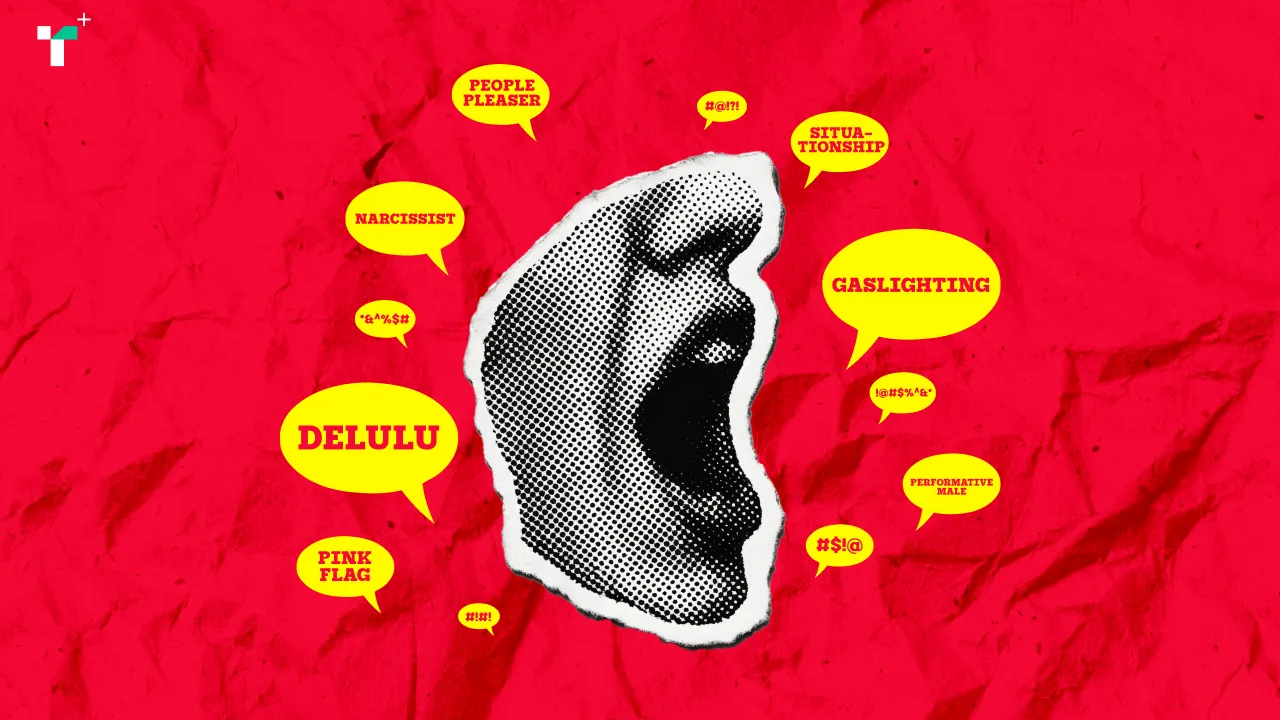
“This person is so toxic...”
This short sentence often instantly evokes empathy. It sounds like a well-considered analysis that grants one the right to distance themselves reasonably. But imagine a few years ago saying the same thing in Thai with more emotional terms like “This person is so damn awful...” The reaction would likely be disapproving stares or complaints that we are speaking ill behind someone's back.
An interesting question is: why do modern Thais "choose" to use English words even though suitable Thai words already exist?
Welcome to an era where netizens’ dictionaries are invaded by English terms that sound global. We elevate venting emotions into something like diagnosing human behavior. Borrowing foreign words in Thai contexts may not just be a linguistic fashion but a profound strategy. We borrow words not only for style but also as a protective shield to vent negativity towards the world and people without risking others 'throwing negativity back' at us.
This is not merely about language taste but concerns psychology, identity, and shifting thought structures.
From a sociological perspective, language is not only a means of communication but also a resource reflecting status and power. As Pierre Bourdieu proposed with the concept of "linguistic capital," certain language skills can translate into opportunities and bargaining power in society. In the Thai context, English is closely linked to economic and social infrastructures, including standardized education and multinational workplaces.
Choosing loanwords like “We need to align first” instead of using Thai in the same context is not merely for convenience. In social psychology terms, this is impression management to convey professionalism and global outlook. Such code-switching signals background and access to international knowledge sets, enhancing credibility and symbolic advantage in highly competitive communication spaces.
In a world where conflicts can arise with just a fingertip, humans have developed instincts to survive through more sophisticated language. The phenomenon of transforming blunt insults like "selfish person" into psychological terms like Narcissist, or renaming behaviors like "manipulating and distorting truth" as Gaslighting, is not just a display of knowledge but a labeling mechanism to gain superior communication power. Using specialized terms shifts one's role from "party involved" to "diagnostician," granting immediate moral high ground. Our words no longer seem like impulsive emotions but carry scientific credibility no one can easily dispute. This strategy allows us to criticize others directly while maintaining a safe position as educated and mature individuals.
Besides being communication weapons, these fancy terms also subtly absorb impacts. Researchers from the University of Chicago explain through the Foreign Language Effect that using a second language or foreign words to describe emotional issues creates immediate emotional distance in the brain. This is because the mother tongue connects to the amygdala, the emotional center developed since childhood, while English is processed more in the prefrontal cortex, associated with analytical thinking and reasoning.
The online world plays a huge role in spreading vocabulary through platforms like TikTok or Instagram. Terms like Red Flag, Green Flag, or Main Character Energy often lack concise, powerful Thai equivalents; translations tend to be lengthy and lose original impact. Psychologically, the brain prefers short terms with clear imagery (cognitive efficiency).
We also use English as identity labels such as Introvert, Empath, or People Pleaser to condense complex inner worlds into short packages. Labels help people understand themselves more easily and create experimental identity spaces (sandboxes) online. For example, saying “I’m just setting boundaries” literally means “Don’t cross the line; please be considerate.” In Thai society, which values seniority, respect, and group harmony, such directness is often viewed negatively as "aggressive" or "blunt." However, framed in English, the meaning shifts to mental health and self-care.
The Sapir-Whorf Hypothesis on language and culture relationships suggests that choosing the word Boundaries reflects how language shapes reality perception. Since Thai lacks a short, emotionally neutral equivalent, borrowing English imports a conceptual framework about rights over emotional space that was not clearly defined before. It also reduces cultural friction, turning "rejecting others" into "affirming personal rights."
When relationships reach a zone where clarity becomes burdensome, fancy English terms are used to protect feelings. The emergence of the term Situationship clearly exemplifies using language to soften expectations. Defining ambiguous status as Situationship—neither lover nor friend—helps avoid facing the reality of not being anyone’s main person, yet frames it as a lifestyle choice of independence and flexibility favored by younger generations. Such labeling balances egos, preventing feelings of losing in love and instead portraying oneself as "exploring" socially acceptable gray areas.
Similarly, behaviors like abruptly disappearing (Ghosting) or screening others through labels like Red Flag, Green Flag, or Pink Flag function as powerful emotional distancing mechanisms. Communication researchers find that having specific terms for these behaviors creates social scripts that make situations seem more neutral. Calling someone who left a “Ghoster” changes the pain of rejection into a common phenomenon worldwide. Normalizing it replaces “What did I do wrong?” with “This happens to everyone.” This mechanism protects self-esteem from collapsing into self-blame. These terms act as effective shields helping us manage disappointment gracefully.
Beyond using language to cope with others, these technical terms also protect self-image. Psychologically, humans employ self-serving bias—explaining our mistakes in flattering ways. We often use the term Burnout in personal and workplace contexts to express feelings of "laziness" or "lack of motivation" because Burnout implies an uncontrollable external cause, like excessive workload or systemic pressure. This shifts responsibility away from the individual, portraying us as victims deserving sympathy rather than inefficient in others’ eyes.
Similarly, the term Delulu (from Delusional) exemplifies reframing denial into something cute and relatable. Psychologically, it creates a positive illusion—distorting reality in a hopeful way to endure a harsh world. Saying “Delulu is the solulu” (with solulu from solution) turns the shame of daydreaming into confident humor. These terms act like filters blurring our flaws into socially forgivable traits, helping us live with our imperfections.
The popularity of English among modern Thais thus reflects not just fashion but globalization, social ambition, and negotiating traditional culture. English does not replace Thai but fills gaps Thai still cannot address.
An interesting observation is that English words widely adopted in Thai today tend to be psychological terms, reflecting how Thai words often carry a heavy moral judgment framework (e.g., lazy, selfish, crossing the line). In contrast, using English shifts narratives into a psychological framework that appears more neutral and scientific. Here, English functions not just as communication but as a tool to rebrand feelings once seen as aggressive or weak into recognized issues of rights and self-care in global society.
In reality, language is a living entity constantly changing. The key is not whether we "should" use certain words but understanding "why" we use them. If used to communicate more clearly, it is evolution. But if used out of fear of seeming unskilled or outdated, it may reflect inner insecurity. Ultimately, every word choice reflects not just its meaning but our mindset amid a rapidly changing world.