

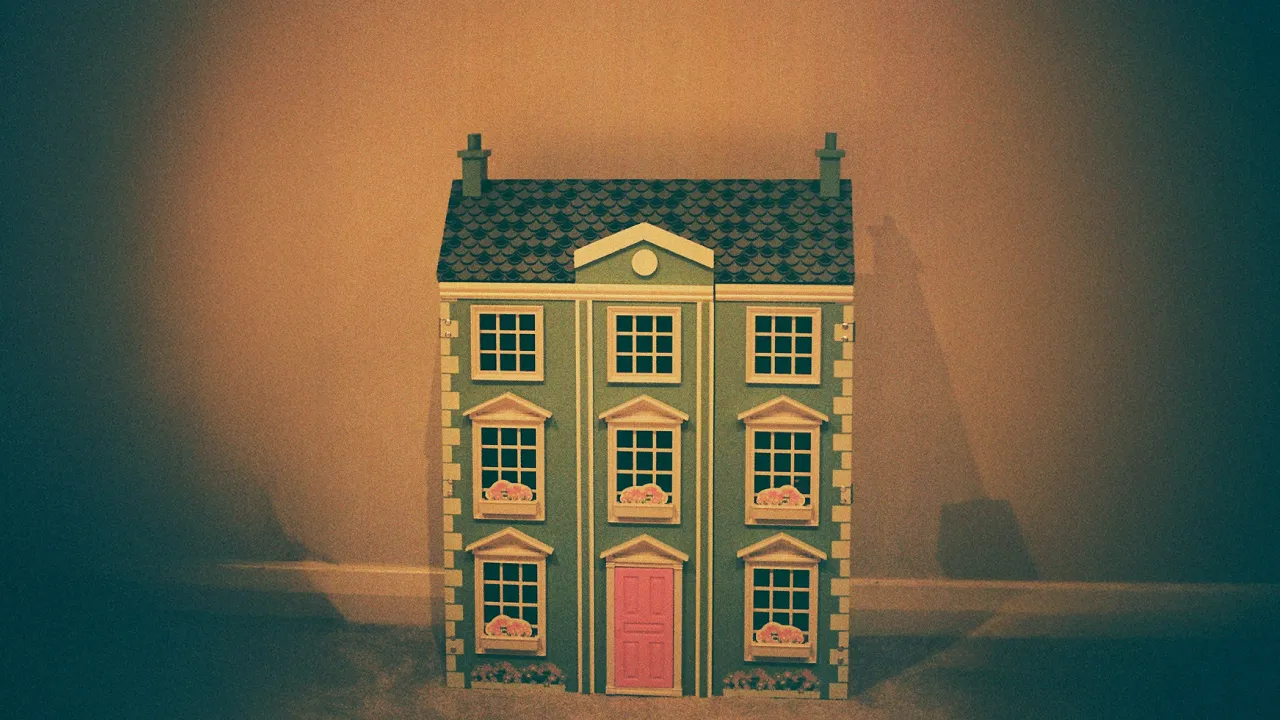
We may have believed that a "home" is a spiritual crucible that shapes siblings living under the same roof to share roots, mindsets, and ways of life, and similar life paths.
We have the same parents or guardians, share countless toys, clothes, and meals together, and even face family crises, playing the role of observers to our parents’ emotional storms in unison. So, it’s no surprise that many assume growing up in the same environment means sharing equal joys and wounds.
But as time passes, many begin to wonder why our brother travels abroad while we work overtime to send money home, or why my sister laughs at dad’s jokes while I feel like a stranger in the house.
Why do they seem to have survived, yet I have become the odd one out...
Over time, we start to see a truth different from what we believed. Often, siblings differ greatly: one grows into a bright person with a warm family and a life lived as they wish, while the other grows carrying wounds, struggling to maintain fragile relationships, bearing emotional exhaustion, and yearning desperately to be seen—even though both watched the foundations of their home crumble together.
"If we grew up in the same house, why am I the only one broken?"
We tend to believe that parenting style, family status, parents’ personalities and relationships, or housing constitute a "Shared Environment" that should mold siblings alike. However, research by Robert Plomin (1987), a psychologist and behavioral geneticist, confirms that shared environments have less impact on sibling personality differences than thought. What truly influences is the "Non-shared Environment," meaning each child’s specific experiences even within the same home. Imagine a night when parents argue loudly—an adolescent sister secretly listens under the stairs, waiting to comfort their crying mother, unknowingly learning that "my role is to care for the family’s emotions." Meanwhile, her eight-year-old brother is shooed away to his room, hearing only silence and his own voice.The distant sound of falling objects.For him, this home may just sometimes be too quiet. They grow up in the same house but experience completely different stories.
Thus, we often see siblings "having different versions of parents" at different times. The firstborn may grow up with parents struggling through financial crisis and job stress, witnessing them before they learned how to cope or how to parent for the first time. When a younger sibling arrives, many things may have changed—improved economy, more stable parents, or an older sibling acting as a "wall shielding the storm," allowing those behind to grow in calmer surroundings.
In some families, these differences don’t just come from fluctuating storms but also from the different times each child lived in the same home. One sibling might have experienced the years when the family was whole, sharing meals or holiday outings with parents more often. Another grew up in the same house but during a time when some seats had already become empty. Looking back, their memories of "home" differ: one recalls the laughter clearly, while the other knows the home through the silence replacing those who left.
Besides differing personal experiences, another hidden factor lies in genetic codes, which determine how each child interacts with the world—what psychologists call Genotype-Environment Correlation. This theory explains why two children react so differently to the same family fractures.
Some are born with greater emotional sensitivity. They are like sponges absorbing anger, sadness, or coldness at home more quickly. Even a heavy sigh from their father or a tearful mother can flood their emotions. It takes them a long time to recover, often feeling twisted and fragile. This is Reactive or Evocative Correlation, where a sensitive nature unknowingly draws reactions from others. These sponges, who appear to endure more than others, learn to be silent and perfect to prevent the home from breaking further. Perhaps a small hope lingers in that sponge—to one day become an oasis where moisture nourishes themselves and their family, not a burden to absorb.
Meanwhile, another child may better separate emotions from reality, like a drainpipe. The events at home flow through them too, but instead of holding onto them, they learn to let them pass, flowing away unseen. This instinct is Active Correlation, where individuals use personal traits to select environments that help their survival. They are not tougher; their nature simply isn’t made to hold every drop of the home’s storm. And sometimes… just because they still stand in the same place doesn’t mean they haven’t been soaked by it.
Dr. Jonice Webb (2012), an expert on Childhood Emotional Neglect (CEN), explains that pain doesn’t stem only from violence, scolding, or physical abuse, but from the "emptiness" parents leave behind. Emotionally unintelligent parents often cannot see their children’s true selves equally. Some children grow up with many basic needs met—four, five, or six factors—but no one ever visits their feelings or asks, "How are you today?"
Imagine a child returning home from school wanting to share being teased or praised by a teacher, but the mother is stressed, the father tired, the older sibling at work, the younger sibling playing games. The child gradually learns their feelings are not important enough to be heard. That child may grow into a strong, responsible adult who cares well for others but deep down doesn’t know who to turn to when in pain.
Sometimes, when adults cannot fully hold their children’s feelings, that emptiness doesn’t disappear but slowly gets filled by someone else in the home. Some children learn not only to keep their own feelings silent but also to care for others’ emotions instead.
The eldest child in a home with crumbling foundations often faces Parentification, where the child switches roles to become the family’s pillar, expected to be both caretaker and emotional supporter.of the family.Left alone, they sacrifice the bright youth they should have had to support the collapsing family structure. Though wanting a life of their own like others, they become adults worn out emotionally. When this pillar bears a massive load, the youngest sibling often has enough emotional space to build the life they desire. This painful contradiction means one survives because another allowed themselves to break.
Psychologically, Pete Walker's theory identifies four fundamental trauma responses known as the 4Fs: Fight, Flight, Freeze, and Fawn. These are basic nervous system instincts when facing threats. If the family is likened to a house, these are the different materials that respond differently to a raging storm.
However, Annie Wright (2022), a psychotherapist specializing in childhood trauma, points out that in fragile homes, siblings not only react differently to wounds but also gradually assume different roles to maintain family balance. When a house begins to tilt, each child is pushed to stand in different structural positions so it can remain upright. These roles often appear as "opposites" and leave lasting marks into adulthood, most notably these two roles:
- The Fawn: A child who tries to fix everything. They quickly learn that if they are cute enough, patient enough, or take blame for others, family tension may ease. These individuals often grow into relationship caretakers, willing to get soaked themselves so others stay dry. Their later breakdown is a silent scream: "Please see my pain."
- The Flight: Another child who learns that the safest way to protect themselves is to create distance. They may throw themselves into studies or their private world to prevent household chaos from consuming their life. They aren’t cold-hearted, just choosing a survival path. They may build new lives far from their original home, but deep down still carry memories of the storms that once battered that structure.
In Thai society, which highly values gratitude, the role of the "family caretaker" often doesn’t end in childhood. Children who were the family’s pillars may grow into adults who still feel responsible for the family’s survival. Sacrifices made to keep the home standing gradually become emotional burdens hard to lay down, while other siblings may openly build beautiful new homes. Sadly, when the family’s main supporter starts to tire or falter, they often face questions about their gratitude, even though those cracks may be proof of sacrifices made beyond their limits.