

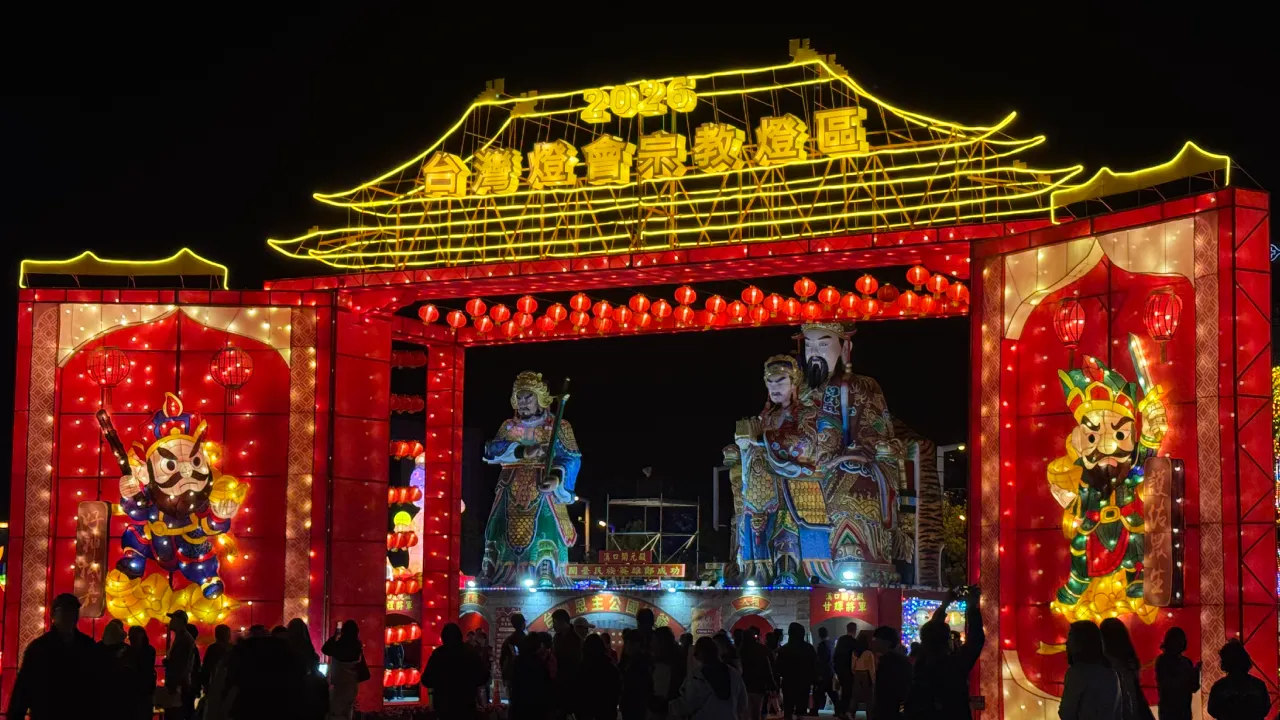
At this time of year, anyone visiting Taiwan should consider attending the Taiwan Lantern Festival, a major event that draws visitors nationwide and encourages them to explore the host city as well.
In 2026, the festival returns for its 37th edition in Chiayi City, held from 3 to 15 March across 16 exhibition zones around Chiayi HSR Station, the Southern National Museum, Taizi Boulevard, and Chiayi County Government Building Plaza. All works are created by international artists under the theme 'Glow with Taiwan, Light Up Chiayi.'
The Taiwan Lantern Festival has existed for nearly 40 years, originally held at various temples across Taiwan. In 1990, Taiwan’s Ministry of Tourism recognized its importance for attracting visitors and consolidated the events into a single festival to support cultural tourism through crafts and storytelling about Taiwan’s heritage for global travelers. The first festival was at Chiang Kai-shek Memorial Hall in Taipei before moving to other cities from 2001 to promote tourism beyond Taipei. The event’s core symbol is the zodiac animal of the year—in 2026, the Fire Horse—represented by a large flaming horse display.
The Taiwan Lantern Festival did not originate from the Ministry of Tourism but evolved from a traditional practice derived from China’s Lantern Festival or Yuanxiao Festival, dating back to the Han dynasty. It began from Emperor Ming’s Buddhist devotion, observing monks lighting lamps in honor of Buddha on the 15th day of the lunar calendar’s first month. The emperor showed respect by ordering homes, temples, and palaces to light lamps on that night.
Another legend says that on the 15th day of the first lunar month, the Jade Emperor ordered the city to be set aflame because he was angered that villagers had killed his favorite goose. The villagers quickly lit fires and firecrackers to simulate the city burning to deceive the emperor.
In reality, the 15th day of the first lunar month marks the first full moon of the lunar year, which is reflected in the festival’s name: 'Yuan' means 'first,' and 'Xiao' means 'night,' together meaning 'the first night of the full moon.' The full moon is considered auspicious, a time for family gatherings and meals. The date also precedes the planting season, so the celebration likely combines agricultural and religious good wishes.
If you miss this year’s festival, there is no need to worry, as Taiwan holds this event annually. Keep an eye on announcements to learn which city will host the 2027 festival and what exciting themes will be featured.
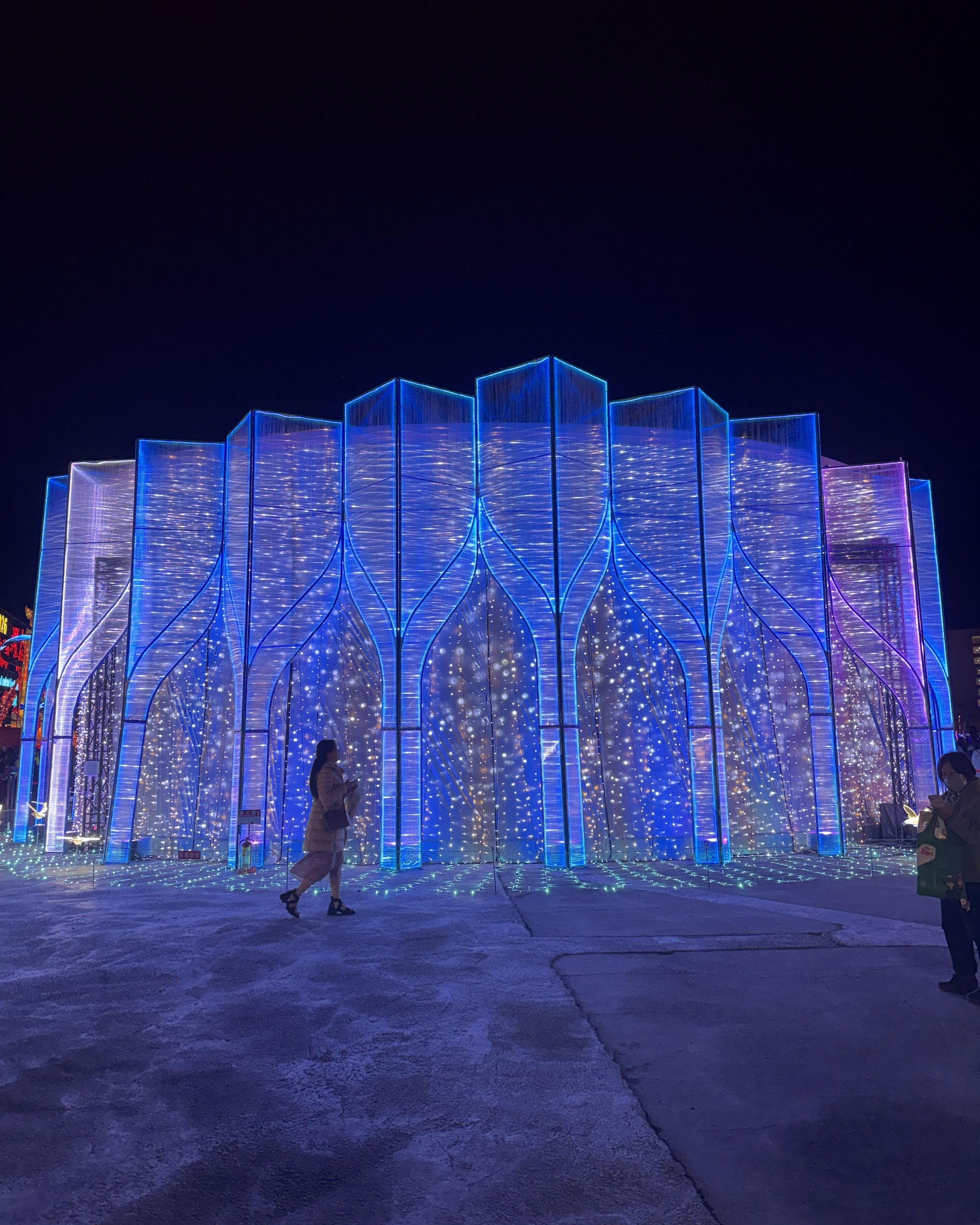
Salt Fields Reflected by the Tides
This installation is designed as waves and droplets, symbolizing inner energy. It is interactive, emitting light pulses when touched, blending technology with the unpredictable environment like ocean currents.
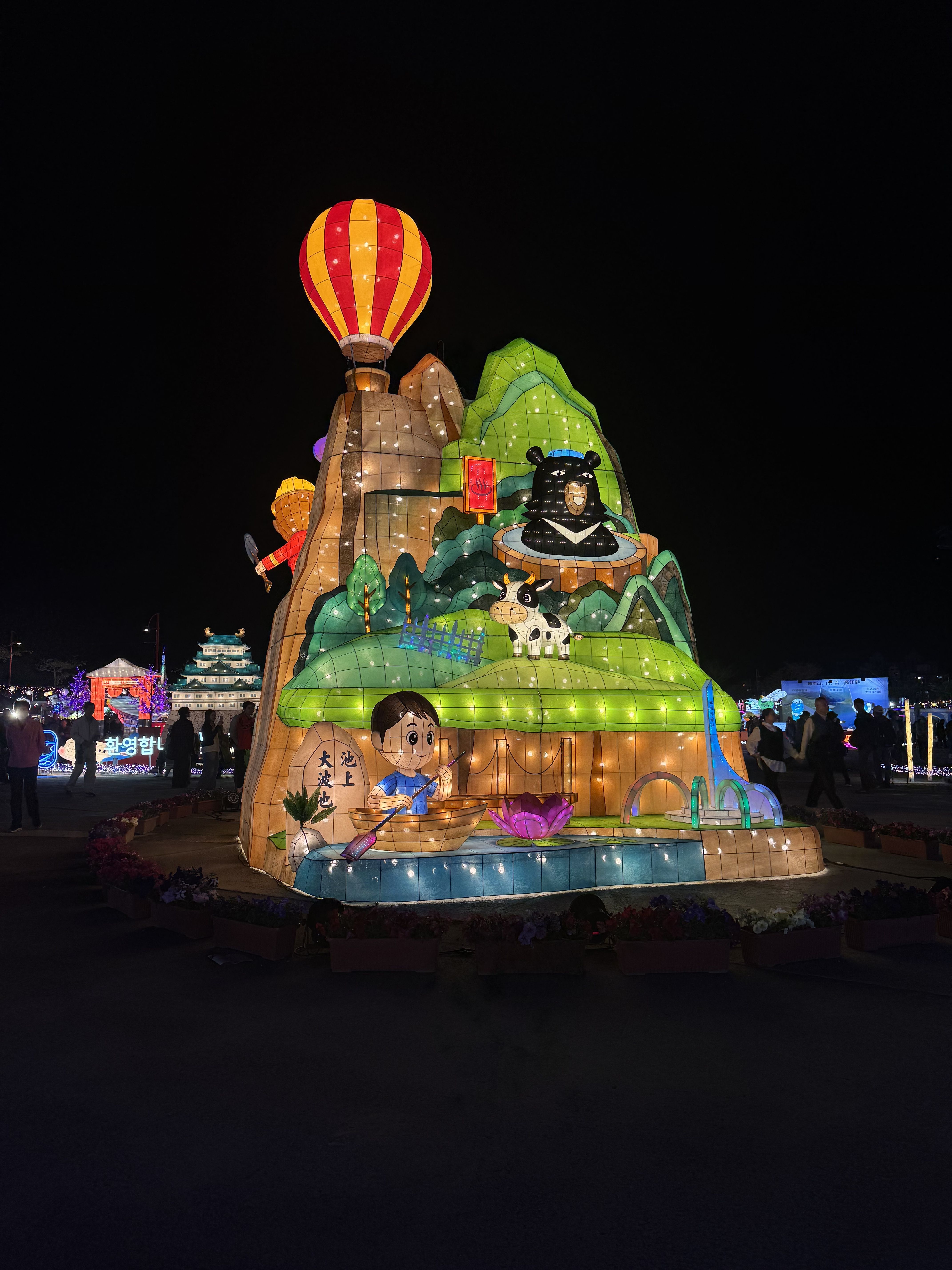
Echoing Swells, Mountain to Sea
This work centers on the East Rift Valley viewpoint, merging natural scenery, cultural charm, and imagination through visual art. Blue and green tones represent majesty, while waterfalls, animals, and caves depict ecological diversity and mystery.
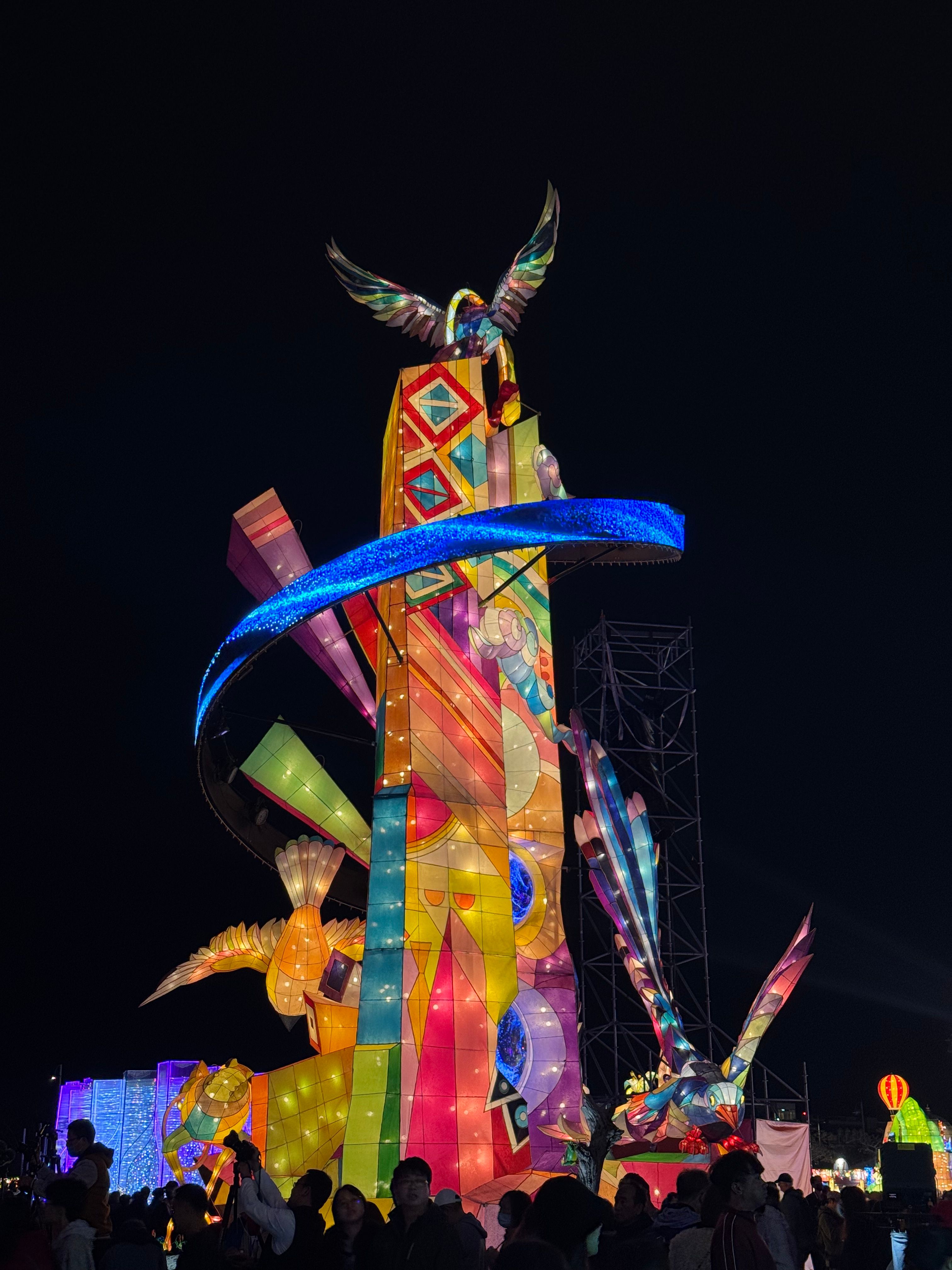
Firebird Rising
Standing 13 meters tall, this piece references a sacred tree and legendary firebird, illustrating the connection between humans and animals. It conveys dialogue and cooperation among people, animals, and nature, combining traditional crafts with modern technology.
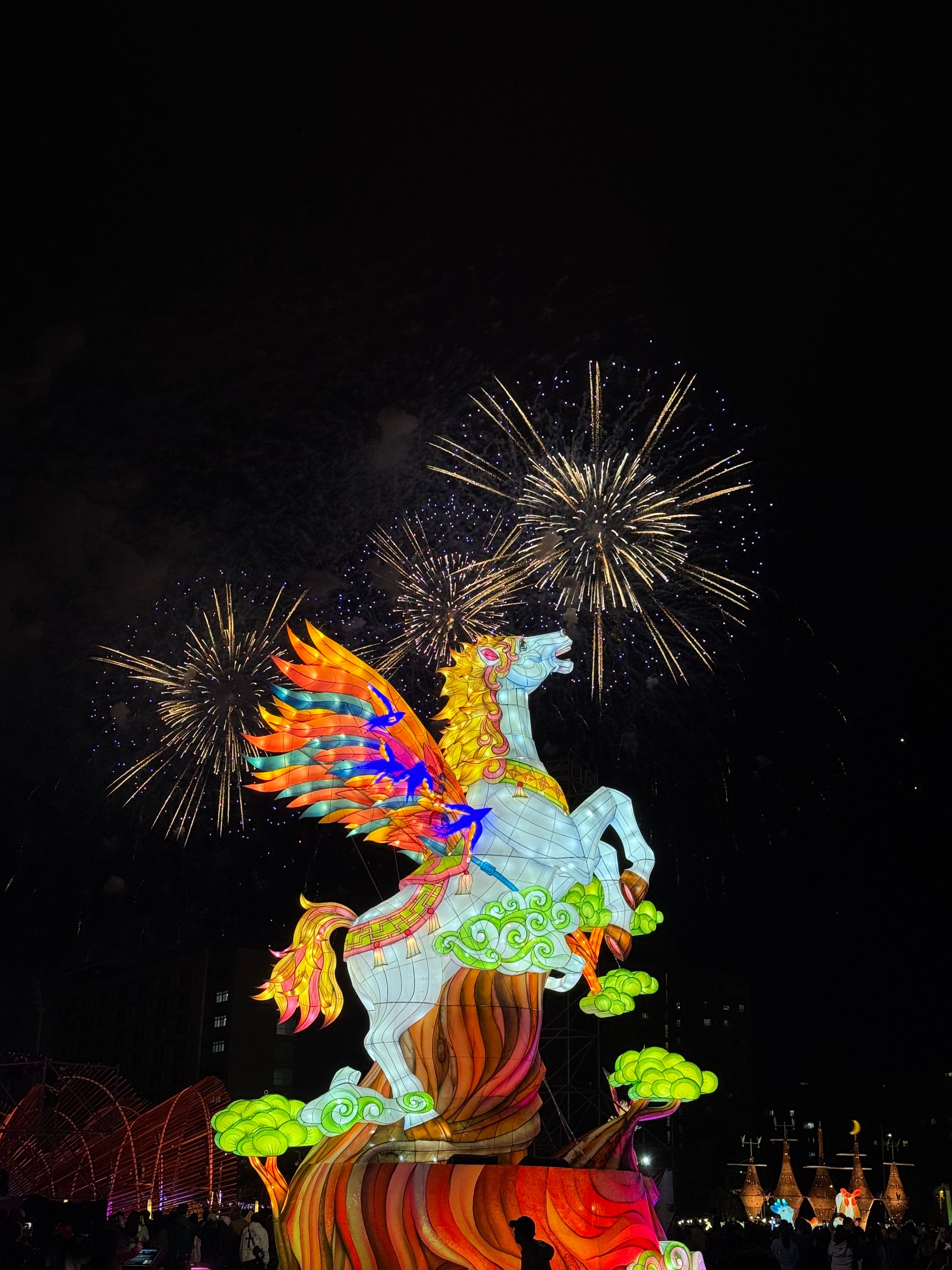
Heavenly Steed, Dreams in Flight
This zodiac centerpiece features the horse, symbolizing determination and the pursuit of dreams in Chinese belief. Historically more than a mode of transport, horses represent human progress and courage. The artwork shows wings on the horse soaring through clouds, embodying the flight toward dreams.
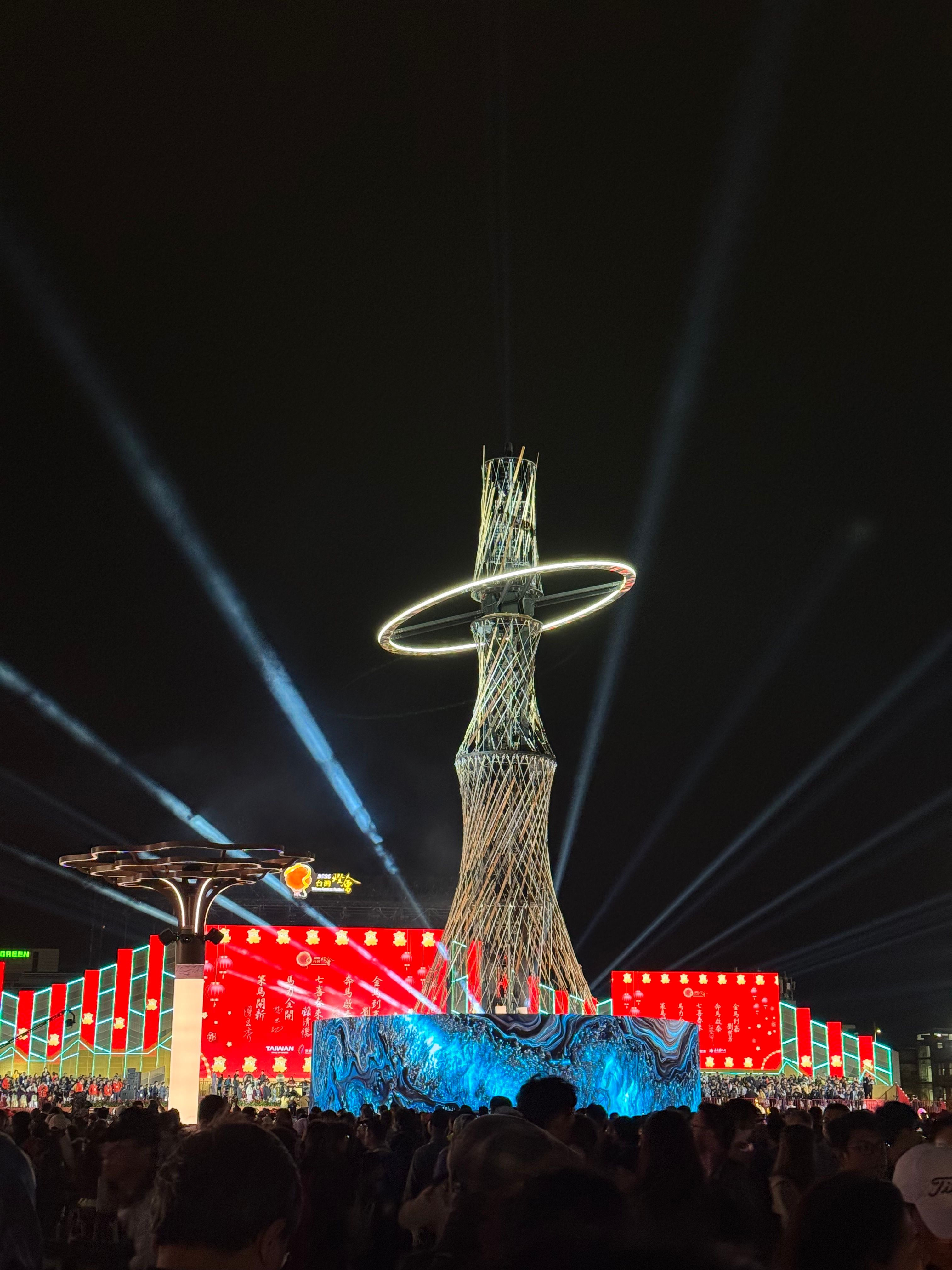
Alishan, Veiled in Luminous Mist
A 21-meter tall twisting tower made from recycled wood symbolizes Alishan’s sacred 3,000-year-old cypress trees in the national park. Illuminated rings and uplighting give the installation a majestic presence akin to the real trees.
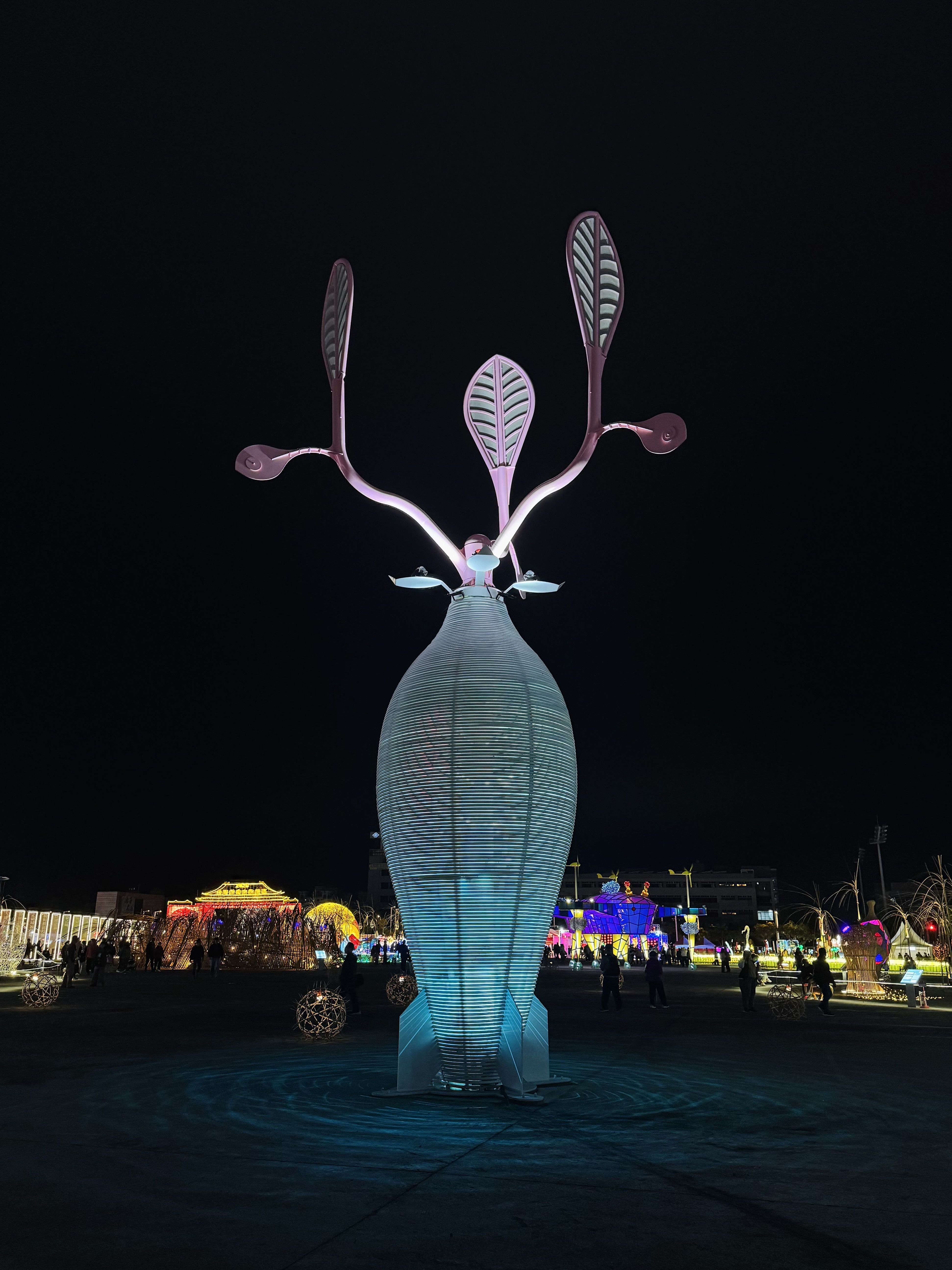
Borderless Dream
This vase-shaped work with three branching limbs represents life, harvest, and ecosystems. Like other pieces, it symbolizes the coexistence of humans and the environment and reflects local growth toward a boundless future.
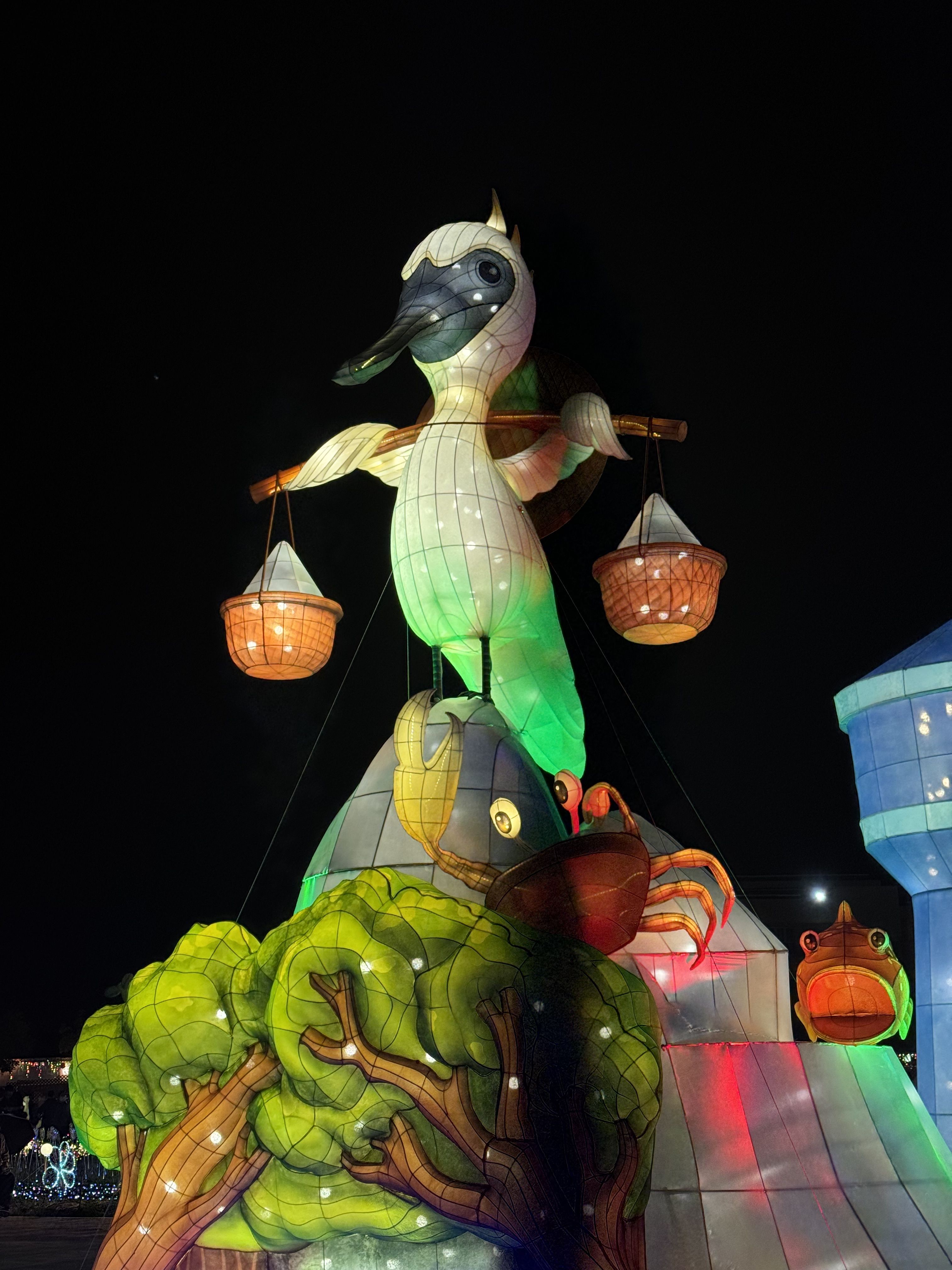
Happy
Inspired by salt farming culture in the southwestern coastal area, this piece features a black-faced spoonbill standing atop, carrying salt on its back. In Chinese, the bird’s name 'Hei-Pi' sounds like 'Happy,' which inspired the title, conveying joy through harvest.
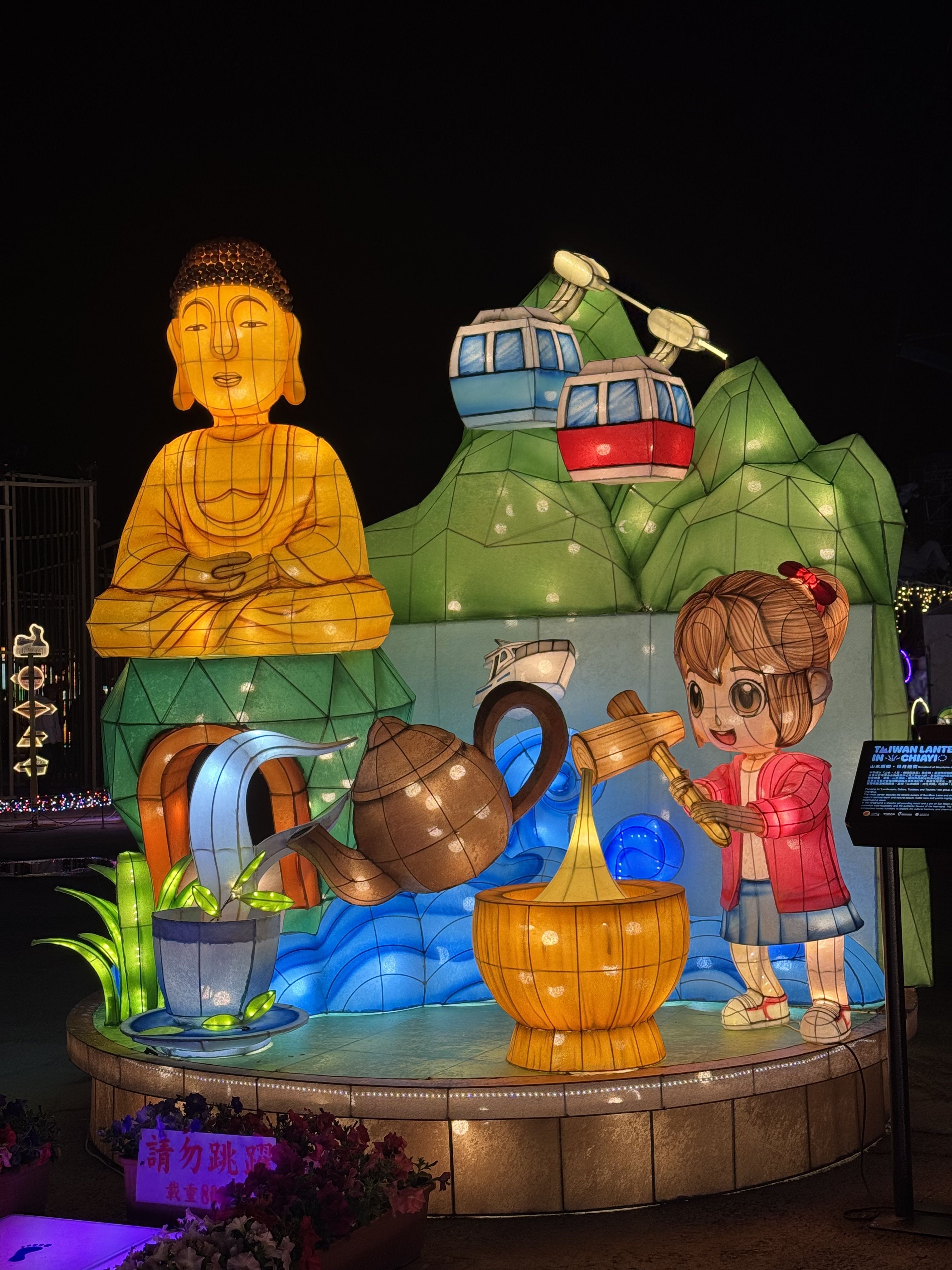
Homeland of Mountains and Waters, A Welcoming Sun and Moon
This work narrates the landscape, culture, traditions, and tourism of Nantou and Changhua, highlighting landmarks such as Buddha statues, cable cars, and yachts. Nearby, a girl pounding mochi represents the locals’ warm hospitality.
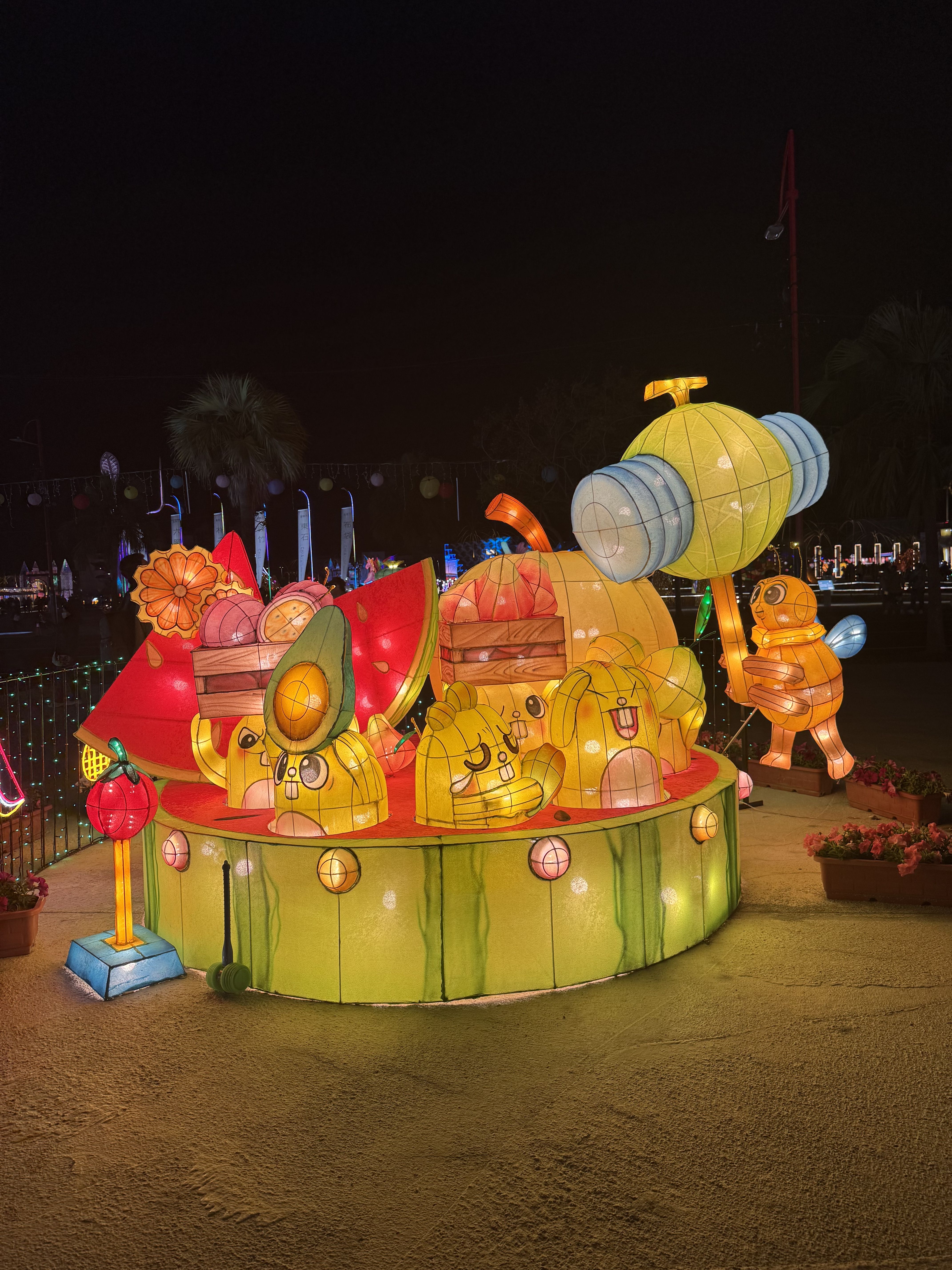
Sweetland Carnival
This installation celebrates Chiayi’s fruit diversity and abundance, featuring parades of avocados, melons, Taiwan No. 17 pineapples, and Formosa mangoes, surrounded by charming small animals.