

Linktree reported that in 2022, there were 207 million online content creators. These creators do not hold organizational or media positions but produce content themselves via social media. Of them, 46.7% said this was their main job, while 38% did it alongside other full-time work. However, only about 20% achieved consistent follower success and steady income.
This report highlights changing career values, where the 'main job' is viewed solely as a source of income, unrelated to passion. This contrasts with earlier generations who invested body and soul into their careers, believing that greater effort meant more growth opportunities and did not prioritize dreams or personal passions first.
In today’s world, work culture shifts with technology and greater freedom to express oneself. Young people now see work and dreams as intertwined, focusing more on what they love and trying to turn their passions into careers, believing this brings happiness, income, and added personal value.
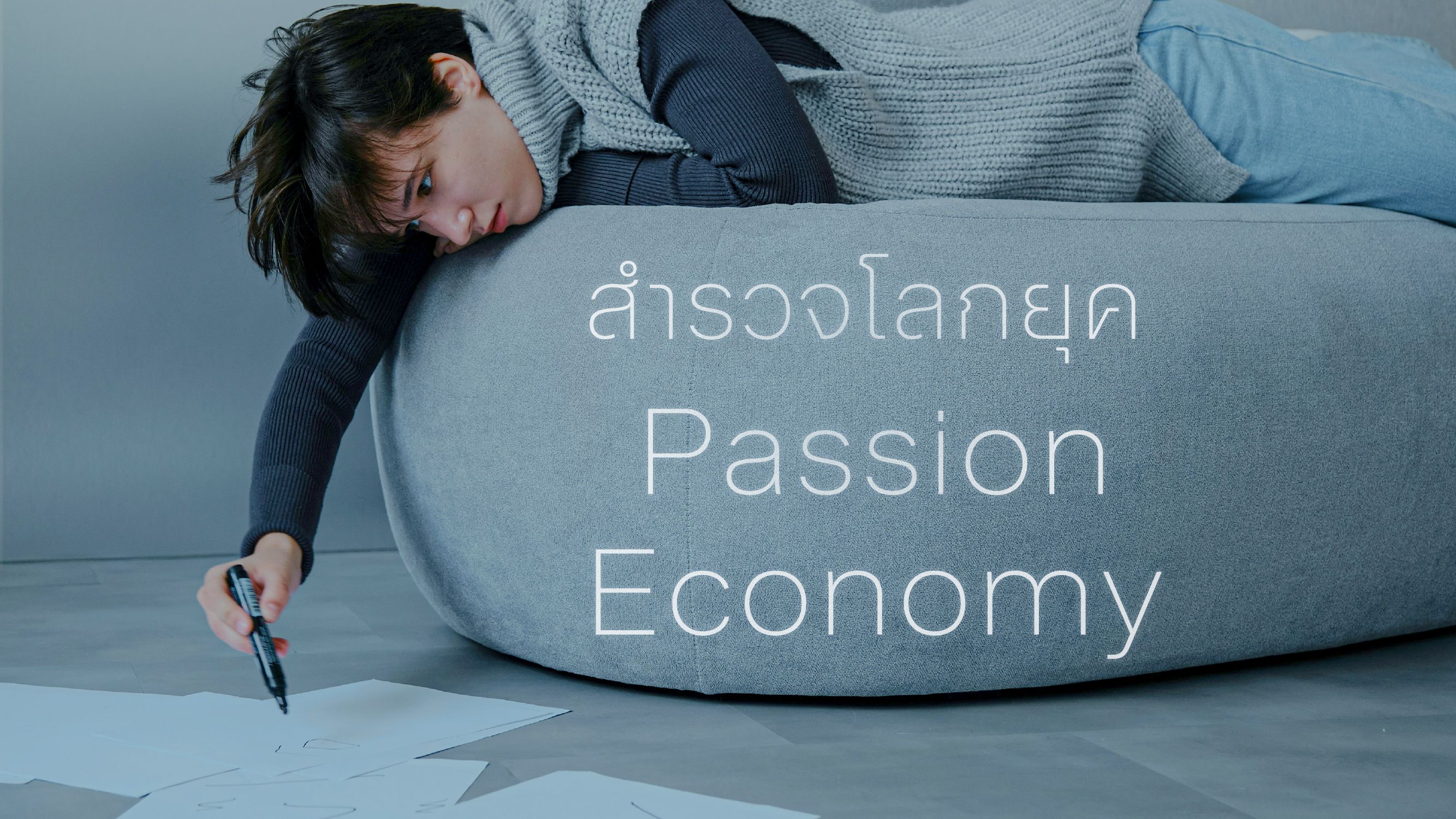
This phenomenon is called the Passion Economy. The term refers to the concept of monetizing one’s expertise. It was first coined by Li Jin in 2019 in her essay "The Passion Economy and the Future of Work." Jin described it as evolving the Gig Economy (such as Uber or Grab) into a new form of work that can generate income comparable to full-time jobs. Her Passion Economy covers many creator jobs, including podcasters, Substack writers, Twitch streamers, and online teachers or tutors.
Meanwhile, Adam Davidson, journalist and NPR co-founder and host of the podcast Planet Money, published a book titled The Passion Economy: The New Rules for Thriving in the Twenty-First Century in 2020.
Davidson views the Passion Economy not only as digital creators but as the future of work, contrasting with 20th-century Widget Economy jobs—factory-like, repetitive tasks producing generic, low-priced products. The only way to sell at higher prices and gain more sales is to infuse one’s passion or craftsmanship into the product to add value.
For example, today we see travel content because travel alone brings short-term joy without long-term benefits. Some extend it by creating content as a travel content creator, earning income through platforms. This contrasts with traditional travel shows on TV, which are short, unrealistic, and staged. Creators like Go Went Go take viewers to unusual places with detailed information, and Backpacker shares genuine traveler experiences, including scams, theft, and local culture.
Similarly, artists use separate accounts to showcase their work or post drawing tutorials, expanding into courses and selling art directly. This bypasses traditional systems where work must be vetted by others and challenges conventional art teaching methods, allowing artists to promote their work far beyond galleries or exhibitions.
The Hobby Trap: When the Passion Economy Becomes a Hobby Killer
The Passion Economy carries risks; we must prepare for the possibility that hobbies may become things we hate, or "Hobby Killers." To succeed, high self-discipline is required. Typically, people work Monday to Friday, daytime, leaving only evenings for side pursuits. Weekends may involve chores like cleaning or laundry. This fatigue can turn hobbies into chores, causing emotional exhaustion as free time becomes obligation, potentially harming mental health.
Another challenge is dealing with internet algorithms, which change the work dynamic. Those with full-time jobs must also keep up with trends, algorithm systems, and online marketing. We compete not only with fellow Passion Economy creators but also established professionals, pushing us to continuously innovate to stay fresh and avoid repetitive cycles.
The Passion Economy Is an Unstoppable Trend
It’s clear that the Passion Economy fits the lifestyles of many young people, maximizing their potential and valuing themselves beyond traditional roles. However, the key caution is to avoid over-identifying hobbies as just another job.
Since we cannot reject the Passion Economy, how can we engage with it without burnout?
First, find new hobbies beyond your main one. Since hobbies are meant to relieve stress, if travel content creation becomes work, find another hobby that takes less time to reduce daily tension—such as reading, gaming, or watching movies.
Second, don’t throw yourself fully into all work. If you create products for sale, separate what you sell from what you want to make for yourself. If you create travel content, balance content production with actual travel time. Fully immersing yourself turns your hobby into the very job you sought to escape, leading to eventual reluctance.
Next, set clear boundaries between serious hobbies and personal life. Having a designated workspace helps—for example, artists having a studio zone. This clarifies time and space for work. Even game streamers should use separate logins to avoid mixing files, allowing use of the same computer for relaxation without worry.
Finally, set realistic goals. The Passion Economy is like part-time work and can’t be compared to full-time career success, as backgrounds and limits differ. Set achievable targets and understand why you do this work; without purpose, efforts waste energy and lead to burnout.
The Passion Economy is a double-edged sword like many life aspects. Despite changing work cultures, we need thoughtful analysis and balance to decide what truly benefits us. Do we need to turn a hobby into work, or is it just a trend? If financial necessity drives this, how do we manage it without overexertion to maintain happiness in whatever work we do?
References: