

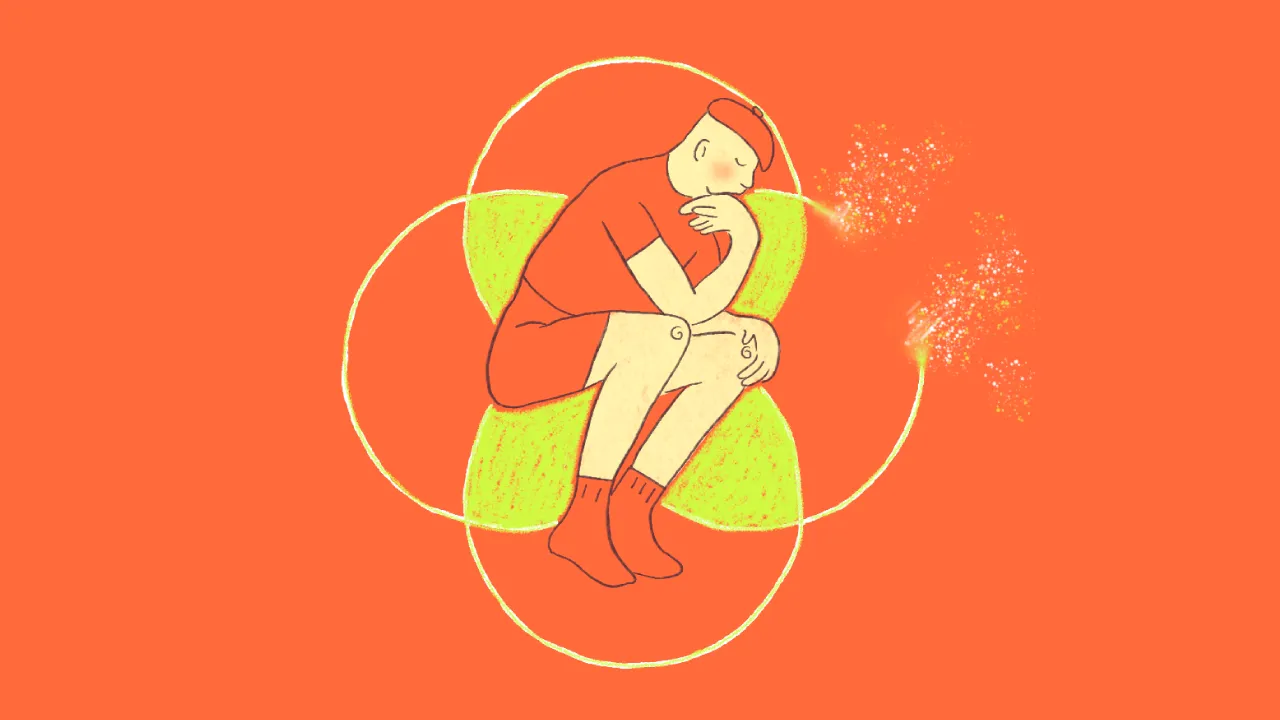
However, in reality, the Ikigai concept may not always work for everyone or at every time, because trying to find a perfect intersection of all four aspects simultaneously can unknowingly create pressure on oneself.
Especially on days when we are unsure what the world needs or cannot yet see a path to turn what we like into income, striving for a perfect intersection may build up stress instead of revealing the true meaning of life.
Therefore, stepping back to examine the basics of the mind through Self-Determination Theory (SDT), a psychological research explaining that humans achieve motivation and true happiness when three basic needs are balanced,
which are feeling autonomy, developing competence, and having connection with others—these are key elements that help reduce life’s confusion.
First, try to find the energy within rather than questioning what we are good at or what the world needs. Observe, throughout a day, which activities make your inner fire light up and which leave you exhausted, as if your body and mind have been drained to the limit.
Because sometimes skills we perform well and others ask for help with may actually be the main cause of our fatigue if we don’t truly love them. Following the direction of our own energy often leads us to a path that better preserves emotional balance.
Another idea is to 'create prototypes' instead of trying to find a perfect answer. Allow yourself to live with some doubt. If you feel the path you’re on is no longer right, instead of quitting immediately, try dedicating a few hours a week to activities you genuinely care about. Taking action helps clarify whether it truly reflects your identity or is just a fleeting interest./that we have become infatuated with ourselves.
Additionally, satisfaction with one’s path invites us to refocus on ourselves: in what we do, how much autonomy we have in decision-making, whether we face challenges that appropriately stretch our abilities, and how our activities connect with those around us. When these elements align, feelings of being lost gradually fade without needing to wait for a grand purpose.
Ultimately, feeling life lacks purpose may stem from trying to find a single 'correct answer' for life. When these three basics are solid, confusion gradually dissipates, as we begin to perceive our own value from within, without waiting for external factors like money or the world’s demands to define us alone.