

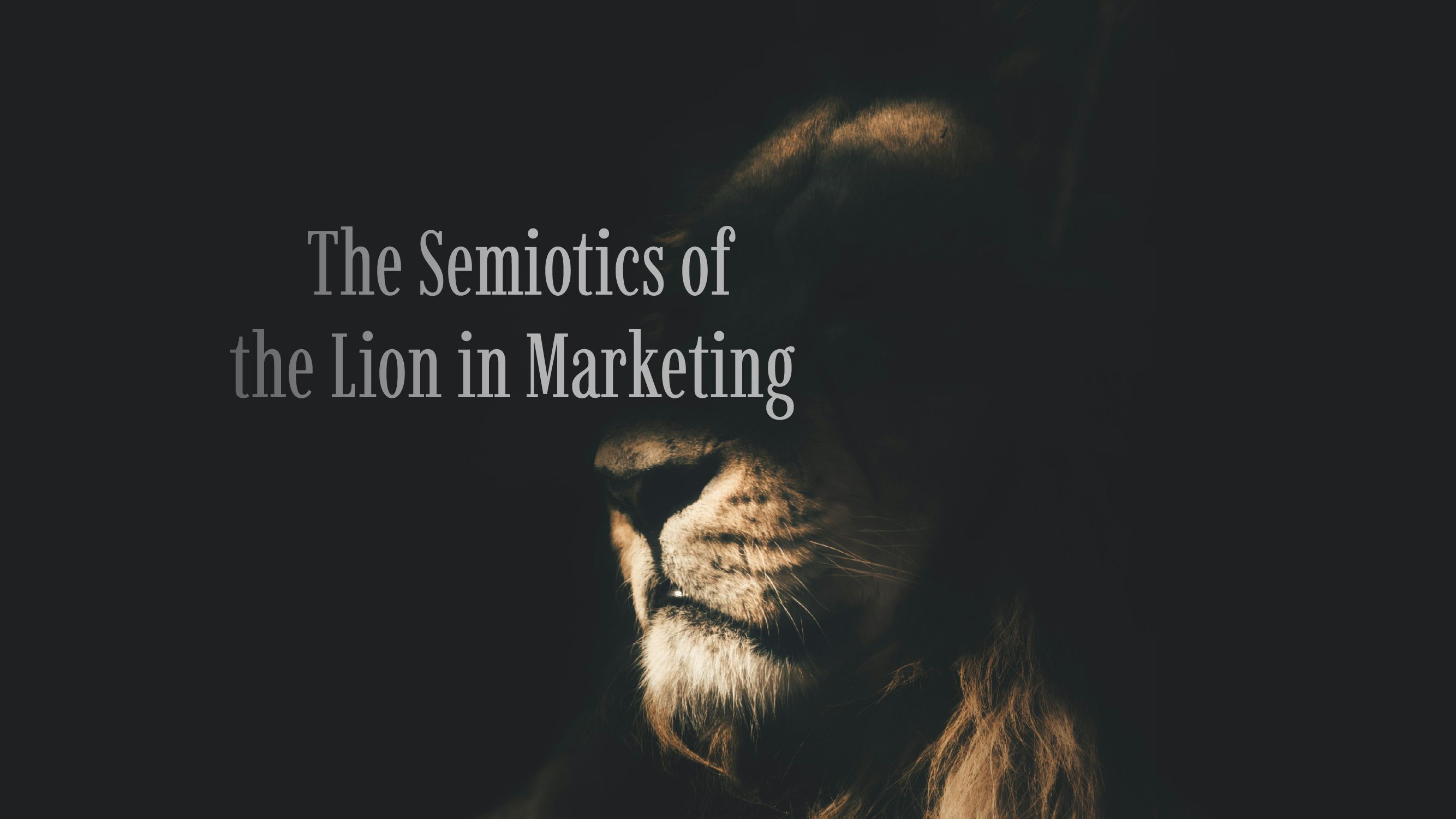
When we see a logo featuring a ‘lion’ right before us, we hardly need any further explanation. This animal image immediately conveys certain meanings to us. Feelings of power, authority, confidence, and leadership arise automatically, even though it is merely a single picture.
This is the power of ‘semiotics,’ or in familiar terms, "an image that conveys meaning in place of words."
The marketing world understands this mechanism well. Many brands therefore do not communicate themselves with lengthy messages but choose symbols that people instantly interpret. The lion is one of the most powerful symbols because, in shared human perception, it is not just a wild animal but the king, commanding respect, standing at the top without needing to compete with others.
But what is more interesting than using a lion image in a logo is that some brands ‘have a lion’s personality’ even without using this animal’s image at all, yet they give the feeling of facing a real lion.
The concept of viewing brands through animal metaphors is another way to see that a brand is not merely a product, service, or logo, but has a ‘presence’ that people perceive like a human personality. This comparison helps visualize the brand more clearly because each animal carries emotional meanings universally understood by humans, and the ‘lion’ is one of the most powerful brand symbols.
Decoding this clearly, Brand Personality is a set of emotional traits and images that consumers automatically associate with a brand, just as when we say someone seems warm, trustworthy, ambitious, or composed. Brands can be perceived in the same way.
However, this personality does not arise from actual habits but from designing the entire experience—from product, price, communication, tone, and imagery to how the brand positions itself in the market.
Academic work on brand personality by Jennifer Aaker explains that consumers perceive brands through multiple personality dimensions, such as sincerity, excitement, competence, sophistication, and ruggedness.
This means brands can truly have a ‘personality’ in people’s eyes, significantly affecting purchasing decisions. This idea has become a fundamental principle of modern branding because it shifts competition from functional features to emotional connections.
Applying this framework to the image of the lion, we immediately see a clear personality. A lion-like brand stands out naturally, arising from its own magnetic attraction. Such a personality reflects leadership, confidence in value, powerful composure, and natural dominance.
In behavioral terms, brands with a lion personality often lead or create new trends, setting the market rhythm. Their communication is weighty and clear, requiring little explanation to be understood. Products and services are designed to consistently reflect high standards. Although priced high, consumers are willing to pay because the brand’s value justifies it.
On an emotional level, lion-type brands provide experiences that make consumers feel confident in their choice, feel they made the right decision, and feel elevated socially. This symbolic power transcends product features, even without a lion symbol present.
Examples of brands with a lion personality include Apple, a brand that embodies all these qualities. Apple does not just sell electronics but offers experience, design, mindset, and social status. Every product launch automatically draws the market’s attention. This is the behavior of a ‘king of the jungle’ who does not need to race but commands all eyes.
Another clear example is Mercedes-Benz, representing power and dignity in the automotive world. The brand does not compete on price or flashy features but stands on luxury, high-level engineering, and a long heritage. Owning such a car is a symbol of success.
Rolex is similar. Its watches do more than tell time; they are a social language signaling status, achievement, and taste. The brand hardly needs to explain quality because its reputation speaks for itself.
BMW has the personality of a confident leader with a clear stance on “the joy of driving.” The brand does not try to be everything to everyone but firmly occupies its own niche.
Louis Vuitton is the lion in the luxury fashion world. The brand does not chase trends but creates them. Its logo alone has the power to elevate product value and user image decisively.
Therefore, saying a brand has a “lion-like personality” describes its position in people’s minds. This aligns with contemporary branding concepts that view a brand not as what an organization declares it to be but as what people feel it is.
When that feeling is clear enough, it is like seeing a lion standing quietly in a field—at a glance, you know it is the ruler of the territory.
Beyond semiotics and personality, another obvious feature of the lion in branding is presenting the lion as a clear, tangible symbol. One much-discussed example is the lion in the Narasiri Borommaratchachonnani project, which expresses grandeur, magnificence, and commands attention irresistibly.
To learn about the origins and story of the “lion” that is not just a symbol but also conveyed as a luxury design element,
you can follow the #BehindTheDesign concept of the lion in the context of the Sansiri project athttps://www.facebook.com/sansirifamily/videos/1601790097673135/
and experience the meaning of the “lion” interpreted into actual architecture through the luxury Narasiri Borommaratchachonnani project here:https://siri.ly/0U0YEI4
and on all Sansiri platforms.
Facebook: @SansiriPLC
Instagram: @SansiriPLC
Tiktok: @SansiriPLC
Youtube: @SansiriPLC
References