

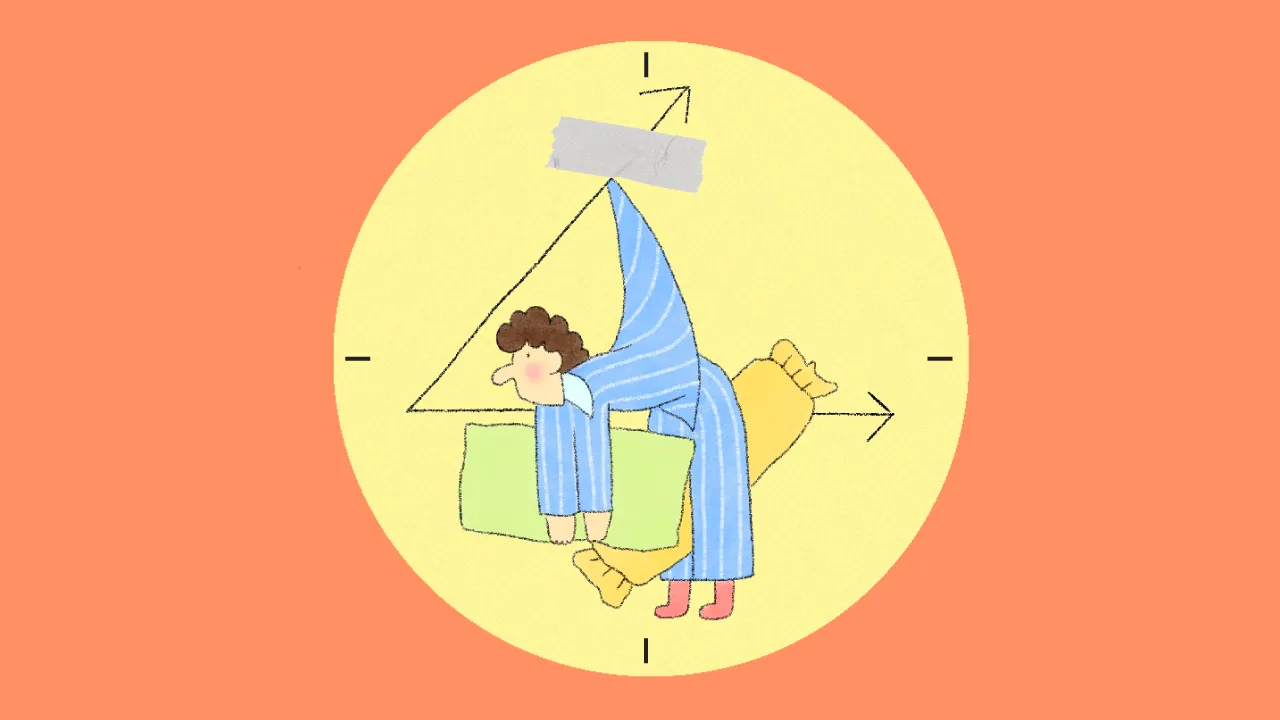
“I’ll do it tomorrow” or “Later is fine” — everyone has likely said this, whether to friends when agreeing on a meal plan or to themselves promising to read ten pages, watch a movie, or do laundry today. Sometimes we feel more productive than usual, but when the time comes, we think, “I can do it tomorrow.” Some even dream of cooking well but feel discouraged just thinking about the process, saying, “I’ll do it later.”
This is not a grand phenomenon but is known as “procrastination.” We might mistakenly think procrastination is laziness or poor time management, but psychological research finds it is more about emotions, fear, and self-control than discipline. In today’s world, where everyone easily monitors others’ actions, procrastination becomes a form of self-rejection that leads to feelings of failure or reinforces a sense of incompetence.
Procrastination is normal; it’s a mechanism to postpone mental burdens to enjoy the present. But what if the present means scrolling endlessly through screens instead of doing something productive?
Procrastination is not a time problem but an avoidance of unpleasant feelings.
Research by Sirois & Pychyl (2013) explains that when facing difficult tasks, we often feel anxious, bored, or fearful of poor performance. These feelings cause us to delay tasks temporarily to feel better now, even though it harms us later. We may overthink the entire project—sometimes spanning months or years—which encourages procrastination.
Psychologists call this “short-term mood repair,” the core of procrastination behavior. We’re not avoiding work itself but the negative feelings that accompany it.
This can be explained by brain function: the limbic system responds immediately to what feels good, while the prefrontal cortex plans long-term. When these parts conflict, the brain chooses the easier path. Thus, procrastination isn’t lack of motivation but the brain rewarding delay whenever we avoid tasks.
Fear and low self-confidence are key triggers.
This is especially significant today, as anyone can create content, music, or businesses independently. Social media encourages constant comparison with others’ success. If someone has low self-efficacy—believing they are incapable or unready—procrastination increases, accumulating guilt and shame. This emotional resistance makes starting even harder.
Why does procrastination increase anxiety?
A study compiling data from Swedish universities found students who procrastinate are at higher risk of anxiety and depression. Most youth, from high school to university, procrastinate the most due to:
When we procrastinate, the brain won’t “close the file” on the task; it lingers like an open tab in a browser, causing chronic tension and anxiety.
Delaying tasks increases feelings of helplessness and “loss of self-management,” triggering greater anxiety.
Unfinished tasks are perceived as threats, activating the amygdala, linked to fear and worry. This keeps the body in a state of “alert to danger,” even just thinking about the work.
What can we do about it?
Ask yourself if you want to delay because you’re unprepared or to avoid feeling bad. Sometimes potential is there, but negative feelings create excuses to procrastinate.
Lower emotional resistance and make starting easier by focusing on one step at a time, not the overwhelming whole or distant future. This basic approach helps prevent anticipatory anxiety.
Sirois (2014) found that self-compassion reduces future procrastination. Don’t treat a day’s delay as catastrophic, especially compared to others. Remember everyone has a first step; visible success is just the outcome, and others may have struggled too. Forgiving yourself and recognizing your limits gradually reduces fear.
As the world advances and technology multiplies, we all must strengthen ourselves to face chaos. Not just physical strength but mental resilience is vital to live happily on this planet. Procrastination isn’t disastrous if our body is tired; we just need to manage it ‘in moderation’ to avoid harsh self-criticism. No one makes us feel better than ourselves.
References:
Rozental, A., & Carlbring, P. (2014). Understanding and Treating Procrastination: A Review of a Common Self-Regulatory Failure. Psychology, 5(13), 1488-1502.
Sirois, F. M. (2014). Procrastination and stress: Exploring the role of self-compassion. Self and Identity, 13(2), 128-145.
Steel, P. (2007). The Nature of Procrastination: A Meta-Analytic and Theoretical Review of Quintessential Self-Regulatory Failure. Psychological Bulletin, 133(1), 65-94.