

If you try to imagine shades or light waves visible only to certain animals, no one can picture them as clearly as familiar colors like red or blue. It's similar to how we understand ultraviolet rays conceptually but our brains don’t form actual images of them.
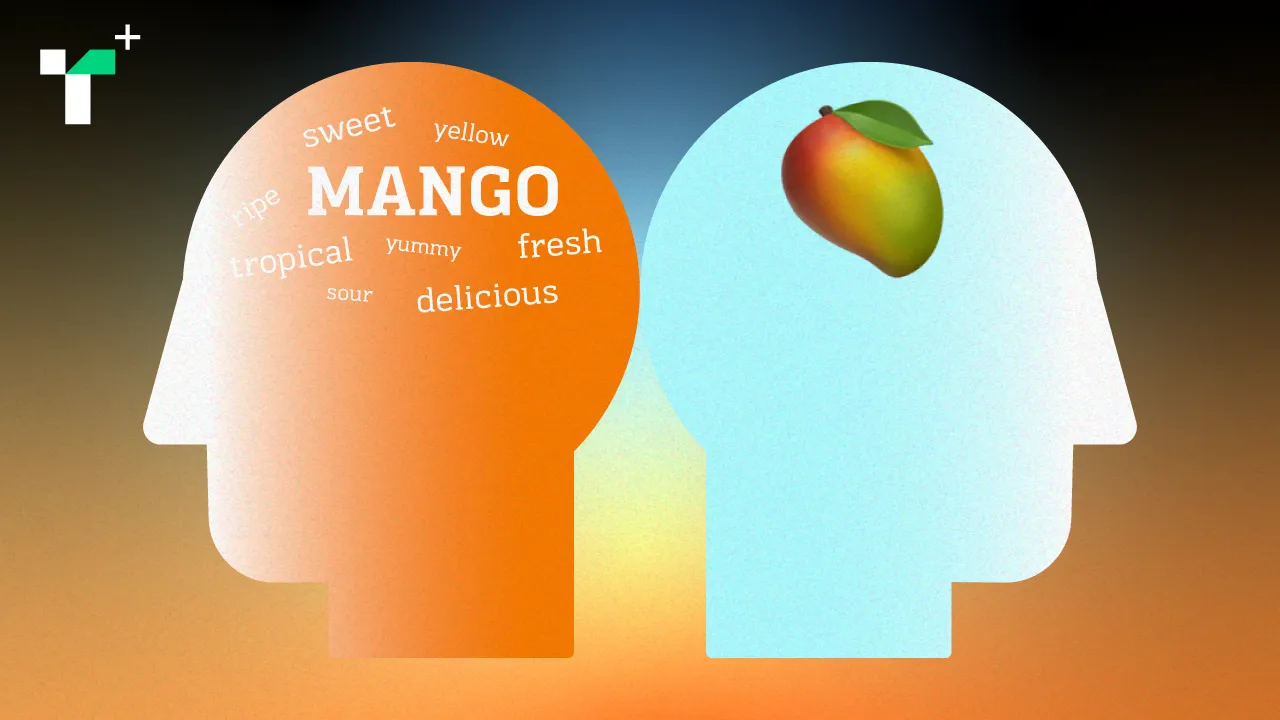
The example above illustrates what people with Aphantasia, or visual imagination blindness, experience when thinking of things. While most can clearly picture an apple in their mind, these individuals only register facts—that the apple is red, round, and sweet—without visualizing the apple itself.
However, this condition is not a disease or disorder but a form of neurodiversity found in about 2-5% of the global population. The interesting question is how their brains function differently from most people and what mechanisms compensate for their inability to visualize images.
How Aphantasia Works: When Two Brain Areas Fail to Connect
Normally, when we see objects, our eyes capture light and send it to the brain's posterior visual processing center. Human imagination works in reverse: the frontal brain creates an image conceptually and sends a command backward to the visual areas to generate that image without the eyes.
In people with Aphantasia, the signal between these two brain regions is weak or incomplete, so the command to create the image never reaches its destination. Moreover, the left prefrontal cortex, which filters information for conscious awareness, blocks these images from entering the person's awareness.
As a result, they see only darkness when closing their eyes and their brains adapt by relying on factual memory instead. They remember details like a friend wearing glasses with a mole on the cheek as text-based information, not pictures.
Not only Image-Blind but Sometimes Silent Inside the Mind
Generally, people have internal speech or thoughts sounding in their minds, but some with Aphantasia experience complete silence within their heads—known as anendophasia—or sometimes lack internal music, a condition called anauralia.
This doesn't mean they cannot think or plan; rather, they skip directly to logical conclusions, relying on strong concrete thinking instead of scattered imagination.
Lack of Mental Images Does Not Hinder Creativity
Knowing about this condition, many might wonder how these individuals can work creatively or plan complex tasks without mental images. Ed Catmull, Pixar co-founder, and Glen Keane, Oscar-winning animator who created Ariel, both have Aphantasia, proving that lacking mental imagery does not limit creative legends.
Research from the University of Oklahoma confirms that people with Aphantasia are not disadvantaged in life; in fact, they are excellent planners.
Because their visual memory is inactive, they tend to take notes and make to-do lists, resulting in highly organized minds. To remember people's appearances, they convert images into verbal codes by memorizing keywords, such as facial structure described as commands and text rather than pictures.
Additionally, when reading fiction or imagining scenarios, they conserve mental energy by anchoring to reality—using existing knowledge of acquaintances or celebrities to play roles—thus reducing the need to create new imagery.
Furthermore, they emphasize learning through hands-on experience and sensory engagement to understand space and spatial relationships, building a solid, concrete knowledge base rather than relying solely on closed-eye visualization.
Ultimately, understanding Aphantasia opens a fascinating window into the human brain and broadens acceptance that different perceptions do not imply lesser ability or abnormality. We must avoid labeling these individuals as deficient or inferior.
References: