

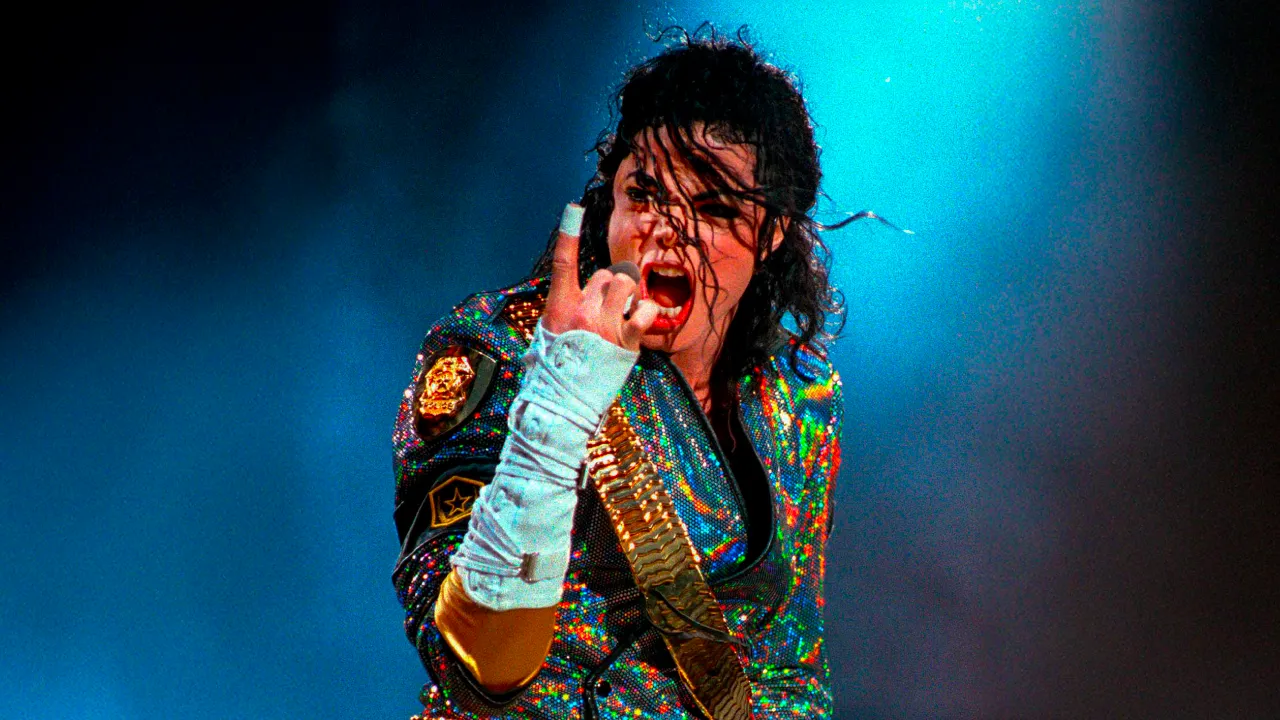
Blues Away (1976), the first song Michael Jackson wrote himself, began with him humming the melody into a tape recorder. The melody was initially conceived as a broad, loose concept. Then, he clarified the melody in each section by deciding which instruments would play there. Once the overall picture became clearer and more defined, he used a method of deconstructing the whole melody into parts by isolating the instrumental components of every note through his astonishingly distinct vocal keys alone.
This is a musical genius that likely only he in the world could achieve. But before reaching this point, the future King of Pop had to bitterly sacrifice his childhood and face the most uncompromising and grueling tests imposed by the man known as his father.
Michael Jackson was born on 29 August 1958 in Gary, a city famed for its high-quality steel production in northern Indiana. Joseph, the family patriarch, was a hard-working factory employee but, driven by a love for music, was a semi-professional guitarist who might have succeeded professionally if the family’s financial situation had been better. His wife, Katherine, was also a young woman who loved music from childhood.
Michael Jackson had two older sisters, Rebbie and La Toya, and one younger sister, Janet, plus four older brothers (not counting Brandon, Marlon's twin who died at birth). In this family, youngest sister Janet was most pampered, while the five brothers shared a passion for singing and playing music following their parents' footsteps. Initially, they played music for fun and often performed for their parents. Eventually, Joseph realized his sons’ musical talents and pushed them—Jackie, Tito, Jermaine, and Marlon—to practice singing, dancing, and playing instruments all day with almost no rest, before later adding youngest brother Michael to the group.
Although there is no official record of how harsh Joseph Jackson’s music training schedule was, many artists have stated unanimously that his training was probably the toughest they have ever witnessed.
Smokey Robinson, both an artist and senior executive at Motown, once commented on Michael’s childhood singing that it was not the behavior or tone of a boy but the result of forcing a child to sing like an adult. This ambiguity affected Michael’s personality, temperament, and lifestyle from adolescence until the end of his life, with one side always remaining a child and the other seeming like a child pretending to be an adult. Smokey added that Michael’s technique and self-control on stage were too perfect, which allowed him to create music no one else could imitate—but the downside was that he completely lost his freedom.
Legendary artist Gladys Knight, who first promoted The Jackson 5 by sending their demo tapes to Motown, revealed she saw potential in the band at the Apollo Theater. She recalled that while adults rested after a hard day's work, the five boys never took a break, constantly rehearsing dance moves and checking vocals with their father backstage. She said The Jackson 5 was the hardest-working band she had ever known over decades in the industry.
Quincy Jones, Michael Jackson’s longtime producer, revealed that Michael’s unbelievable perfection in every aspect stemmed from the rigorous practice schedule his father created. He compared the strictness to prisoners sent to forced labor camps working without seeing the sun. The benefit was that this superhuman discipline created the wonder of Michael, who transformed the landscape of pop, soul, and R&B music from the late '70s onward. However, all else was disadvantageous because Michael’s spirit and humanity were destroyed.
Jermaine Jackson wrote in the book You Are Not Alone: Michael Jackson, Through a Brother’s Eyes, "Father didn’t just train us to be singers; he trained us to be soldiers wielding instruments instead of guns, and we had to win the battle or die." Janet Jackson also recalled in a documentary seeing her brothers drenched in sweat, faces streaked with tears, practicing nonstop until their father was satisfied.
Joseph Jackson’s brutal training made even the toughest K-pop idol production systems seem gentle by comparison, as his rehearsals left no room for mistakes. Even though small mistakes are often considered part of art’s charm, especially in creative work like singing and playing instruments, the harsh training inflicted wounds on the Jackson sons' hearts, especially the youngest. Yet, it must be acknowledged that without Joseph Jackson, the world would not have had the extraordinary Michael Jackson.
At age six, Michael Jackson and his four older brothers named their group The Jackson 5 and began gaining recognition by entering amateur music contests. They progressed to semi-professional competitions and performed at nightclubs from Chicago to the Apollo Theater in Harlem, New York. Though a new amateur band, The Jackson 5’s musical skills were so outstanding that even professional musicians were impressed.
Their singing technique involved laid-back timing and using high notes percussively at almost the last moment in each section, creating a new musical direction for soul music starting in the early ’70s and most clearly visible in the mid-’70s. The Jackson 5’s style was rooted in soul, R&B, and gospel, with blends of funk, early disco, and bubblegum pop (from catchy hooks).
Michael Jackson’s later development of high-note singing with rhythmic vocal effects evolved into beatboxing, the precursor to New Jack Swing—a non-verbal vocalization style that enhances song grooves by creating rhythms through vocal timing, hiccups, beatboxing, and rhythmic tongue sounds with remarkable pitch variations.
Gladys Knight and Bobby Taylor recognized the group’s potential and took The Jackson 5 to audition in Detroit. After viewing the audition tape, Motown owner Berry Gordy Jr. immediately signed the Jackson brothers. Before releasing their first album with Motown, the family relocated from Gary to Los Angeles, home of Motown. Initially, Suzanne de Passe, Motown’s creative assistant, managed stage shows, media relations, and image, while Diana Ross acted as their mentor.
If The Beatles introduced rock and roll, rhythm and blues, and early pop into a new style called Merseybeat originating in Liverpool in the early ’60s, The Jackson 5 similarly created a new musical phenomenon. Their innovations became a foundational influence on later pop music, extending to contemporary pop today.
Their debut single, I Want You Back, released in November 1969, was groundbreaking for a time when sub-genres were fewer than today. That year also saw Sly and the Family Stone’s influential album Stand!, mixing soul, funk, and rock; Isaac Hayes’ Hot Buttered Soul, which redefined soul with complex arrangements; Aretha Franklin’s Soul ’69, blending jazz influences; and James Brown’s Mother Popcorn, advancing funk’s seductive style.
1969 was a golden year for soul and funk. Motown knew these genres defined the era’s soundtrack, and Berry Gordy understood that fusing these styles with modern pop would produce hits capable of shaking the global music industry.
What made I Want You Back stand out among other funk-soul songs was its incorporation of power pop accents similar to The Beatles, The Beach Boys, and The Byrds into funk music, creating a new sub-genre. The catchy bassline, though simple, was instantly memorable. The vocal harmonies retained a soul melody, but Michael Jackson’s vocals made the song unforgettable.
At age 11, Michael’s voice brought brightness and gentleness to the song. His tone was not only pleasant but had an astonishingly wide range. What elevated the song was his gospel-style vocal technique, holding high notes and rhythmically delaying beats perfectly. From then on, young Michael used his voice rhythmically to enhance the groove, along with his distinctive dance moves.
Michael Jackson possessed a special talent from childhood: he instantly recognized the pitch of any sound (despite being unable to read music) and could sing it perfectly in tune. This ability, called Perfect Pitch, enabled him to adjust his singing key instantly regardless of whether his brothers played in major or minor keys. This is evident in live Jackson 5 performances, where Michael’s vocal inflections shifted according to the music key, enriching the groove through rhythmic vocal timing.
Songs like ABC, The Love You Save, and I’ll Be There all reached number one on R&B charts, surpassing typical standards for R&B music—thanks largely to the extraordinary singing style of young Michael Jackson.
Michael Jackson often spoke about James Brown, rock and roll legend Little Richard, and Jackie Wilson, a key figure who infused R&B accents into soul music since the ’50s. Lacking formal music theory knowledge or the ability to read notes, Michael couldn’t sing by reading music but instead sang by feeling the emotions and rhythms he heard in his mind first, taking many notes. Both James Brown and Jackie Wilson excelled at capturing unique moods and rhythms in their songs.
Michael’s naturally high tenor/countertenor voice resulted from his own intention, as he believed consistently singing high notes preserved his youth forever. Due to his father’s rigorous singing practice schedule, Michael never had a normal childhood. His high voice was not only in his music but also in his speaking and media interviews.
One way Michael developed his legendary voice was by observing the breath control of all his favorite singers. He noticed each had different timing for releasing breath to bring out their true vocal tone. Michael adapted these observations to develop his own singing style.
He also used rhythmic shouting in the funk style of James Brown, but at much higher pitch. Combined with diverse vocalizations creating percussion rhythms beyond notes, this made Michael the first pop singer to use his voice as a second percussion instrument, rivaling or surpassing drum kits.
The following outlines how Michael Jackson discovered his true identity through his unique voice.
He could hear an entire song in his head before recording. He recalled all harmony layers and knew exactly where each note should be placed to create the best groove. He mastered volume control from whisper to powerful shout without any pitch distortion.
He trained for decades with world-renowned vocal coach Seth Riggs using Speech Level Singing, a relaxed, balanced style mimicking everyday conversation. This helped him sing high keys naturally with gentle yet powerful voice, conveying internal vulnerability deeply, enabling listeners to feel loneliness or love profoundly.
Michael created his signature sound through vocal percussion techniques, such as vocal hiccups as rhythmic elements, improvisational singing to fill grooves differently each show, breath-holding before powerful notes to add tension, and timely use of vocal sounds like "hee-hee" or "shamone" to strengthen the music's impact.
All of this involved using voice to express emotion, not language communication—non-verbal sounds—a form of nonverbal language only Michael Jackson created. He could layer dozens of vocal tracks harmoniously to form the "MJ Choir," with each track perfectly timed and balanced, a feat achievable only by a superhuman like him.
Before earning the title King of Pop, Michael Jackson worked with his brothers in The Jackson 5, releasing a total of 16 studio albums (including those under The Jacksons). This sibling band pioneered a new pop-soul style that became a critical foundation for future pop, soul, and R&B music. The Jackson 5 remains one of the most successful sibling bands ever, with over 150 million copies sold worldwide across all singles and albums.
ABC, their second studio album released in 1970, is regarded as one of the finest bubblegum pop, rock, and R&B works of the ’70s. The phenomenal popularity of The Love You Save and ABC endures, with DJs and nightclubs across eras continuing to mix the band’s lively basslines and pop-funk guitar sounds with disco music from other artists.
After moving from Motown (with Jermaine as the only brother remaining while Randy, the youngest, joined), they signed with Epic Records, renamed themselves The Jacksons, and released six studio albums. Michael, while lead singer, began solo work in 1972—the same year The Jackson 5 released Lookin' Through the Windows.
It’s fair to say the enormous album sales of The Jackson 5, especially post-1972, owed much to Michael’s solo success. Their later album Victory (1984) sold over 7 million copies worldwide, coinciding with Michael’s peak fame from Thriller, the best-selling album ever, reportedly selling up to 120 million copies across formats.
Got to Be There, Michael’s first solo album, featured covers of hits like Bill Withers’ Ain’t No Sunshine, Carole King’s You’ve Got a Friend, The Supremes’ Love Is Here and Now You’re Gone, and Bobby Day’s Rockin' Robin, plus new songs by the then 14-year-old Michael.
Got to Be There’s solo style differed significantly from The Jackson 5’s music. More deeply, Michael’s solo work aimed to shed the image of lead singer among his four brothers. Importantly, he showcased a softer, more vulnerable vocal tone rarely heard in The Jackson 5, revealing the fragility within his soul.
His shift from soul to pop and R&B reflected at least two truths: one, he wanted his solo music not to be confined to Black Music genres; two, this laid a strong foundation to break down the "wall" dividing black and white music cultures—a barrier that would unexpectedly collapse later.
Ben (1972) and Music & Me (1973), his second and third solo albums, blended pop and R&B fairly seamlessly. A key change came during the third album as Michael’s voice changed with puberty around age 14, prompting him to raise his vocal pitch to mask his deepening tone due to hormones.
Michael aimed for a Marvin Gaye and Stevie Wonder-style soul and funk feel on this album and desired to write songs and play instruments himself. Motown disagreed, leading Joseph Jackson to break their contract and take his sons to Epic Records, with Forever, Michael (1975) as Michael’s final Motown album.
Michael’s fourth studio album marked a dignified farewell to Motown. It featured Philadelphia soul with touches of classic funk, blending oldies, disco, and soul harmoniously. Philly soul’s beauty lies in string and horn arrangements with string combos, making the music enjoyable across social classes—from family homes to luxury hotel lounges and nightclubs. Philly soul remained a constant in Michael’s solo albums.
Though Michael had recorded many albums solo and with groups, he had rarely had the chance to showcase his songwriting or musicianship. Earlier works passed quality tests but lacked the essential artistic quality of expressing the artist’s true spirit and identity.
Previously, Michael was merely inspired by his favorite artists. If he were a chef, he followed recipes prepared by others with pre-measured ingredients, only responsible for mixing them to taste.
With Off the Wall, Michael took a leading role in creating music as he wished, knowing his strengths and choosing key ingredients and their prominence, balancing flavors perfectly. This album marked his emergence as a rising solo artist with Michelin-star potential.
Michelin-star here signifies that, like a top chef, each of Michael’s musical creations offers unique, unparalleled sensory experiences.
Motown deserves applause for refining Michael into a uniquely talented artist. However, limiting his creativity within predefined frames prevented him from fully expressing his individuality, making him a skilled craftsman but lacking authentic personal artistry.
Epic Records broke those constraints, allowing Michael maximum freedom to innovate musically, despite knowing his limited music theory and traditional standards could risk incoherent works and business setbacks. Yet, they had a plan to manage this.
They let Michael use his first solo album with Epic to transform himself creatively and authentically. He solved challenges by bringing in Quincy Jones to polish his ideas into balanced productions, rather than simply grooming a musical image that lacked personal depth, as Motown had done.
Although initially hesitant about Quincy Jones producing Michael’s first Epic solo album—due to Quincy’s jazz background seeming too conservative for pop—Epic trusted Michael’s confidence that Quincy could fully unlock his artistic potential, ultimately approving him for this crucial role.
"When working with legendary artists like Frank Sinatra, Ray Charles, Sarah Vaughan, or Aretha Franklin, you must be truly excellent and fully prepared, because they immediately see if you know your craft and will overwhelm you if you don’t," Quincy said.
"Early in my career, I dedicated myself to mastering my skills so that when I asked artists to try something new, they would trust I wouldn’t let them fail."
The U.S. Library of Congress, which preserves cultural heritage and honored Michael’s Thriller album as an American cultural treasure, interviewed Quincy Jones in 2016. Quincy said he saw Michael’s limitless potential first through his work ethic while collaborating on The Wiz.
Quincy’s first impression of Michael wasn’t about singing, dancing, or innovative sound creation, but about his superhuman dedication. Michael memorized every song and actor’s line in The Wiz, gladly endured five-hour daily makeup sessions despite already being successful. Quincy was confident such dedication would fully unleash Michael’s potential.
When Michael sought a producer for Off the Wall, instead of using Quincy’s many industry connections to find someone else, Quincy told Michael, "Why don’t you let me try?" He then explained,
"Understand first that artists like Frank Sinatra, Ray Charles, or Aretha Franklin devoted themselves fully to their craft. They had talent but worked hard not just to make hits but to fully express themselves. Their timeless work came from this dedication. I’ve been in the studio with Aretha as she repeated a passage many times to perfect its feeling. These things don’t happen automatically—you must put in the effort, and Michael did so with every breath."
Michael recorded a demo of Don't Stop 'Til You Get Enough using a two-track recorder in his kitchen, creating percussion sounds with glass bottles and household items. Quincy heard the song’s raw spirit and expanded it in the studio—a challenging task, especially since Michael used a soda bottle tapped with a spoon to produce a sharp, clear tone. Quincy initially tried to replicate this sound with instruments but failed, so he had Michael bring the bottle to use in the studio.
For the overall rhythm, Quincy layered many overdubs to build a rhythmic wall. The main drum kit, played by John Robinson, emphasized a solid four-on-the-floor beat with strong downbeats. Additional rhythms came from shaker and agogo bells—African percussion instruments. The complex, syncopated bassline was played by legendary bassist Louis Johnson. Michael’s vocals, including "hee-hee" sounds, breaths, and short vocal bursts, functioned as another percussion instrument.
Detailing this complex rhythm construction clarifies the foundation of Michael’s music style from then on. These sounds aligned precisely with instrumental syncopations to keep the music dynamic and moving constantly.
Michael proposed using dual microphones to record each instrument, creating realistic sound dimensions through repeated experimentation—his secret formula. Listening closely, one hears dozens of percussion and rhythmic layers within a single band, yet the mix remains clear because Quincy arranged space for each instrument, allowing Michael’s vocals to fill the groove continuously. This is finely crafted sonic art.
Off the Wall is acclaimed as one of the greatest albums ever, though not as commercially successful as later albums like Bad or Dangerous. During its release, disco music peaked, and Off the Wall gained recognition on par with Donny Summer’s Bad Girls (1979) and Bee Gees’ Saturday Night Fever (1977).
In an era when African American music culture was largely limited to R&B, Off the Wall set a new standard by blending white bubblegum pop with disco, funk, and R&B foundations. Artists like Beyoncé, Pharrell Williams, Kendrick Lamar, and The Weeknd have cited this album as a blueprint for their journeys from pop artists to global superstars.
Bruce Swedien, sound engineer who worked long with Quincy Jones, revealed that Michael’s remarkable vocals since childhood never stopped evolving. He adjusted vocal dimensions and depth, balancing frequency ranges with subtle vibrato to match song emotions. Swedien separated Michael’s vocals from instruments from the Jackson 5 era through Off the Wall, noting his deliberate falsetto shifts to alter mood dramatically, though so fast it was almost imperceptible.
Swedien considered Michael’s vocals on Thriller as his most perfect work, fully utilizing his vocal potential. Knowing his voice intimately allowed Michael to manipulate it freely—even tuning it to mimic imagined musical instruments.
Michael played some instruments but wasn’t highly skilled. However, his inability to read music and limited theory knowledge freed his imagination from conventional constraints, allowing musical ideas to come alive miraculously beyond written notes.
Steve Porcaro, founding member of legendary rock band Toto and co-writer of Human Nature with Michael, revealed that Michael could sing string arrangements by changing keys and notes all vocally to guide string players. When asked how, Michael simply said, "I already have all harmonies and notes in my head."
Rob Hoffman, renowned American producer and engineer, once recalled a morning when Michael rushed into the studio with a freshly composed song. Alone, he sang complex chord separations, then called a guitarist, singing each chord’s notes and directing the musicians to play exactly as he vocalized.
Michael’s precise vocal control meant some notes were so unique that certain instruments couldn’t match them naturally, forcing producers, engineers, and musicians to adapt creatively. For example, Billie Jean’s deceptively simple, catchy rhythm is actually intricate, created by four instruments including an electric bass and three synth basses set to different pitches playing simultaneously.
To perfect the album, Quincy assembled 62 top musicians and about 22 singers to record at Westlake Recording Studios in Los Angeles. Quincy said about Thriller, "You can’t see music, taste it, touch it, or smell it, but you can feel it." This reflects the album’s depth beyond a mere collection of songs, creating a unique, deeply spiritual musical signature.
Thriller contains only nine tracks: side one features Wanna Be Startin' Somethin', Baby Be Mine, The Girl Is Mine (duet with Paul McCartney), and Thriller; side two has Billie Jean, Human Nature, P.Y.T. (Pretty Young Thing), and The Lady in My Life. Each track is a legendary piece in pop music history.
Notably, Beat It features Eddie Van Halen of Van Halen performing an iconic rock guitar solo. It was rare for a black artist famous for soul and R&B to feature a legendary rock guitarist, reflecting Michael’s intent to break down genre barriers by proving musical categories are constructs.
However, his primary goal was dismantling racial prejudices by blending popular music from both black and white audiences perfectly. This implied racial divides were mere prejudiced fabrications, as any ethnicity or race can coexist if such walls are crushed and discarded.
At the 26th Grammy Awards, Thriller won eight awards in one night, including Album of the Year. Its genre-crossing bravery earned accolades in pop, rock, and R&B categories, disproving conservative white skeptics who believed black artists could only succeed in R&B or soul. Music lovers of all races adored the album, which was the first to remain in Billboard’s top ten for an entire year.
Just two years after Thriller’s unprecedented success, Michael faced a pivotal life event. On 27 January 1984, while filming a Pepsi commercial, a technical malfunction caused pyrotechnics to ignite prematurely, hitting Michael’s head. The fire quickly spread before crew could extinguish it.
The accident caused severe third-degree burns, permanently destroying hair follicles in the affected area. Michael underwent extensive treatment and reconstructive surgeries, including saline balloon implants under the scalp to stretch remaining skin—procedures causing immense pain.
No one anticipated this pain would persist throughout his life. Michael suffered almost constant headaches, initiating continuous use of multiple painkillers, leading to later addiction. Analysts suggest his self-image insecurity worsened after the incident, contributing to mental health issues and possibly exacerbating vitiligo and lupus, autoimmune diseases he suffered.
Remarkably, without knowledge of this event, one would never guess Michael endured such severe trauma, as he hid his injuries from fans and the public, wearing wigs to conceal scars. Despite the pain, he never let it hinder his musical standards.
After the accident, Michael’s appearance changed noticeably. His skin lightened due to vitiligo, which made him highly sensitive to sunlight. His hairstyle changed because of wig use. Bad was an album channeling his pain and anger, featuring a distinct hard rock influence. By 1987, digital synthesizers appeared, giving the pop, dance, and R&B sounds a futuristic edge.
The musical style shift divided critics. Some viewed the change as lacking creative innovation despite bold rock elements and noted the team’s efforts to reshape Michael’s look into a rock star image didn’t fit him well.
Personally, it seems Michael struggled with identity confusion stemming from physical pain deeply affecting his mind. He tried creating an alter ego. Psychologically, he may have perceived a "doppelgänger," a spiritual twin, making it hard to distinguish his true self. This other persona, akin to Peter Pan, helped fill his long-standing loneliness.
"Bad" wasn’t a term for evil but a 1980s African American slang meaning cool or tough. Michael rarely praised himself; instead, he saw beneath his gentlemanly persona a world where he could be fiercely attractive to both women and men equally. This album shattered the previously effeminate image, presenting him as a bad boy, almost like a different person.
Originally, Michael wanted to duet on "Bad" with Prince, a funk king of the ’80s, but Prince declined, disliking the lyric "your butt is mine." Prince reasoned, "Who would sing that to whom? Definitely not me, and you wouldn’t sing it to me, right?"
Though not reshaping pop music forever like Off the Wall or Thriller, Bad contains richly diverse sounds and rhythms, marking the start of New Jack Swing, which would be more prominent in Dangerous. The Way You Make Me Feel introduced new wave elements emphasizing bass rhythm like The Police. Just Good Friends was a synth-pop/funk track featuring Stevie Wonder.
Smooth Criminal, a key track, combined pop rock, synth-pop, and funk to create sharp, driving rhythms that maintain tension. Its lyrical theme about murder was a stark departure for Michael and pop music. The iconic anti-gravity lean dance move debuted here. Man in the Mirror urged listeners to change themselves before changing society.
Fans had high expectations and the album sold over 32 million copies worldwide, making Dangerous one of the best-selling albums ever. However, critics had mixed views.
Rolling Stone rated it 3 out of 5, saying it followed the then-mainstream hip-hop trend of 1991 too closely. The pervasive anxiety and paranoia in lyrics made the album feel overwhelming. Jon Pareles of The New York Times heard Michael’s voice more as a scream for help than confident as before.
The identity confusion linked to Bad, stemming from Michael’s burdens and pain since his accident, made the album conceptually fragmented. Nonetheless, no critic faulted the New Jack Swing style Michael and producer Teddy Riley created after Quincy Jones left the producer seat.
Only decades later did retrospective reviews unanimously praise Dangerous as a pioneering pop album ahead of its time. Critics who initially disliked it failed to grasp Michael’s intent. Ironically, what they criticized—identity confusion—became widely understood today, as social media blurs truth to generate engagement through conflict.
Michael Jackson faced such external threats decades before their full impact, making Dangerous not just an album but a chronicle predicting a future where human identity and will are eroded by algorithms.
New Jack Swing emerged fully with this album, bridging traditional R&B and the rising hip-hop beats of late ’80s to early ’90s. Its charm lies in drum rhythms that delay beats to create bouncing grooves. Synthesizers like Roland TR-808 and MPC60 contributed dense, powerful low-end sounds.
Dangerous is often used to test high-quality speakers for their ability to reproduce deep, mid, and high frequencies because its bass is synthesized, delivering very thick lows. Snare drums are short but sharp with slight reverb for dynamic effect. Early tracks Jam and Dangerous showcase these beats well.
Michael’s singing continued using rhythmic vocal phrasing and layered soul singing structures over hip-hop beats seamlessly—an unprecedented method. He limited the album’s tempo to 100-110 BPM, ideal for agile dancing and universally inviting movement.
All these innovations dismantled traditional pop frameworks focused on live instruments and catchy melodies, advancing underground and street pop-infused dance music. Similar to how breakdancing elevated pure drum beats as core hip-hop foundations in the mid-’70s.
This led to a dance revolution the world had never seen.
With tighter, longer rhythms, Michael perfected his moonwalk from Thriller, making it smoother and longer. The Sidewalk move involved rapid sideways foot slides, appearing to float. The Toe Stand required balancing on tiptoes while holding poses or shaking hands and body.
These footwork-based moves are similar to tap dancing (Michael was inspired by Fred Astaire’s tap rhythms in Singin’ in the Rain). New Jack Swing’s syncopated beats and dense sound forced Michael and choreographers to innovate new dance routines tailored to this music.
Notable moves include The Kick-Spin—kicking forward then spinning immediately; The Crotch Grab & Hip Thrust—always a crowd-pleaser; The Knee Slide—sliding on knees during intense song endings like Dangerous or Give In To Me; and Ancient Egyptian Moves from the Remember the Time video, mimicking ancient Egyptian paintings with wrist and elbow bends.
The Crotch Kick in the Jam video demanded strong leg power. The Black or White (extended) finale featured freestyle with aggressive moves like car smashing and rapid spins, showcasing live dance skills. Robotic moves like The Robot and Spin & Snap—multiple spins ending with finger snaps or shirt pulls—were performed at high speed, alongside precise shoulder and hip movements following beatboxing rhythms, inspired by Hollywood musicals like West Side Story.
Michael Jackson performed in Thailand for the first time during the Michael Jackson Dangerous World Tour Live in Bangkok in 1993 at Suphachalasai Stadium. He held two shows on 24 and 27 August (a two-day gap due to dehydration causing two show postponements). Each show drew 70,000 to 80,000 attendees, totaling approximately 140,000 to 160,000—a record for foreign artists in Thailand and the only Suphachalasai Stadium sell-out to this day.
Ticket prices ranged from 500 to 2,500 baht, quite high compared to Thai living costs when gold was about 4,000 baht per baht weight. The 2,500 baht ticket would equate to tens of thousands today. The two postponements caused confusion and chaos among fans, especially without social media. Hundreds without tickets tried forcing entry through the 500-baht gate, driven by the unstoppable Michael Jackson fever and the desire to experience his concert once in their lifetime.
Personally, attending his concert at age 13 was a once-in-a-lifetime experience that deepened my passion for music beyond imagination. Michael’s dramatic rise from beneath the stage to standing on it triggered screams lasting over ten minutes, reaching around 120 decibels—comparable to a jet engine taking off. Standing still yet creating shared awe and near-fainting (mass hysteria), especially among women, was something only Michael Jackson could achieve.
Michael returned to Thailand for another concert during the HIStory World Tour three years later on 5 November 1996 at Muang Thong Thani’s open field. It was well received but did not replicate the stadium-breaking phenomenon of his first Thai concert.
The Michael Jackson biographical film directed by Antoine Fuqua surprised many upon his selection, as Fuqua was known for action thrillers. Doubts arose about whether he had the vision to depict the complex life full of struggles and conflicts on screen.
Without the opening scene showing Michael as a superstar, the film narrates his life linearly from a child harshly trained by Joseph, to signing with Berry Gordy’s Motown after The Jackson 5’s success, progressing straightforwardly to his 1988 Bad Tour concert at Wembley Stadium.
The movie abruptly ends with the text "The King of Pop’s story continues," implying a sequel.
Critics attacked the film for being too flat, lacking character studies despite many facets worth exploring to understand why individuals behaved as they did. The clearest example is Joseph, portrayed as a father who loved no one but himself.
This is unsurprising since the executive producers were Michael’s four older brothers and his son Prince. The film fully expresses their pent-up anger over their father’s oppressive treatment, viewing them as possessions rather than children (they never call Joseph "father" in the film).
Joseph’s portrayal is utterly black, with no nuance, clearly showing how much the children hated him, even though he sometimes sought justice for them, such as when he canceled Motown’s control over Michael’s music direction and took them to Epic and CBS.
The lack of character depth made the film flat and soft like freshly rolled pasta dough. The film skips many key events, most notably ignoring Michael’s solo albums with Motown, jumping directly to his move to Epic and stating Off the Wall as his first solo album, which is only true for Epic but not overall—it was actually his fifth.
This causes an unusual discontinuity in the timeline, with the film emphasizing Michael and Quincy Jones’ collaboration on Off the Wall but nearly sidelining Quincy’s role during Thriller. After celebrating Thriller’s success, the film abruptly moves to Bad, focusing excessively on dance rehearsals at the expense of studio work.
Viewers may be frustrated that some character relationships could have been developed further, such as Michael’s deep trust in his driver and bodyguard Bill, or that his nose surgeries were not just for looks but to shed his restricted childhood identity and gain freedom. The inclusion of his siblings and mother felt tokenistic, merely enumerating family members, not exploring them fully.
Even Michael’s pet chimpanzee Bubbles, a poignant mirror of his loneliness and lost childhood, his trust the chimpanzee gave him unlike humans, and his Peter Pan fascination embodied by his Neverland ranch, were not mentioned.
Nevertheless, the film is not without merits. It compiles key milestones or turning points in Michael’s career—from The Jackson 5 to Thriller to liberating himself from his father’s control—giving audiences a retrospective emotional journey rather than a pure work-focused biography. Thus, while critics disliked it, fans embraced it wholeheartedly.
By choosing this approach, fans viewing the film through a retrospective lens, longing to see Michael live, perform, rehearse, and tour again, consider it a commendable success. The newly produced concert scenes, whether any stage, are so realistic as to feel like being there, especially the 1983 Motown 25 show with camera angles, vocals, dance, and atmosphere transporting viewers back in time.
The film devotes significant time to concert performances, dance rehearsals for Beat It, and behind-the-scenes of the iconic Thriller music video, seemingly serving fans without demanding deep thought. It also highlights John Branca’s crucial role as Michael’s music industry lawyer, who risked everything for Michael’s rights, including master recordings, and championed the creation of Thriller’s groundbreaking short film directed by John Landis, who also directed Black or White’s video.
Originally, Fuqua wanted to include Michael’s darker life aspects for balance, but extensive script rewrites post-filming reduced and fragmented the third act, focusing solely on his ’80s career, diminishing narrative coherence.
It’s possible that deeper character analyses, such as of Peter Pan inspiring Neverland, were downplayed. All references to 1993 child sexual abuse allegations were cut, reportedly due to legal agreements limiting Fuqua’s vision, highlighting the complexity of Michael’s biopic rights and image control.
The film’s ending is ambiguous. Whether the sequel will explore Michael’s life more deeply or continue the emotional retrospective approach remains unknown.
No one can answer this yet; both critics and fans must wait patiently.
References