

You will broaden your horizons
Gain a profound understanding of human folly
Discover that the world is full of fools
(and we ourselves may be among them)
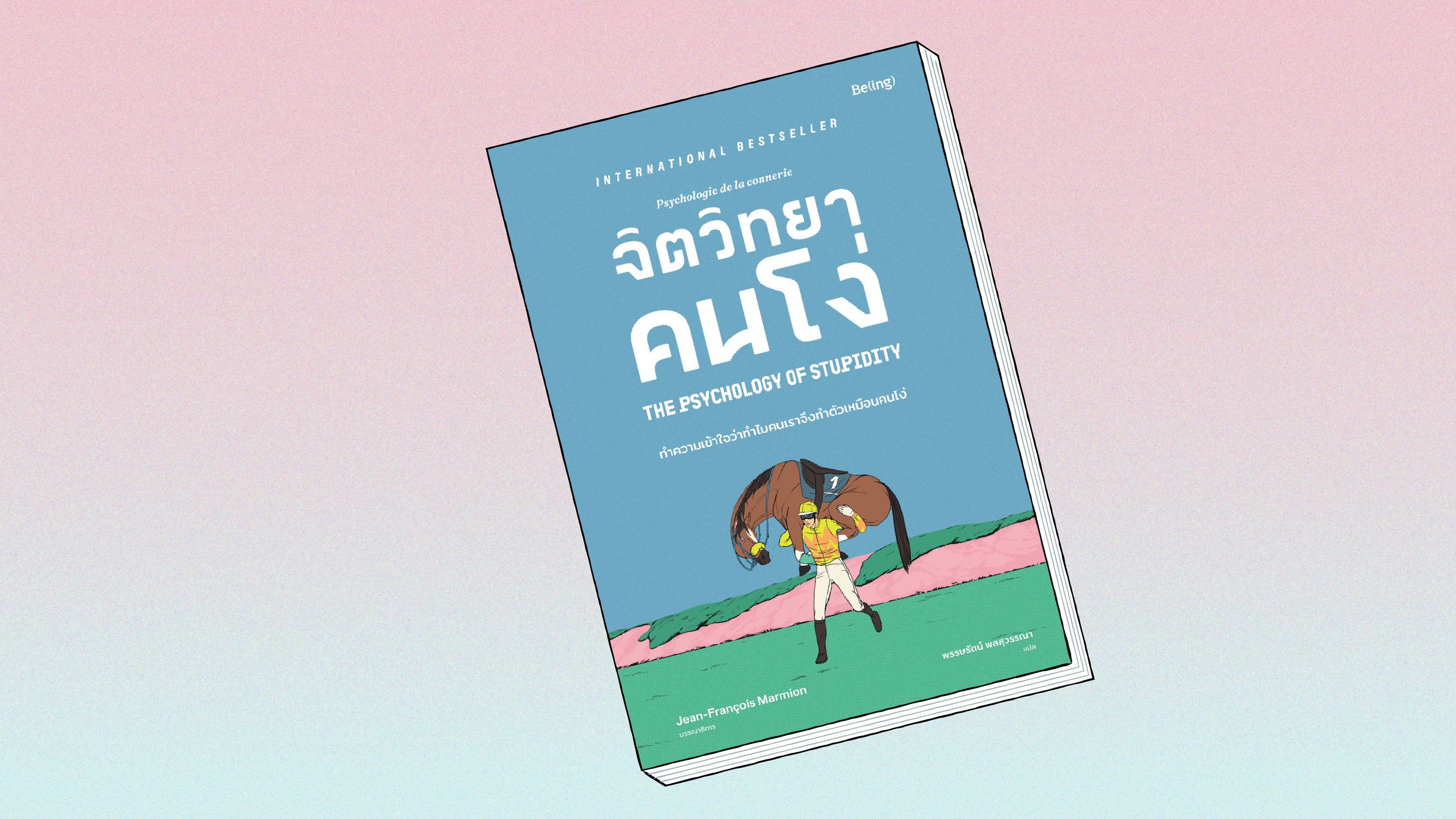
The book "The Psychology of Stupidity" Compiles essays from world-renowned thinkers and researchers, with Jean-François Marmion as editor, taking us to explore the roots of foolishness, which is not limited to intelligence levels but is a psychological mechanism deeply embedded in every human.
In this book's perspective, stupidity is not simply the opposite of intelligence. Many people have high IQs and excellent education but can do incredibly "stupid" things. The main cause is a deficiency in what is called "reasoning," which is distinct from the ability to process information. Smart people might act foolishly because they use their intellect improperly or allow emotions and biases to cloud their judgment.
The frightening part is that this is not limited to those with low intelligence; even global geniuses like Albert Einstein or Steve Jobs have fallen into traps of folly. This book is not a fanciful survival guide promising to help you avoid fools because, in reality, we still have to communicate and live in society.
We will see the many faces of folly. Marmion gathers philosophers, sociologists, and renowned psychologists like Nobel laureate Daniel Kahneman to peel back the layers of irrational behavior. We encounter a "taxonomy of fools" with many shades, from the blatantly foolish to the delusional who disregard facts, to the "jerks" who always see themselves as superior. These classifications are not for condemnation but to help us understand the "mechanisms" behind why the human brain so easily makes mistakes or believes nonsense.
The authors' ultimate goal is not to create a world free of stupidity but to help us "understand" stupidity to its core. When we understand cognitive biases or the phenomenon where incompetent people overestimate themselves, we begin to see the shadow of "foolishness" reflected in our own mirror.
"We are all fools in someone else's eyes."
Accepting our own stupidity is the start of becoming wiser. Be kind to yourself when you make mistakes, and always use curiosity and reflection to examine your own thoughts.
Reading these analyses of folly is not just to judge others but serves as a "big mirror" helping us recognize our own biases.
Because in a world, the loudest voices are often not the most reasonable.
Perhaps true intelligence begins with accepting that
"We too can be foolish, and that's okay."
As long as we remain willing to learn and "be less foolish" tomorrow.
And if you read this book and feel "this doesn't apply to me," that is the clearest evidence that this book is indeed talking about you.
Book Title: The Psychology of Stupidity (Psychologie de la connerie)
Author: Jean-François Marmion
Publisher: Be(ing)