

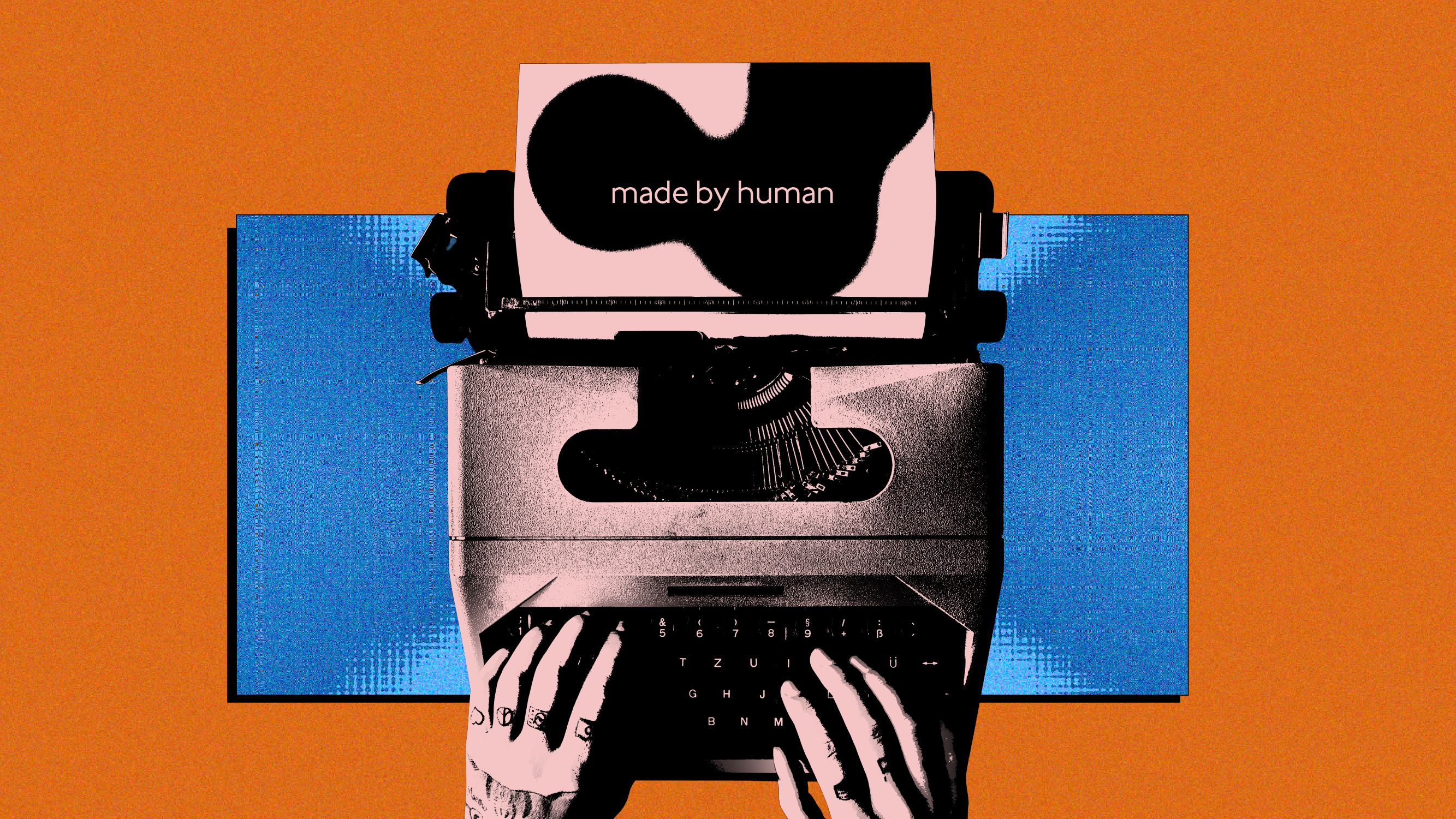
“I use a more casual style, like saying ‘Hey, yo, really?’ or remove exclamation marks. It feels awkward to do this, but it’s what you can do if you want your work to feel more human.”
This quote comes from Sarah Suzuki Harvard, a professional American writer and comedian, in an interview for the Wall Street Journal article titled “Writers Are Going to Extremes to Prove They Didn’t Use AI,” written by Te-Ping Chen. He interviewed people about changing writing behaviors, where they deliberately abandon textbook writing styles to sound more human, as AI tends to use those styles.
This issue is similar to the phrase “Not only x, but y,” which people have begun to recognize sounds very AI-like. In the West, people have stopped using em dashes, and some writers on platforms like Substack who use AI write and then deliberately insert errors or lengthen sentences to avoid detection, even though it can sound odd.
This phenomenon shows growing suspicion about AI usage today. Readers don’t want to encounter AI-generated content, and writers do not want to produce it. Detecting AI use has become a challenge because AI tools develop sentences based on real human writing. People watch for AI’s word usage patterns, as mentioned earlier, and also note if grammar or wording is too perfect, which tends to be seen as AI-generated. On social media, many pages post elegant content, but comment sections often doubt whether it’s AI-made.
One might think this problem is limited to writers and readers, but the issue of proving one’s work is not AI-generated has spread to other fields like art and music. Artists try to prove authenticity by making time-lapse videos from start to finish or photographing their workspace and software screens to show their work was done by hand. All of this reflects consumers’ efforts to avoid being deceived by AI. Chen from the Wall Street Journal humorously likened this to a Reverse Turing Test: while the Turing Test checks for AI’s human-likeness, here the test is reversed, examining humans for AI-like traits.
To understand this, we must look back at early issues of AI art plagiarism before ChatGPT or Gemini existed. There was Dall-E, developed by OpenAI solely for image creation. Its launch was sensational because people once said AI couldn’t create art or that any art it made could be easily detected. But within 2-3 years, Dall-E’s images could pass the Turing Test, prompting protests from artists. The arrival of Midjourney further sparked resistance on platforms like ArtStation, where digital artists set profile pictures opposing AI-generated works. The main argument was that AI learns by using real human artwork, raising intellectual property debates. Midjourney claimed all usage was transformative, teaching the AI pixel relationships with different purposes than the originals. They also argued that image style is not copyrightable. Meanwhile, many lawsuits have been filed by creators.
At that time, especially for painters, the shared problem was: how can we tell which works are real and which are AI-generated? And what is the true value of art?
This phenomenon is difficult to resolve. AI evolves daily, and we cannot stop readers or viewers from detecting or suspecting AI use. At the same time, creators often struggle to prove their work is genuinely theirs, not AI-generated. Ultimately, the best way to cope is to be honest with our own feelings.
All art—whether writing, music, or visual arts—is imbued with human culture and conveyed through individual perspectives. Art’s uniqueness cannot be copied. What matters most is the process: what the creator feels while producing the work, and the motivations behind its elements. These are values AI cannot replicate. Because we know deep down that our creations arise from our own creativity, it means that no matter whether we type “Not only x, but y,” use em dashes, or underline AI-generated content, if we are confident our work is truly intentional, we need not prove ourselves to anyone. Moreover, we should not let the language rules created by humans for literary beauty disappear simply because we are labeled as using AI.
Even if our work is exposed and criticized as possibly AI-made, perhaps the most important thing in creative work is that we do not create or express solely for the audience, but also to reflect our identity and ideas. This is a profound difference only we can recognize. Therefore, if someone claims our work was made by AI, we need not be upset if we know our work stems from our own thoughts and skills. In a world where technology sometimes complicates life, only we can manage our own negative feelings.
References: