

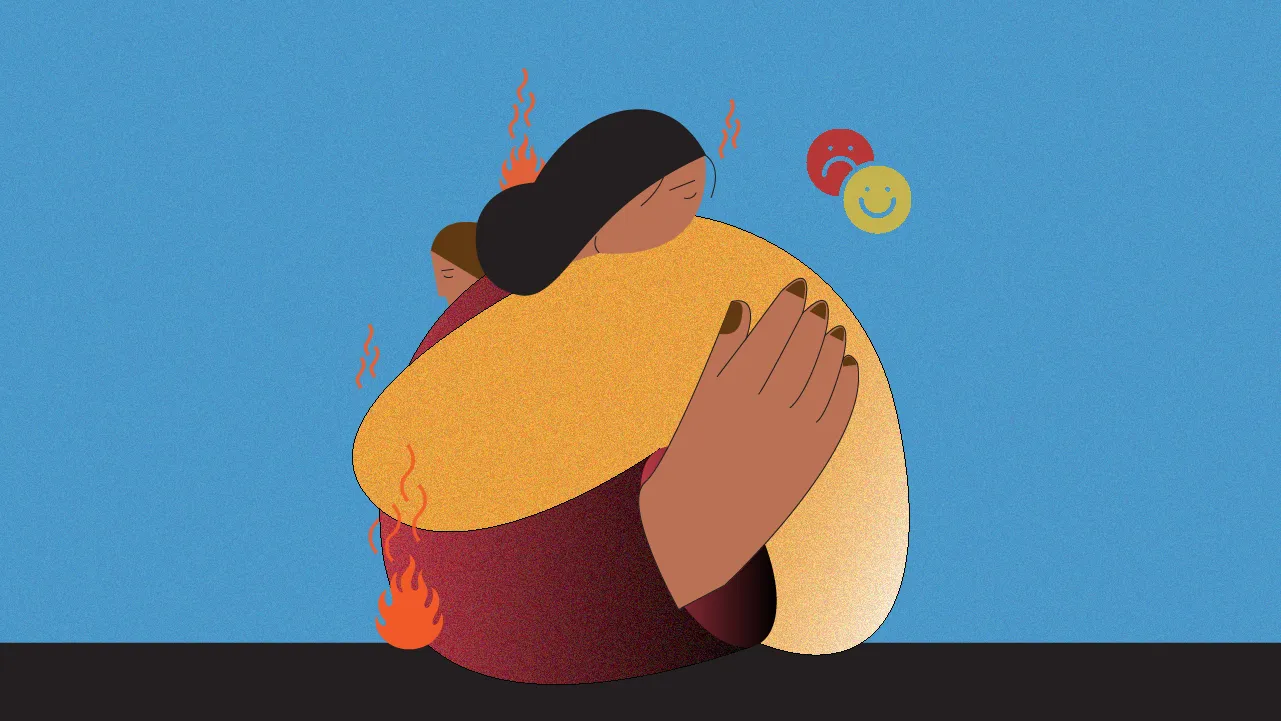
In relationships—be it with a lover, close friend, or even a coworker—there are some people with high empathy who have a special skill to 'scan' for traces of others' past pain.
When someone displays aggressive, cold, or hurtful behavior, instead of responding with anger, these individuals can see through the bad behavior to the root of the problem, recognizing a broken childhood and sensing the psychological wounds or fears hidden beneath the hardened exterior.
Although understanding can help cool a heated situation, it can also be the start of a dangerous trap. Instead of protecting their own feelings, people may focus on reasons behind the other's bad actions or feel compelled to help instead.
Allowing such thoughts to guide us is like opening the door to let others' pain take priority over our own emotional safety.
Tania Singer, a neuroscientist, described this phenomenon as Emotional Contagion. When we see or sense that a loved one is in pain, the part of our brain that processes physical pain activates as well. However, the brain cannot clearly distinguish whether the pain belongs to us or is absorbed from others.
If we overly internalize others' feelings without protective mechanisms, it leads to compassion fatigue, making us feel drained, stressed, and depressed, as if the wounds were physically carved into our own bodies.
Moreover, Charles Figley, an American psychology professor, coined the term Compassion Fatigue, originally observed among therapists, doctors, and nurses. Psychologists now find it can affect ordinary people who continuously act as listeners, mediators, or emotional supports for those around them.
The human mind is like a sponge absorbing emotional toxins. Without squeezing out the dirty water and replenishing clean water, the sponge deteriorates and becomes unusable.
When compassion lacks boundaries or strong immunity, such individuals are often drawn into toxic relationship cycles.
People with deep psychological wounds or narcissistic personalities often seek spaces where their emotions are accepted without rejection, and highly empathetic people fit perfectly into this dynamic.
One side demands and inflicts emotional harm, while the other is ready to understand and forgive, creating a vicious cycle of harm and apology with no end.
Furthermore, trying to understand and fix others can foster the dangerous belief that 'love conquers all,' which psychologists say is false—no one can heal another's emotional wounds unless the person is aware and willing to heal themselves.
Dr. Paul Bloom, a psychologist from Yale University and author of Against Empathy: The Case for Rational Compassion, offers a sharp solution: we don't have to stop helping people, but we must change how our brain works by shifting from sharing their pain to applying reason within compassion.
Rational compassion means recognizing another's pain but using intellect to assess what help is possible within appropriate limits. If we sincerely want their relief, we don't need to suffer alongside them. Taking a step back emotionally preserves energy to help more effectively.
The key to preventing endless cycles of hurt is setting boundaries—defining what we accept and what crosses the line.
This is not selfishness but honest communication and refusing to be an emotional dumping ground. It might be expressed as, "I love and care for you, but I cannot let you destroy me along with your problems."
Compassion is a beautiful human quality; it weaves together fractured societies. But we must always realize that compassion without boundaries can also destroy us.
Everyone has the full right to care deeply for someone while still standing firm to protect themselves.
Everyone has the full right to deeply understand another's wounds and still choose to walk away when the relationship consumes their spirit.
Ultimately, you cannot give light to others if you let the candle inside you go out.
References