

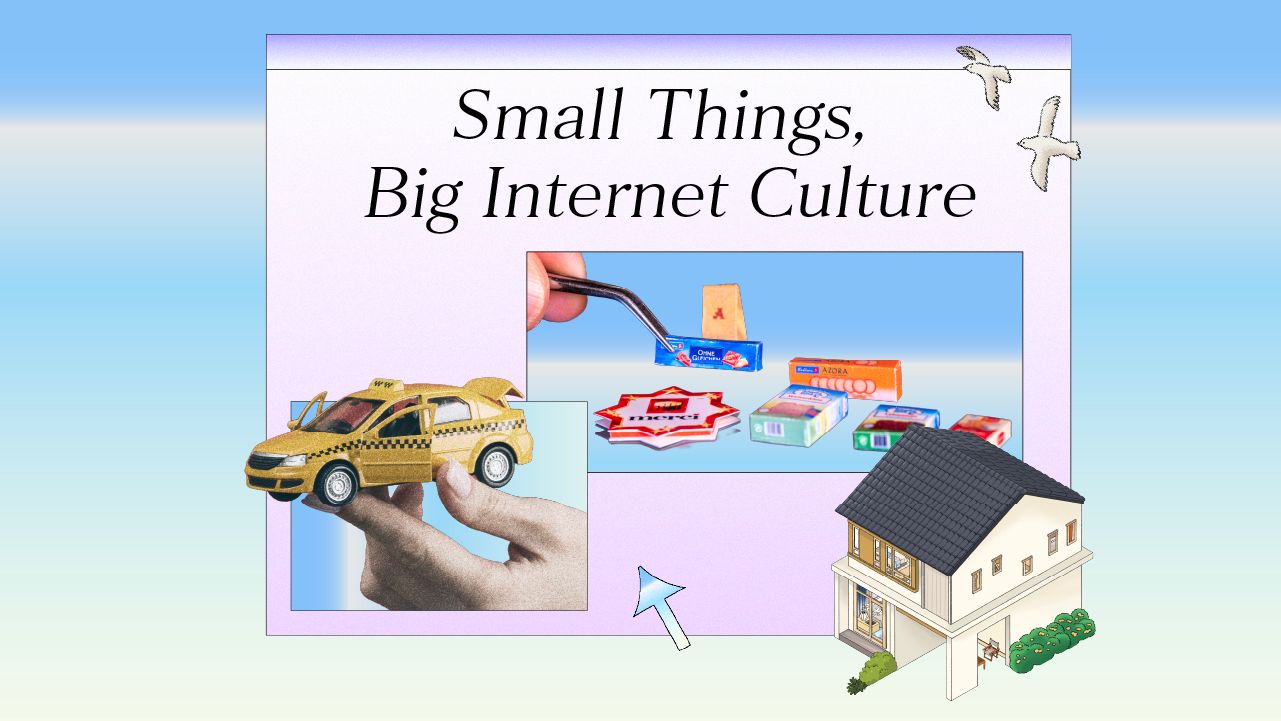
Miniatures have deep roots in basic human behavior from childhood. Many of us grew up playing with dollhouses, city models, toy cars, or miniature kitchen sets. These scaled-down worlds are how humans understand the real world. Miniature worlds transform large, complex, uncontrollable realities into tangible, manageable ones. Children’s play is not just for fun; it trains them in organization, relationship-building, and control through these replicas. As adults, the same desires remain but shift from toys to internet content. Miniature rooms, convenience stores, or food now serve roles similar to dollhouses of the past, redesigned to appeal to adult eyes and minds.
Importantly, as adults, we don’t view miniatures merely as cute, but as sources of satisfaction. The real world is filled with data, work, uncertainty, and uncontrollable elements, yet these small simulated worlds appear perfect. Everything is in its place: tiny tables are neatly arranged, miniature food is crafted with precision, and small rooms lack the chaos of real life. Our brains feel a break from complexity and a sense that everything is controllable. This feeling is vital in the digital age, where people constantly face overwhelming information. Miniatures have thus become emotional safe spaces—a world small enough to understand and complete enough to bring calm.
Another reason miniatures strongly attract the human brain is their paradox: small size packed with intricate detail. Normally, our brains expect small things to be simple, but seeing tiny objects with realistic detail—like a miniature frying pan that can actually fry an egg or a mini-mart stocked with every item—immediately surprises us. This sensation is like witnessing the real world magically shrunk down, stimulating both curiosity and visual pleasure. The high level of detail also reflects the creator’s care and the calm of craftsmanship. Such content often conveys tranquility, gentleness, and order, leading many viewers to use it as a micro-escape—a brief retreat from daily stress—unlike the fast, chaotic feeds elsewhere. Furthermore, miniatures support crafts, creativity, and a DIY culture renewed in the digital age. People appreciate not only the results but also the patience and meticulousness behind the creation.
On the internet, miniatures are more than just a cute trend; they represent emotional healing through imagery. Small simulated worlds make people feel life can be reorganized, even if temporarily. On small screens, viewers see a clean, quiet, balanced world free from pressure, reminiscent of childhood experiences where everything was understandable through play and arrangement. It is no surprise that miniature content is hugely popular, as it simultaneously satisfies memory, comfort, and the desire to control today’s complex world.
Humans have developed platform algorithms like TikTok and Instagram around attention and attraction, forcing content to compete within seconds to stop viewers from scrolling. Miniatures have become powerful content because they immediately surprise visually. People automatically stop when they see disproportionate things, such as an absurdly tiny frying pan, a palm-sized supermarket, or miniature food made to look exactly real. The combination of smallness and detail instantly prompts the brain to ask, “How is this done?” This question aligns perfectly with what platforms want: longer viewing times signal valuable content to algorithms. However, this also has downsides. Platforms reward instantly attention-grabbing content over material that requires time to understand, leading people to grow accustomed to consuming quick, gratifying, and perfectly curated images. Miniature internet content can thus create unrealistically perfect simulated worlds, making real life seem chaotic, unsatisfactory, or uncontrollable. The immaculate order shown may become an emotional standard real life can’t meet. Overusing such content to escape stress risks addiction to temporary comfort instead of confronting real-life challenges.
Miniatures captivate because they are often crafted with perfect symmetry, whether in tiny supermarket shelves, miniature dining tables, or simulated rooms where everything is balanced. The human brain naturally responds to balanced patterns as symmetry conveys stability and predictability. Real life is often full of uncertainty, clutter, and imbalance. The symmetry in miniatures is thus not merely aesthetic but provides psychological comfort by presenting a world more complete than reality.
Miniatures often induce calm because they depict an impeccably orderly world: small rooms without dust, tiny dining tables arranged neatly, every product precisely placed on shelves. These miniature worlds contrast with real life’s mess and overwhelming information. Viewing miniature content allows the brain to feel a break from chaos. Their orderliness functions like organizing a workspace or bedroom, creating a sense that the world is still manageable.
A major charm of miniatures is that every element is deliberately made—from wood grain on a tiny table to the milk foam on miniature coffee, down to product labels only millimeters in size. Such detail gives viewers a feeling of perfect control. In the real world, humans cannot manage everything, but in a miniature world, the creator controls every position, color, and element precisely. Seeing such fine detail surprises the brain, showing care and patience at a high level, standing apart from the fast, superficial content online.
Not too big, not too much, not overflowing beyond control. Tiny rooms with perfectly fitting furniture or miniature food arranged in balanced proportions give viewers a sense of harmony rarely found in real life. Today’s lives are full of data, work, expectations, and overload, but miniatures shrink everything down to a manageable size. This feeling of “just right” becomes emotional comfort. People don’t just watch miniatures for cuteness; they seek a sense that life and the world can be balanced, simple, and under control again—even if only in a palm-sized simulation.
Today, miniatures are no longer just toys or collectible models but are embedded in digital culture and everyday life across nearly every platform. Their small size, detail, and charm quickly attract attention and create emotional bonds. Examples of widely used miniatures include:
▪️Small chat stickers in messaging apps
▪️Miniature food content on TikTok and Instagram, such as making tiny ramen, tiny burgers, or small functional kitchen sets
▪️Dollhouses and simulated rooms
▪️Figures and collectible models like gachapon, food models, or blind box toys
▪️Life simulation apps or games like Animal Crossing▪️Miniature stationery and accessories such as tiny notebooks, decorative tapes, mini furniture, or desk decorations
▪️Isometric Stickers from Sansiri that allow personal arrangement of home spaces
Miniatures today are thus not merely small objects but a form of contemporary culture that satisfies the visual, emotional, and psychological needs of people in the digital age. People seek smaller, simpler, and more controllable worlds amid an increasingly large and complex real world. This connects miniatures to residential space design.
Imagine if choosing a home goes beyond just visual appeal to experiencing living through small details assembled piece by piece. Tiny stickers gradually become reflections of real life—from color shades setting the mood of a space to every piece of furniture carefully chosen to fulfill living functions. Every element is miniaturized from real Sansiri projects, created in collaboration with expert partners like Nippon Paint and SB Design Square. They build a Design Ecosystem linking design, materials, and real living, conveyed through Isometric Stickers that feel like building a living home, letting viewers arrange their space corner by corner, floor by floor, detail by detail.
Because the visual world is no longer limited to sight alone, the global ASMR trend is incorporated into storytelling through the subtle sounds of picking up, placing, assembling, and arranging. This transforms the viewing experience into a tactile feeling, blending with soft storytelling that gently immerses viewers in the home atmosphere. After all, a home may not just be a living space but a small feeling we want to experience before deciding to live there for real.
From miniatures to real homes, from imaginary models to spaces designed for real living—“Behind The Design: Peace in Pieces” invites you to experience Sansiri’s design world through assembling piece by piece, accompanied by ASMR sounds that turn ordinary moments into times of calm and focused attention on the small details around you, available athttp://siri.ly/nIGq8y5
From models to real homes and from real homes to stickers, #BehindTheDesign: Peace in Pieces lets you experience the design world across all Sansiri projects—houses, condos, and townhomes alike.https://siri.ly/IPKFYs5
And on all Sansiri platforms
女
Facebook:@SansiriPLC
Instagram:@SansiriPLC
TikTok:@SansiriPLC
YouTube:@SansiriPLC
Because design doesn’t start from shape but from meaning