

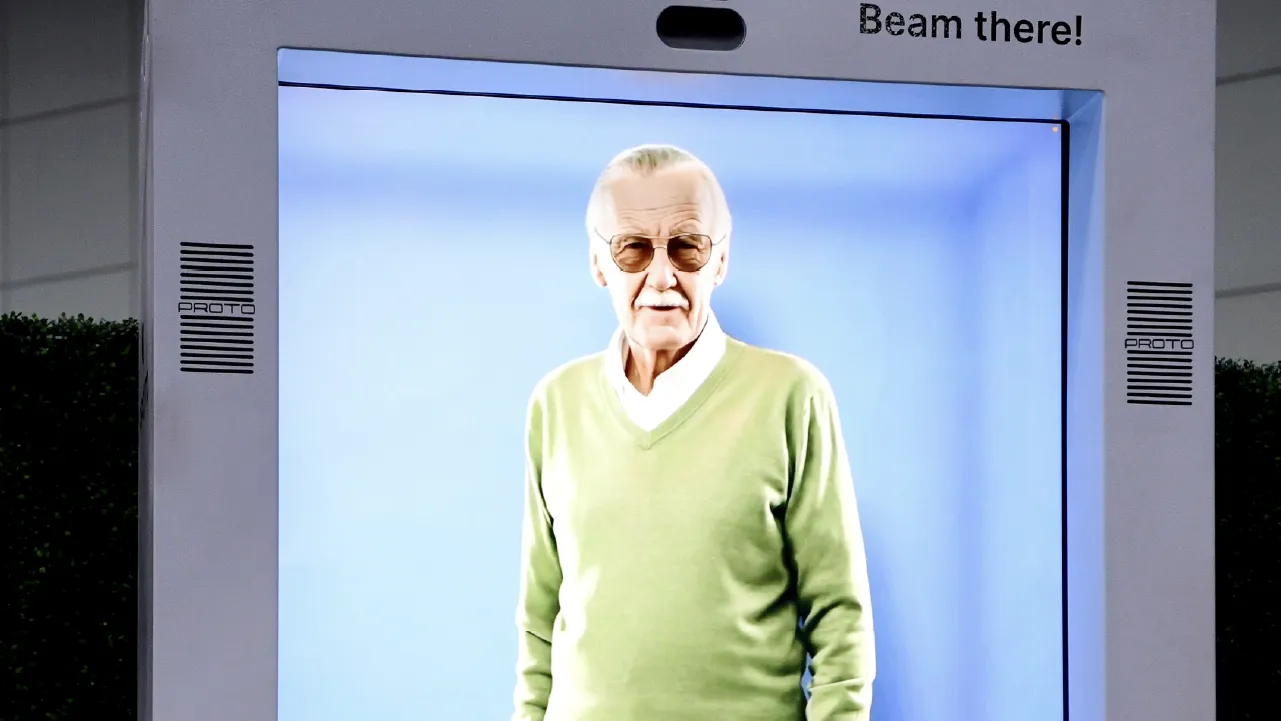
Currently, when discussing AI, a hot topic is a particular advertisement. Although permission was obtained from each family to use voice and appearance data to revive their loved ones with AI technology, and the ad benefits society, it sparked debate about whether it is appropriate. At the same time, some feel this is the correct use of AI.
Facebook users have shared and questioned the appropriateness, from the strange feeling of watching it to ethical concerns about using the identity of the deceased for benefit. Even with family permission, what would the "owner of the body" think? Can we represent the deceased’s wishes? If society accepts it, where should the limits lie?
The idea of reviving deceased actors has been discussed for years—from holograms of classic singers in sci-fi movies to AI-powered de-aging of actors, widely used in films. Many actors fear what AI might enable in the future. Nicolas Cage, currently starring in the series Spider-Noir, revealed to The New Yorker during filming that he fears AI, having undergone two body scans for Spider-Man and another new project.
"They put me into some computer and scanned my eye color. It felt like they were stealing my body and could do anything with it digitally through AI."
"It makes me wonder where the authenticity of an artist ends. Will it be replaced or transformed into something else? Will it have a heartbeat? What will you do with my body and face after I'm gone?"
Reviving deceased individuals for societal benefit is not unique to Thailand. The BBC faced issues after reviving famous writer Agatha Christie, author of Murder on the Orient Express and Death on the Nile, to teach writing in the BBC Maestro course featuring professionals from various fields.
BBC obtained permission from Christie’s family for the course. However, fans and critics noted Christie was famously shy and disliked television or public exposure. Devoted fans insisted that if she were alive, she would hate the idea of being "revived" via technology for teaching. They also emphasized true consent must come from the individual themselves, not decided by others.
The TV series Black Mirror satirizes humans and technology. Its season two premiere, "Be Right Back," explores this issue: a woman discovers technology that creates a virtual version of her deceased boyfriend based on social media data. The episode illustrates how we might cope when grief meets technology, questioning the authenticity of what we create and whether we merely delay pain—highlighting the frightening challenges of emerging technology.
On AI revival and the law
Laws vary by country. In the U.S., due to differing state laws, Congress reintroduced the No Fakes Act in May to cover AI use and individual identity for profit, applicable nationwide. Key provisions include:
Individuals may own rights to their voice and likeness; unauthorized creation or distribution of digital likenesses is illegal.
Previously, deceased persons’ rights belonged to their family. The new draft limits family ownership to 10 years, but with permission, rights may extend up to 70 years.
Unauthorized use allows families to demand removal from platforms or websites immediately.
However, the No Fakes Act does not fully address the deceased’s personal rights beyond ownership, and rights can be transferred beyond family. A way to avoid misuse is to draft a will explicitly prohibiting use of voice, likeness, or other identifying traits after death, serving as important legal evidence.
Thailand currently lacks laws covering this area. Rights to a deceased’s voice or likeness are not considered inheritable property managed by family. Thus, obtaining family permission for AI use is not legally required but a matter of appropriateness to prevent future issues.
Which Ship of Theseus counts as ourselves?
Laws are agreements to avoid future problems and serve as standards to measure if actions align with societal correctness. AI remains new, with countries drafting laws to regulate its limits. When AI intersects with humanity, especially identity, complexity arises.
In the cited advertisement, the senior actors and singers shown are certainly deceased. The question is how much of their true selves remain beyond voice and appearance, and how can we be sure AI does not present a distorted identity?
Philosopher Plutarch's Ship of Theseus raises questions of identity: Theseus, a Greek hero, sailed a wooden ship that was gradually repaired with all new wood. When the ship returned, was it still the same ship? Meanwhile, the original removed wood was reassembled into a new ship by a scavenger. Which is the real ship of Theseus?
Now we have two ships: the repaired one with all new wood and the one rebuilt from the original wood by the scavenger.
The question is: which ship is truly Theseus’s?
This problem is often used to discuss identity concepts and resurfaces with advanced AI. There are various perspectives on the answer, which we can apply to AI representations.
The repaired ship is the Ship of Theseus; the newly built ship is a new vessel.
This view holds that identity constantly changes with new experiences, emphasizing the present self. It aligns with the Buddhist concept of impermanence. Regarding AI, our self ends at death; the AI version is just a reconstructed fragment, a past extended.
Neither ship is truly Theseus’s ship—this perspective prioritizes physical substance.
The Ship of Theseus ceases to be itself once the first plank is replaced. If forced to choose, the ship made from original wood is considered the true ship, valuing physical materials. Similarly, AI replicas could be viewed as ourselves since built from our remaining data.
The repaired ship is the Ship of Theseus, focusing on purpose.
Aristotle’s view emphasizes purpose: the ship’s goal is sailing. Even if all wood is new, as long as it serves that purpose, it remains the same ship. Applying this to AI, the intent behind its use matters. For example, Agatha Christie's AI revival aims to convey writing knowledge, aligning with her purpose.
These thought-provoking issues highlight ethical gaps in using AI to represent the deceased. We cannot fully know the wishes of the dead, nor can close relatives truly understand their authentic selves. Therefore, consent while alive is crucial.
Laws provide practical evidence. Even though Thailand lacks AI-related laws, drafting a will can clarify intentions to protect one's identity from misuse after death. This informs family and heirs, emphasizing that consent is not only legal but also a respect owed to the deceased—an appropriateness all living people should acknowledge as fellow humans.
References: