

Native Americans believe a true Spirit Animal is not determined solely by the birth calendar but is connected to animals we feel bonded with, appear in dreams, or encounter frequently in life—especially during important decisions, life transitions, or significant changes.
However, pairing animals with birth dates here is a contemporary interpretation influenced by Western astrology and New Age ideas. It is not a universal Native American belief, nor is there scientific evidence linking personality to birth dates. This content is intended for entertainment and self-reflection only. If you're ready, let's explore and find your Spirit Animal by your birth period.
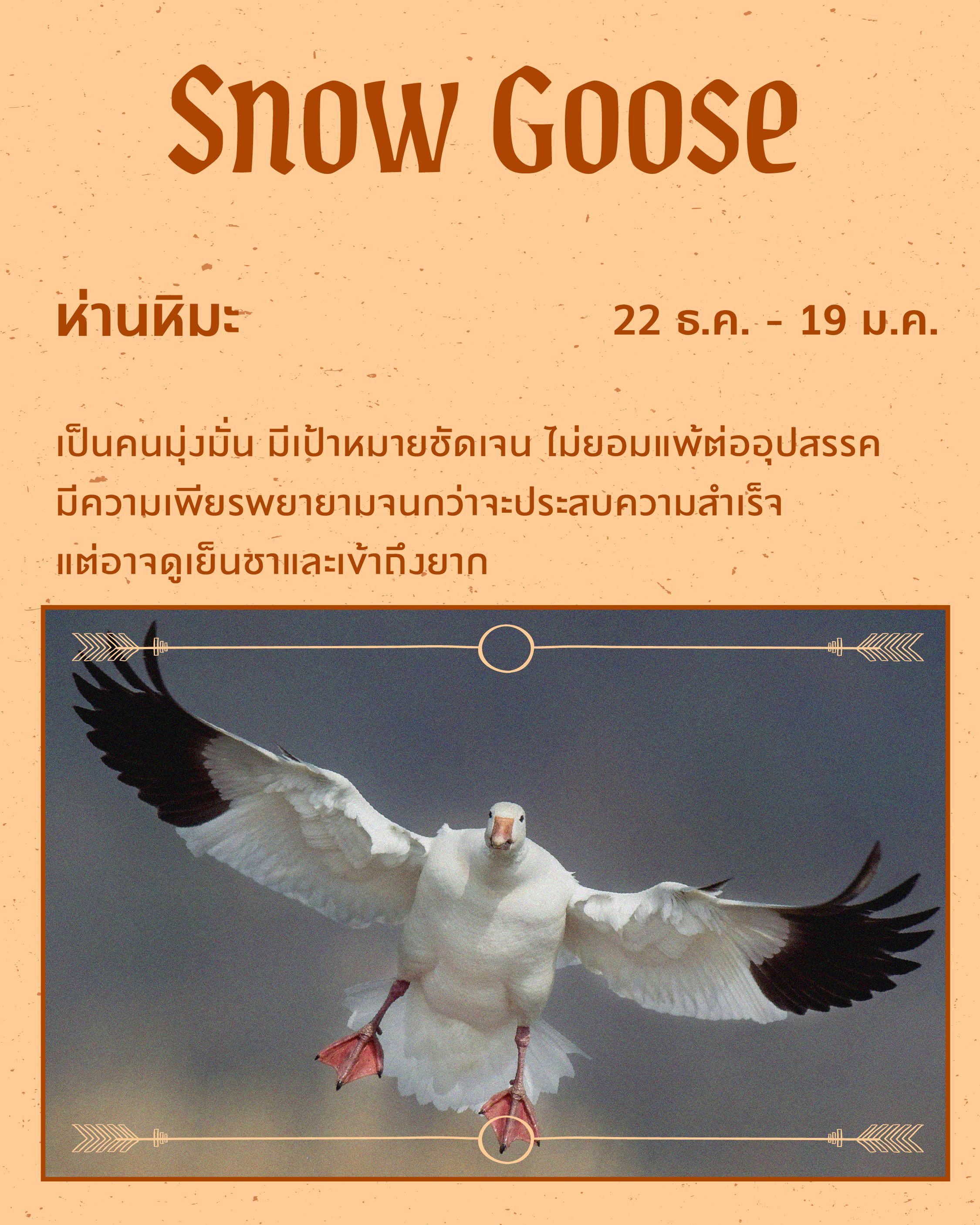
January is a winter season when many animals hibernate due to scarcity of water and food. People also tend to pause and reflect during this time to plan for the future.
Yet the Snow Goose, a large migratory waterfowl native to North America, has evolved to fly long migrations over cold seas and harsh climates.
The Snow Goose represents new beginnings filled with effort, systematic planning, and focused pursuit of goals without deviation.
People of this group tend to have broad vision, set clear goals, and persist until success is achieved. They follow systematic plans, are strong, and resilient in facing obstacles without giving up.
However, caution is needed to avoid excessive perfectionism that hinders action, or appearing cold and distant, which may create discomfort or distance with colleagues.
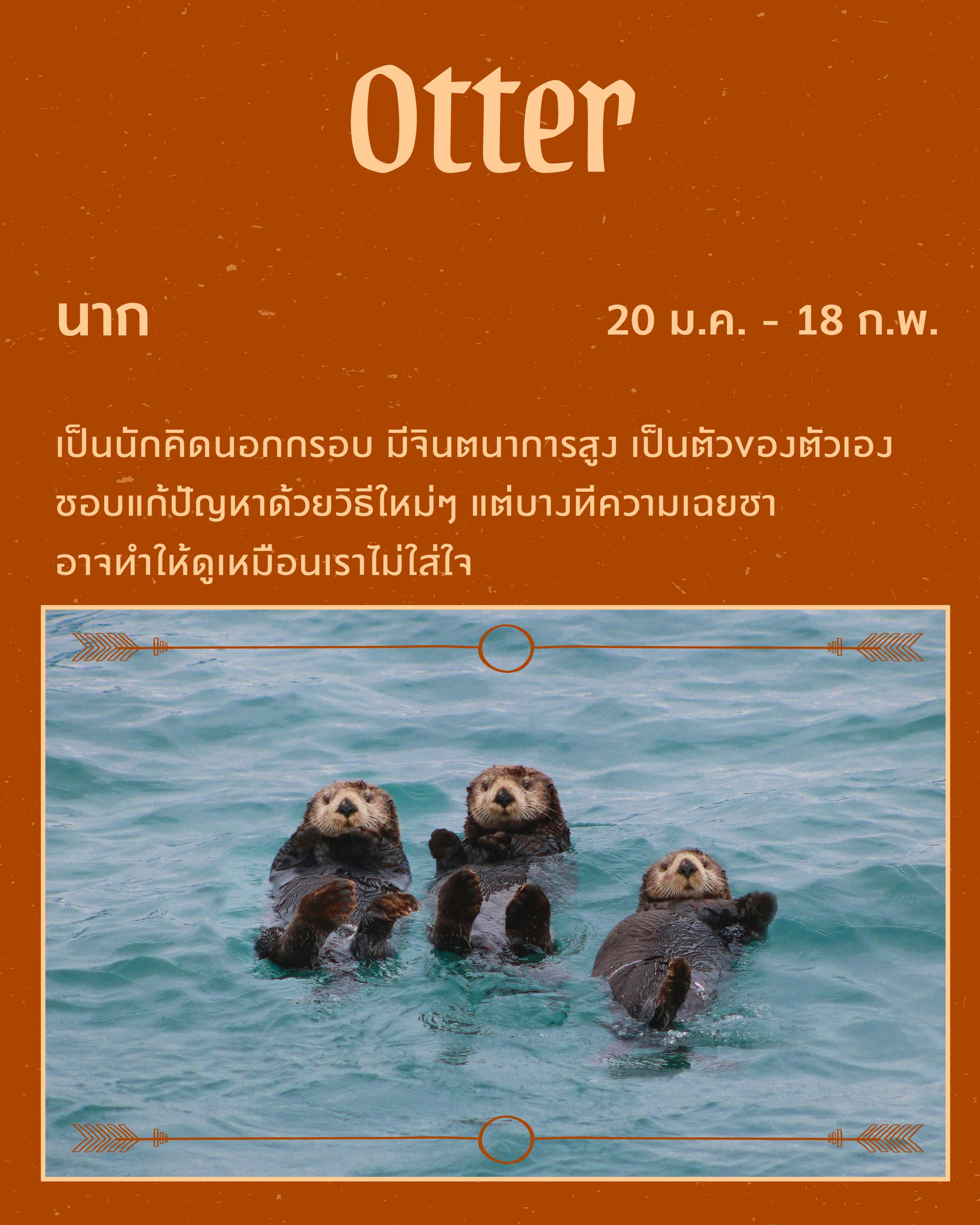
Midwinter marks a crucial transition as light gradually returns. Native Americans see this time as full of energy for renewal and creativity, especially as nature revives after being covered by thick snow.
The Otter, an indicator of water ecosystem health, plays freely in streams, letting currents carry it but always holding friends’ hands to avoid getting lost. It adapts quickly and survives well.
The Otter symbolizes rapid adaptation for survival, collective vision, openness to new ideas, good problem-solving, and playful friendliness.
People with this spirit often have unique creativity, see overlooked solutions, adapt flexibly in thought and social life, cherish freedom, and build strong, sincere friendships.
At the same time, they should watch for excessive distractibility that undermines focus on current tasks and emotional detachment that may make them seem indifferent to others.
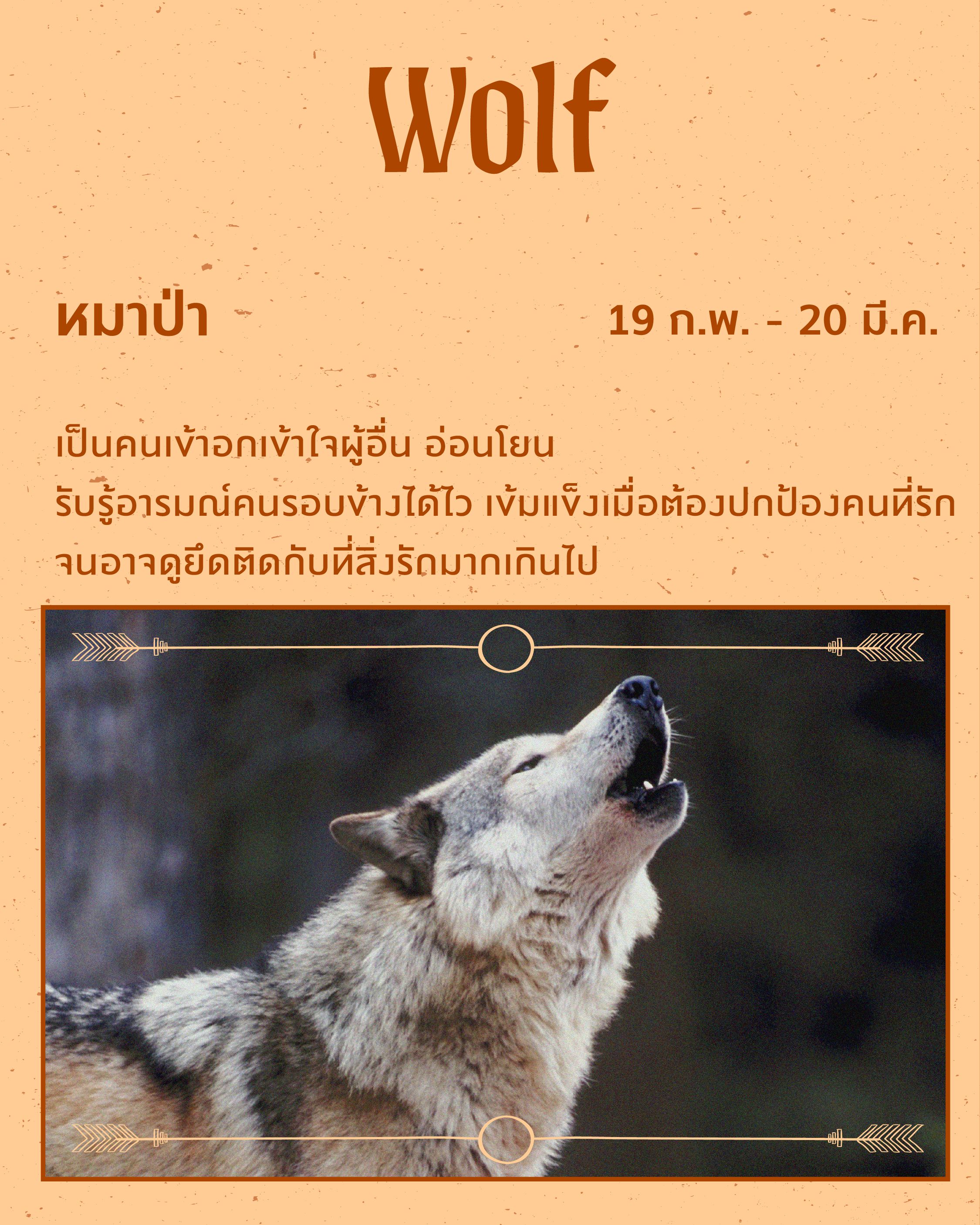
Late winter is a time of anticipating spring’s bloom, a period for inner reflection and transition to new energy.
Native Americans associate the Wolf with water and pack living. Wolves are intelligent, strong hunters symbolizing power, sharp instinct, and leadership spirit before the full arrival of the new season.
People with this spirit quickly understand feelings and surroundings, have keen instincts, read people well, enjoy sharing knowledge and guiding others, are dependable, and protective of loved ones.
However, Wolves need solitude to retreat and reconnect with themselves, which others may not understand. Excessive solitude may lead to loneliness or attachment turning into fixation.
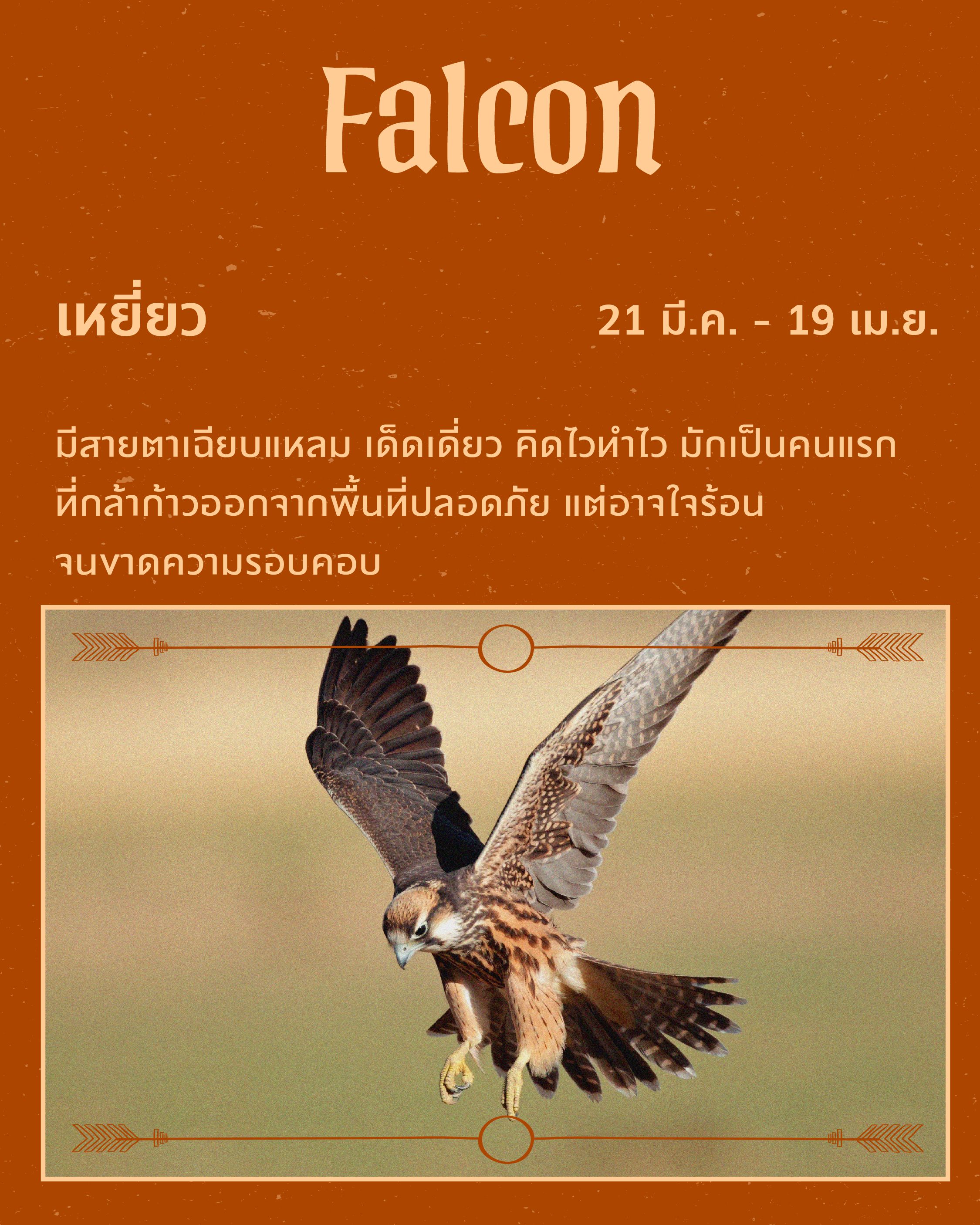
Early spring brings rapidly growing natural energy, a season for new beginnings amid warm weather and blooming flowers. Many animals emerge to live and forage.
The Falcon’s sharp eyes and swift diving behavior represent the power to start new endeavors, courage to break fears, push limits, and step out of comfort zones even with uncertainty.
People with this spirit assess situations well, read social cues, spot opportunities or obstacles early, are decisive and bold in action, and often recognized as leaders for their skills and achievements.
Yet they should be cautious of impatience and hasty decisions lacking thorough thought. Tasks requiring patience and detail may need more time and careful consideration.
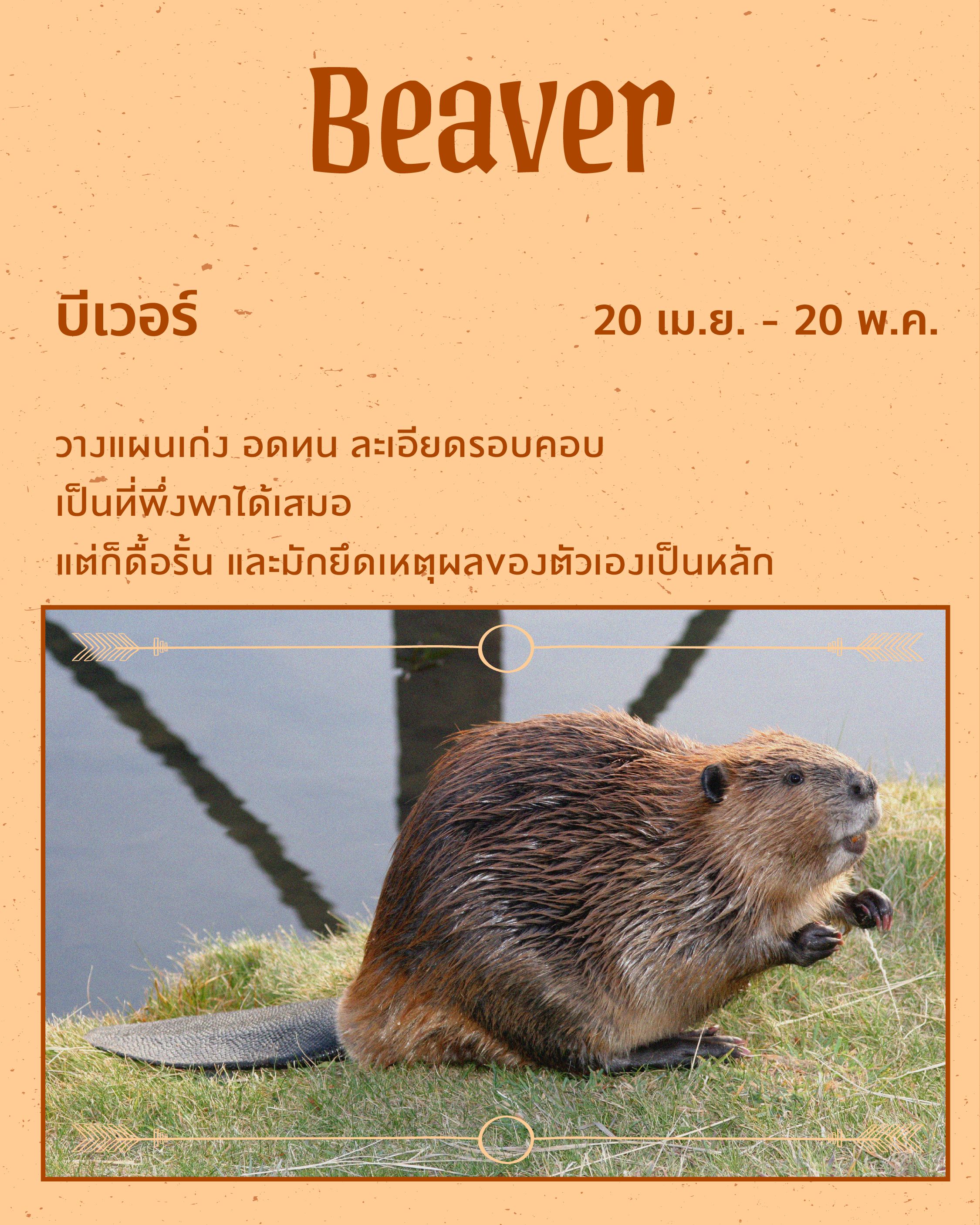
May is when spring is in full bloom, welcoming planting season. Animals in nature perform their ecological roles perfectly.
The Beaver, a little ecosystem engineer, modifies environments to create wetlands that support other life and maintain nature’s balance. It symbolizes this month's energy of systematic action, making the most of resources into tangible, sustainable results.
People with this spirit initiate creative projects with care and attention to detail, work step-by-step for lasting results, have a knack for resource management, know how to use and save wisely, and love to protect family, friends, and their work.
However, they may be stubborn, resisting change when circumstances require new approaches, and sometimes overly possessive or attached.
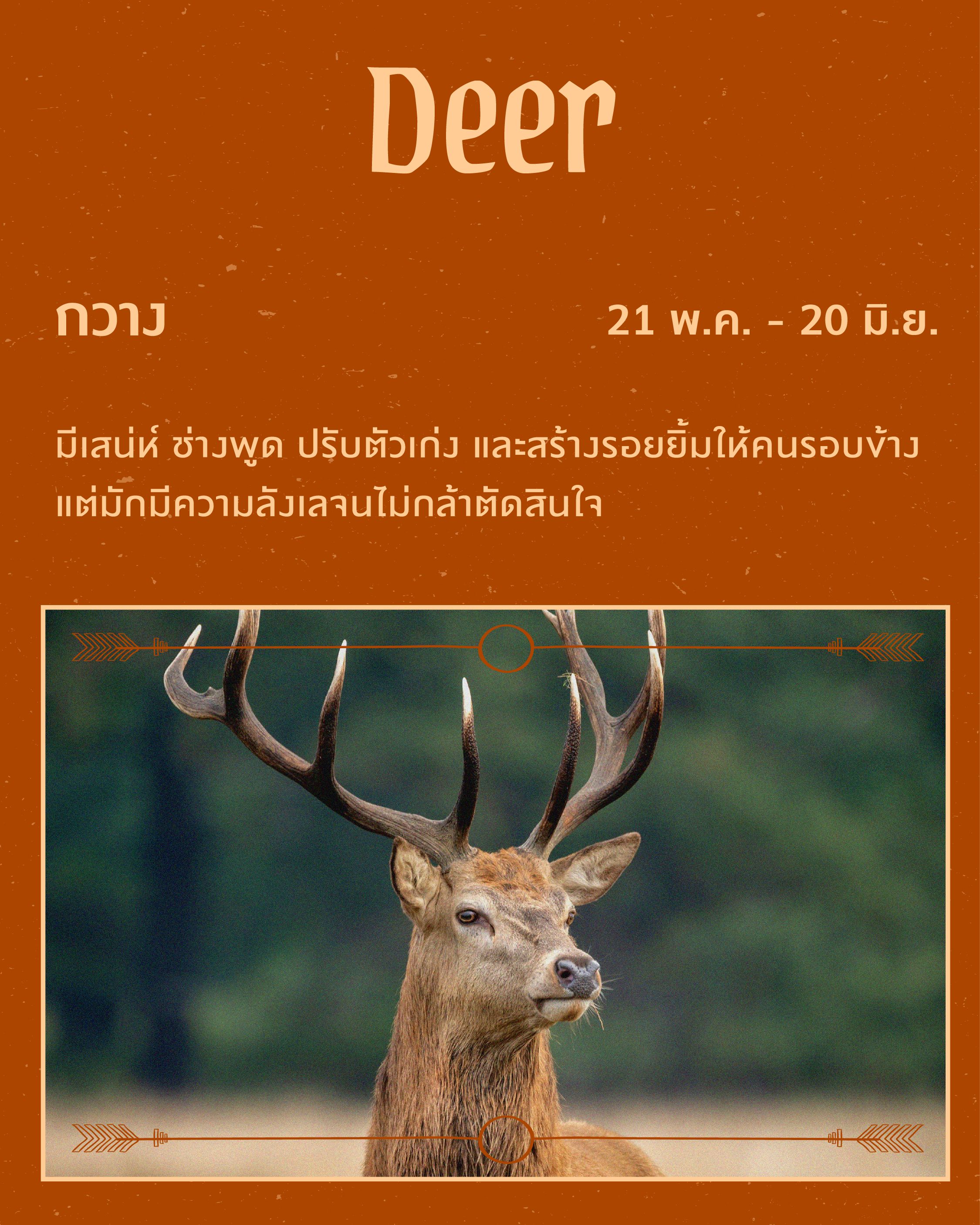
June is when nature is most abundant with the longest daylight hours, filled with vitality among animals and the ecosystem.
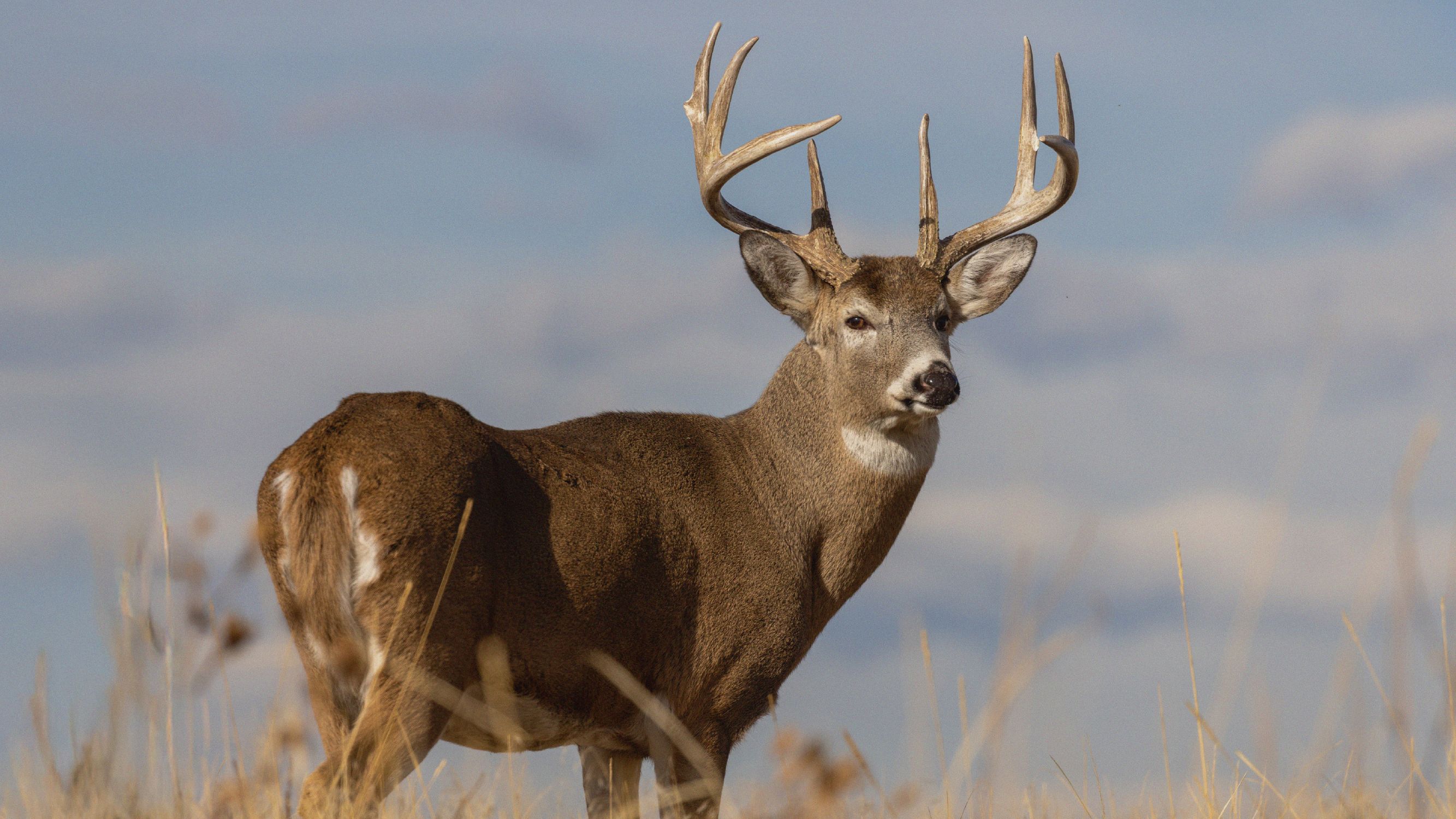
The Deer is known for alertness, grace, and free movement in nature, emphasizing interaction, curiosity, and connecting people with creativity harmoniously.
People with this spirit quickly read atmospheres and emotions, have unique charm that builds trust, are creative and socially adaptable, and can integrate diverse ideas.
Although Deer create warmth and trust, they tend to be overly cautious, leading to anxiety, indecisiveness, and avoidance of confronting problems or conflicts directly.
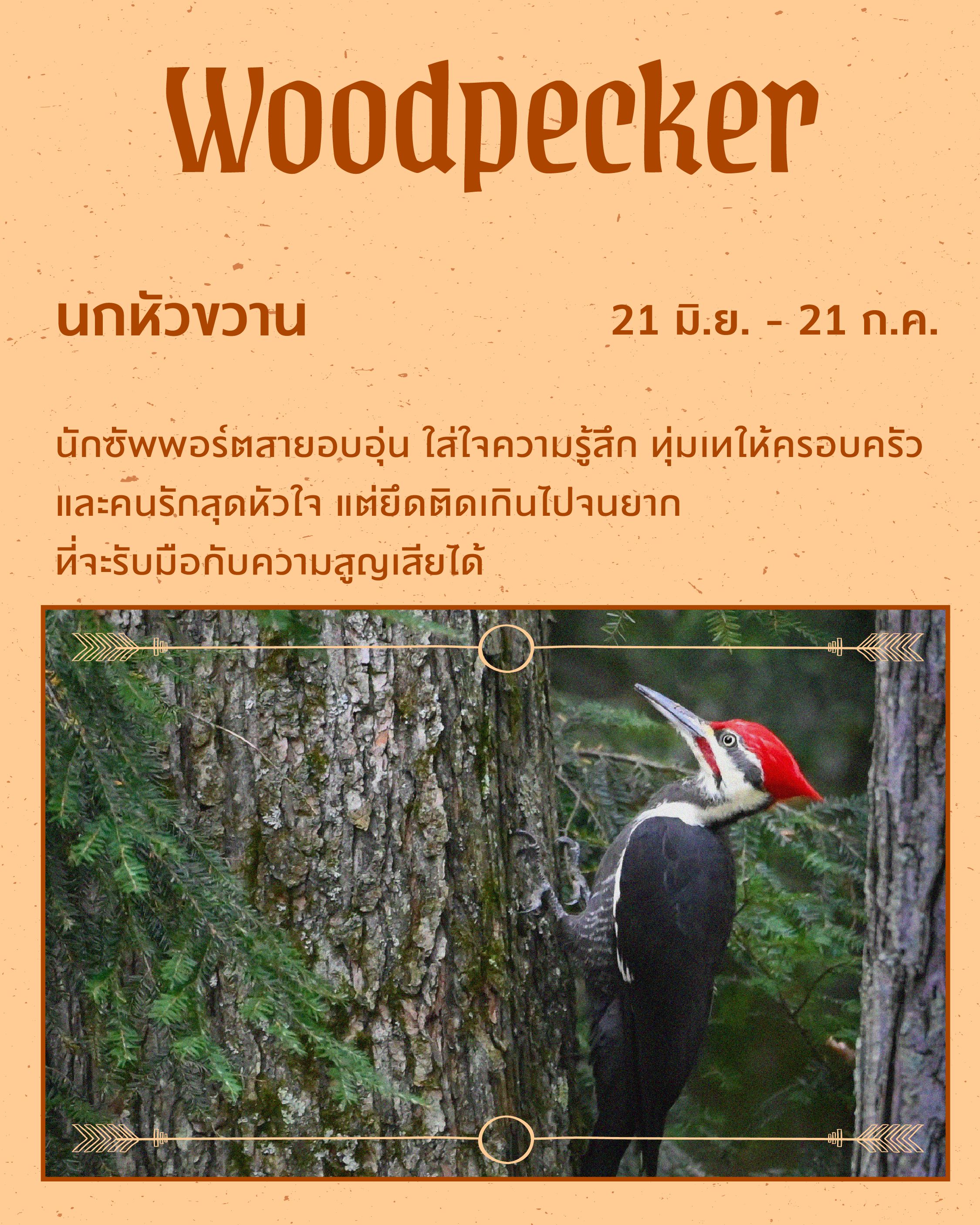
Mid-summer is the warmest time, triggering instincts to build nests and care for family members.
The Woodpecker uses its strong beak to drill into living or dead trees to create nests for shelter and eggs. Native Americans view it as a symbol of creating safe space, emotional security, and devoted care for family and loved ones.
People with this spirit are quick-witted, good at problem-solving, devoted and loyal to chosen goals or people, empathetic, dependable, and supportive during difficult times.
Sometimes they cling too much to the past, making it hard to let go and cope with loss or emotional pain.
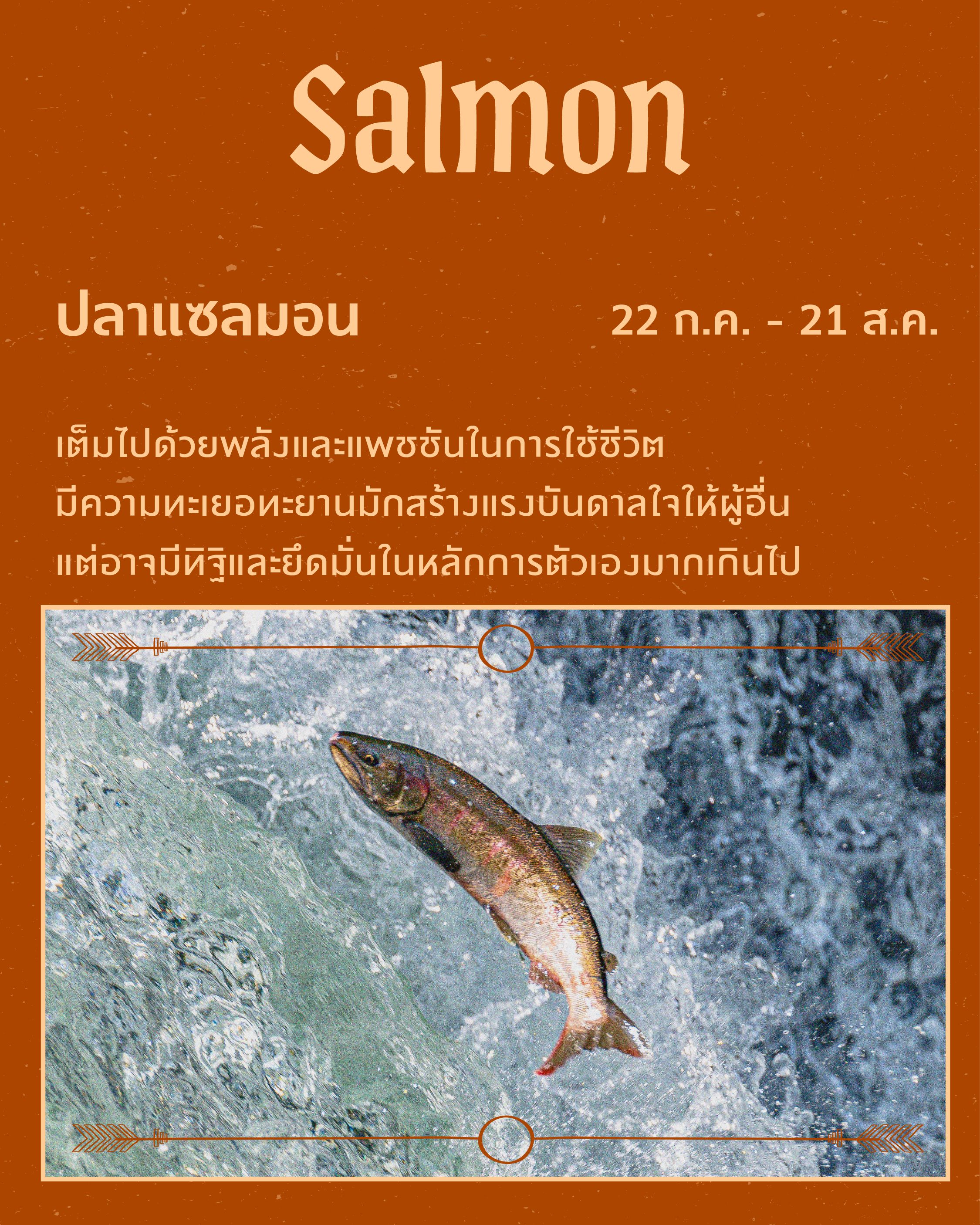
August is naturally the time when Salmon swim upstream against currents to reach freshwater spawning grounds. Native Americans believe the Salmon’s spirit reflects courage to overcome obstacles and perseverance to drive life forward with heart.
People with this spirit are determined and focused, pursuing goals relentlessly, creating unique and innovative work, and have leadership charm that attracts others to join their journey.
However, they may exhibit stubbornness, excessive desire for recognition, and mood swings affecting relationships.
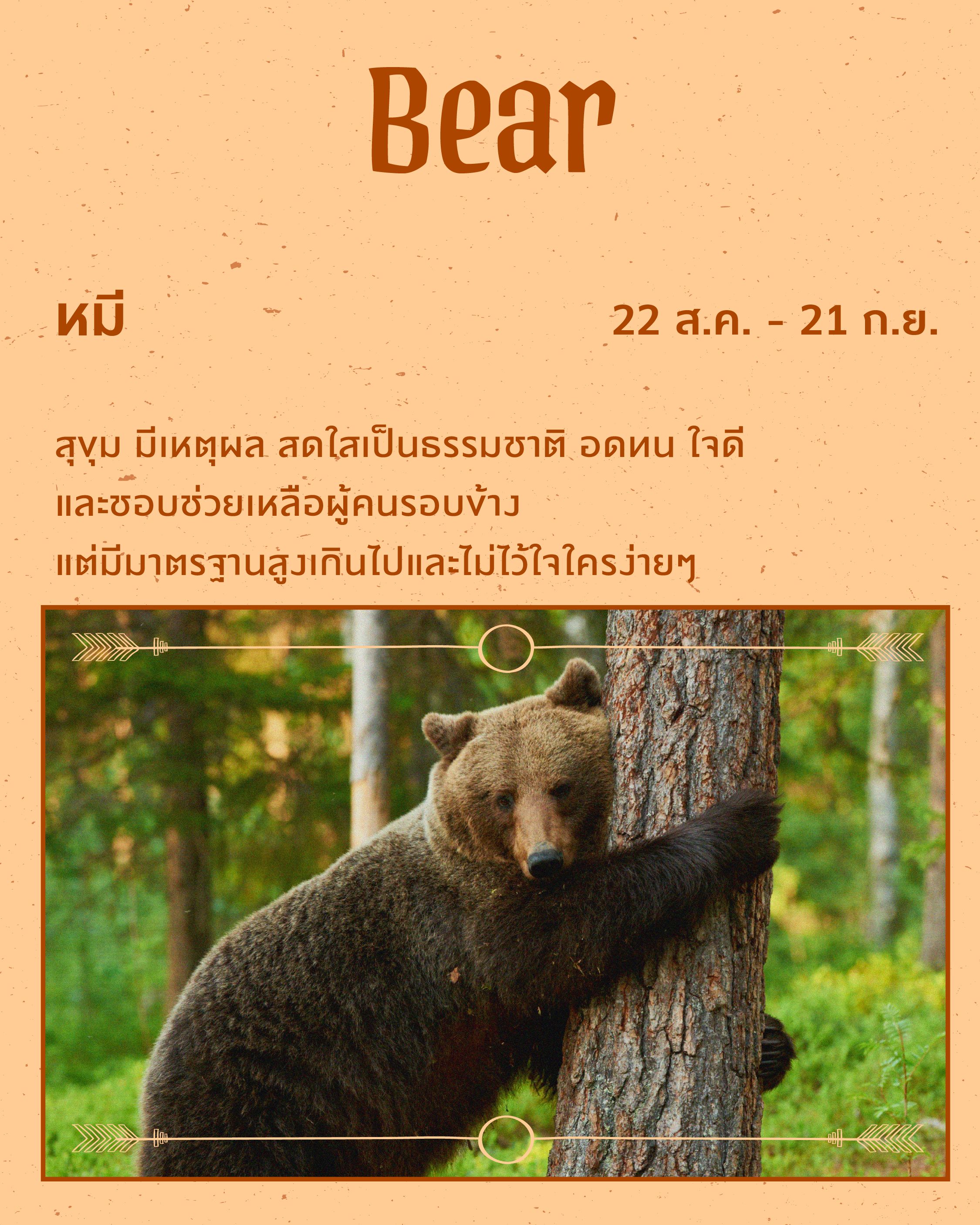
September is harvest time, a transition from late summer to autumn, when people evaluate, select, and organize to prepare for future gathering.
Native Americans believe the Bear’s nature is patient, cautious, and thoughtful; strong yet gentle.
People with this spirit think systematically, are detail-oriented, consider situations thoroughly before deciding, build credibility through quality work, are warm-hearted, helpful, and find joy in advising and solving problems for others.
Due to their carefulness, they sometimes set excessively high standards, leading to self-criticism and criticism of others, and are cautious about trusting others fully.
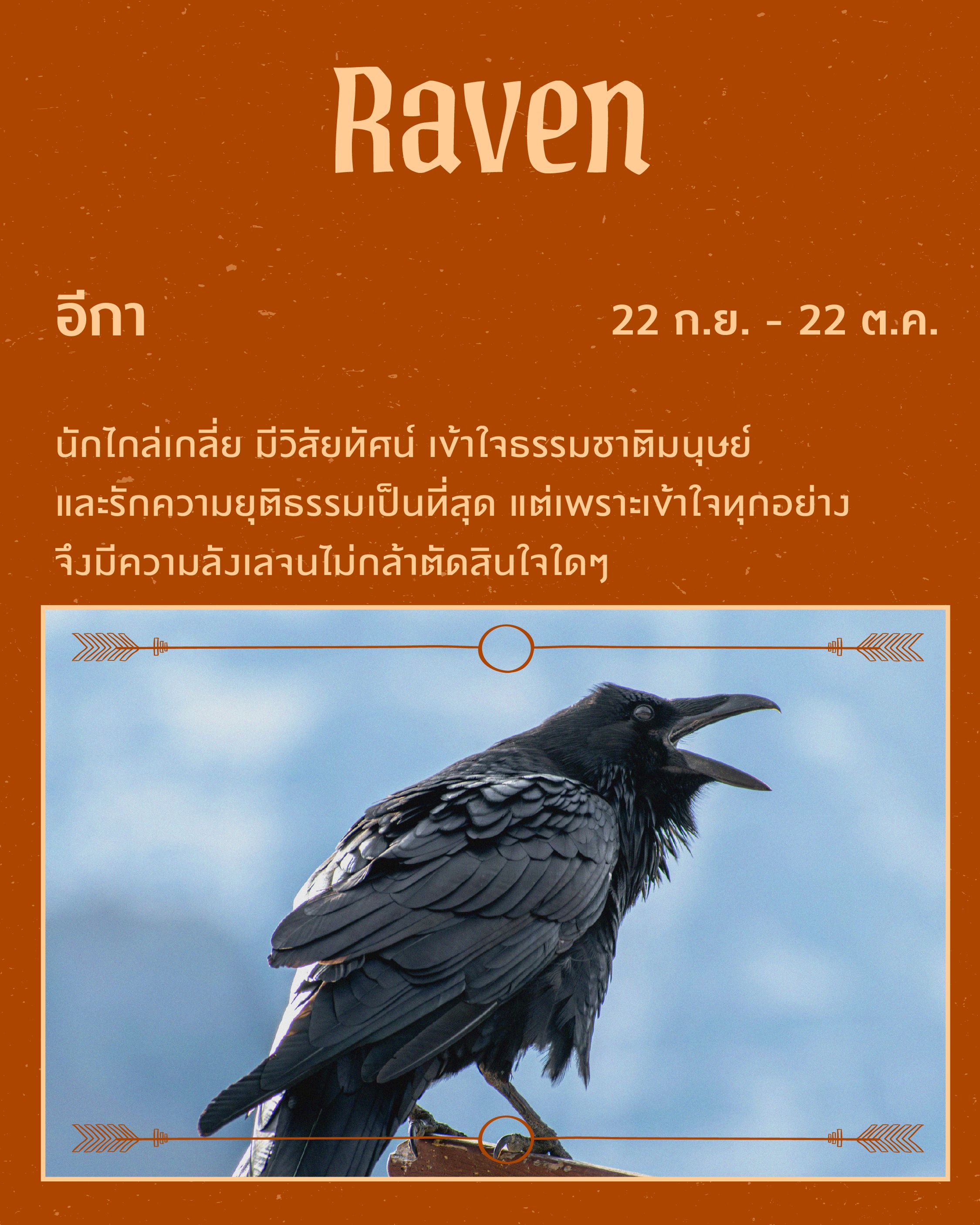
October has equal day and night lengths, a point of perfect balance. Native Americans see the Raven as a symbol of the spirit world, a bridge between two worlds.
The Raven transforms darkness into light and wisdom, reflecting balance, openness to change, and seeing true human values.
People with this spirit perceive deep human emotions, enjoy communication, mediate conflicts, create space for diverse opinions without losing their own stance, have good taste, and see the world realistically.
Caution lies in indecisiveness caused by weighing all sides equally, making choices difficult.
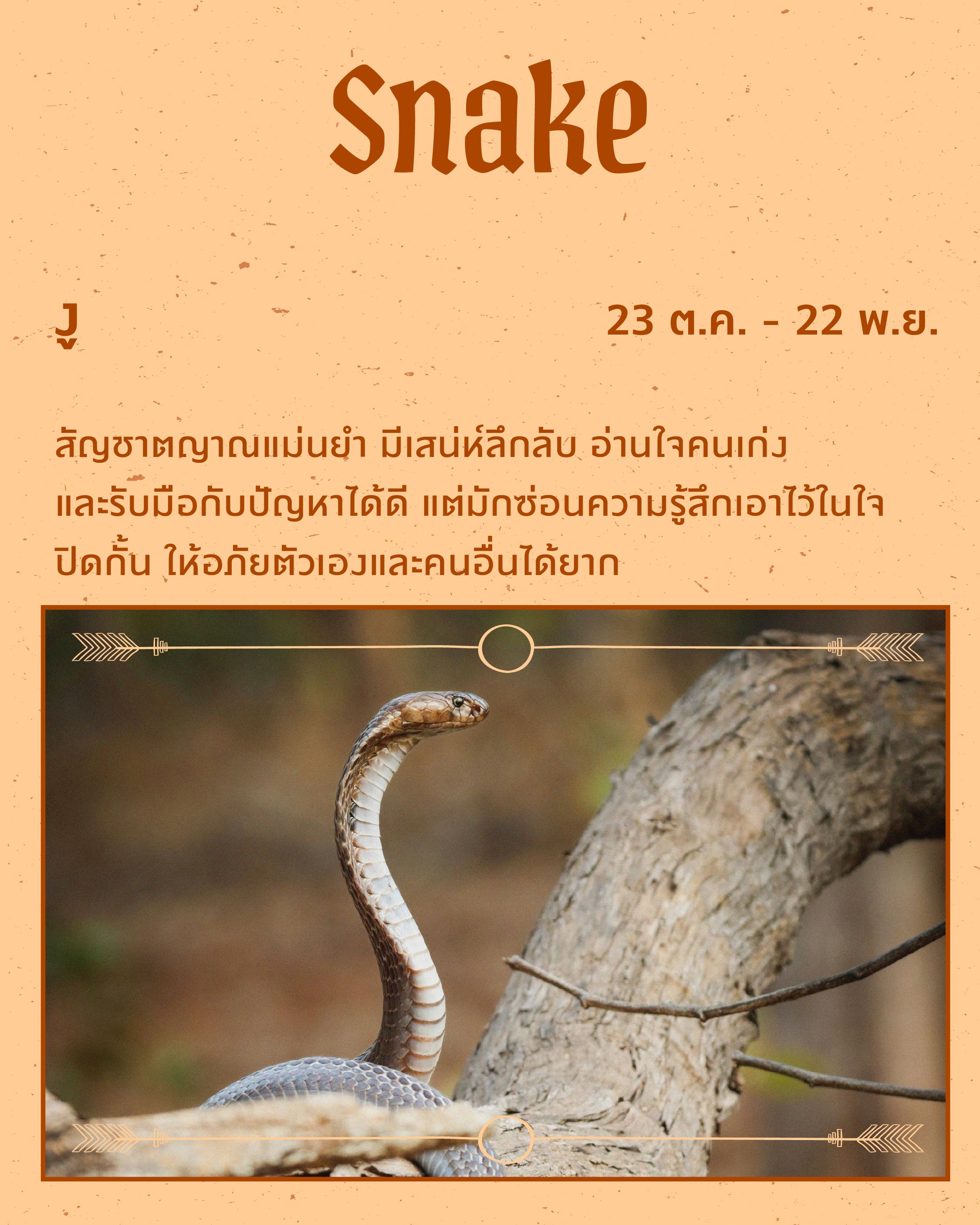
November is when nature sheds what is unnecessary; leaves fall and cold returns, signaling rest before renewal.
Native Americans view the Snake’s shedding behavior as transformation, growth, and shedding old selves—akin to spiritual rebirth amid darkness or challenges.
People with this spirit are strong in facing major life changes, capable of letting go and growing, have instincts to read surroundings and others’ minds, and often provide emotional support for others.
Their strength may lead them to hide feelings, and once trust is broken, forgiveness can be difficult.
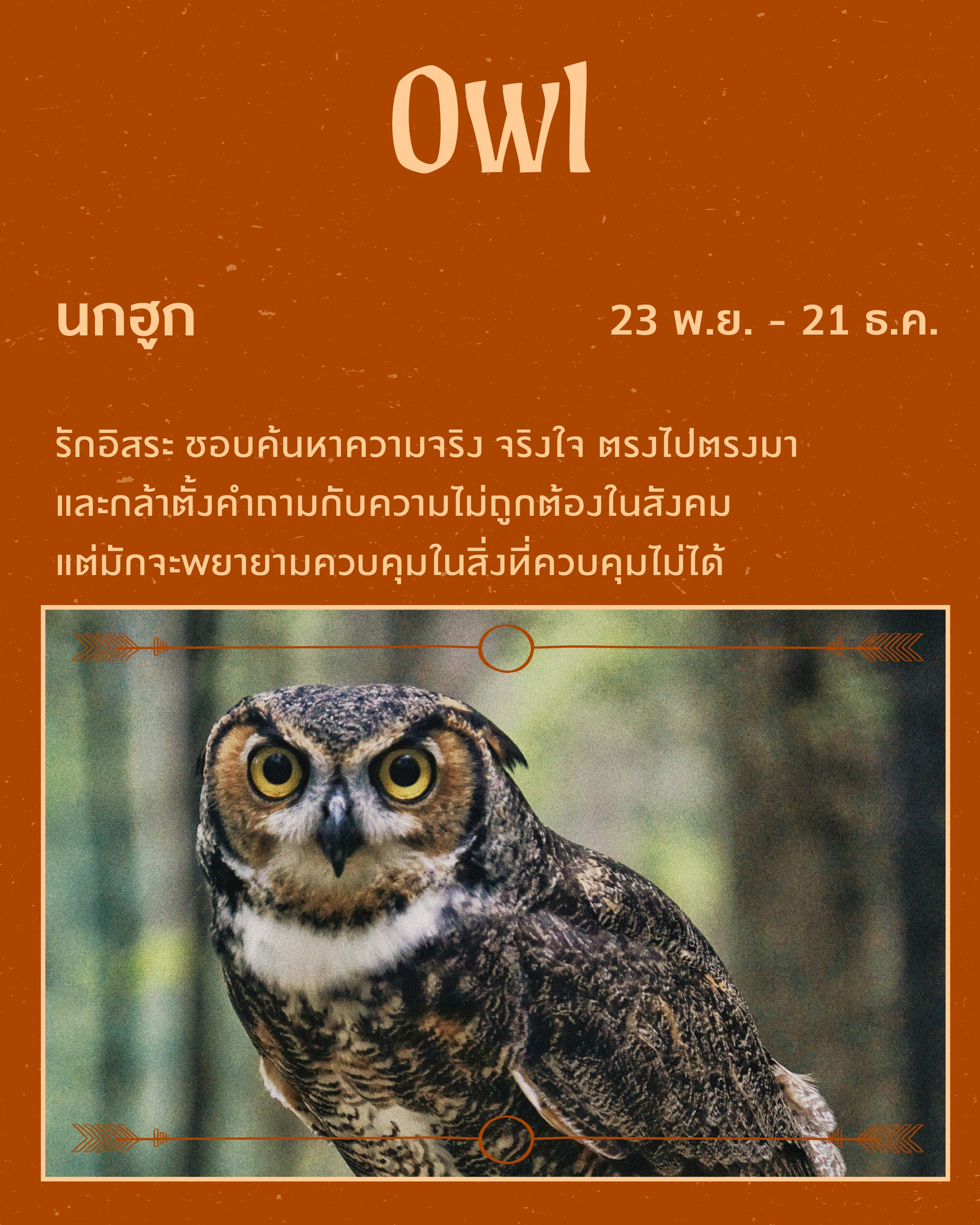
December has the longest nights, a time for self-reflection, searching for life’s meaning, and contemplating experiences.
The Owl, a nocturnal hunter with sharp vision and silent movement, symbolizes seeing through chaos to find truth, using wisdom to solve problems, and courage to question societal issues.
People with this spirit are farsighted, connect dots in all situations, interested in philosophy, seek reasons behind things, are kind, and willing to share knowledge and experience.
It is important for them to reduce restlessness, accept limits beyond control, and focus on what is in front of them.
- Response to pressure: Under crisis, each person's instinct shows differently. For example, Falcons act swiftly and decisively; Otters look for shortcuts or new solutions; Bears remain calm and address problems step-by-step.
- Relationships with others: Social patterns reflect the nature of the Spirit Animal. Pack animals like Wolves or Snow Geese emphasize loyalty and group importance, whereas independent animals like Owls or Falcons value personal space and boundaries more.
- Cautions: Each animal’s shadow side or weaknesses teach us to create balance. For example, Falcons should watch impatience and rashness; Beavers must avoid stubbornness and inability to adapt plans to changing situations.
Ultimately, Spirit Animals are initial reflections of ourselves. If you feel a connection to another animal, you can draw inspiration from its strengths in your life.