

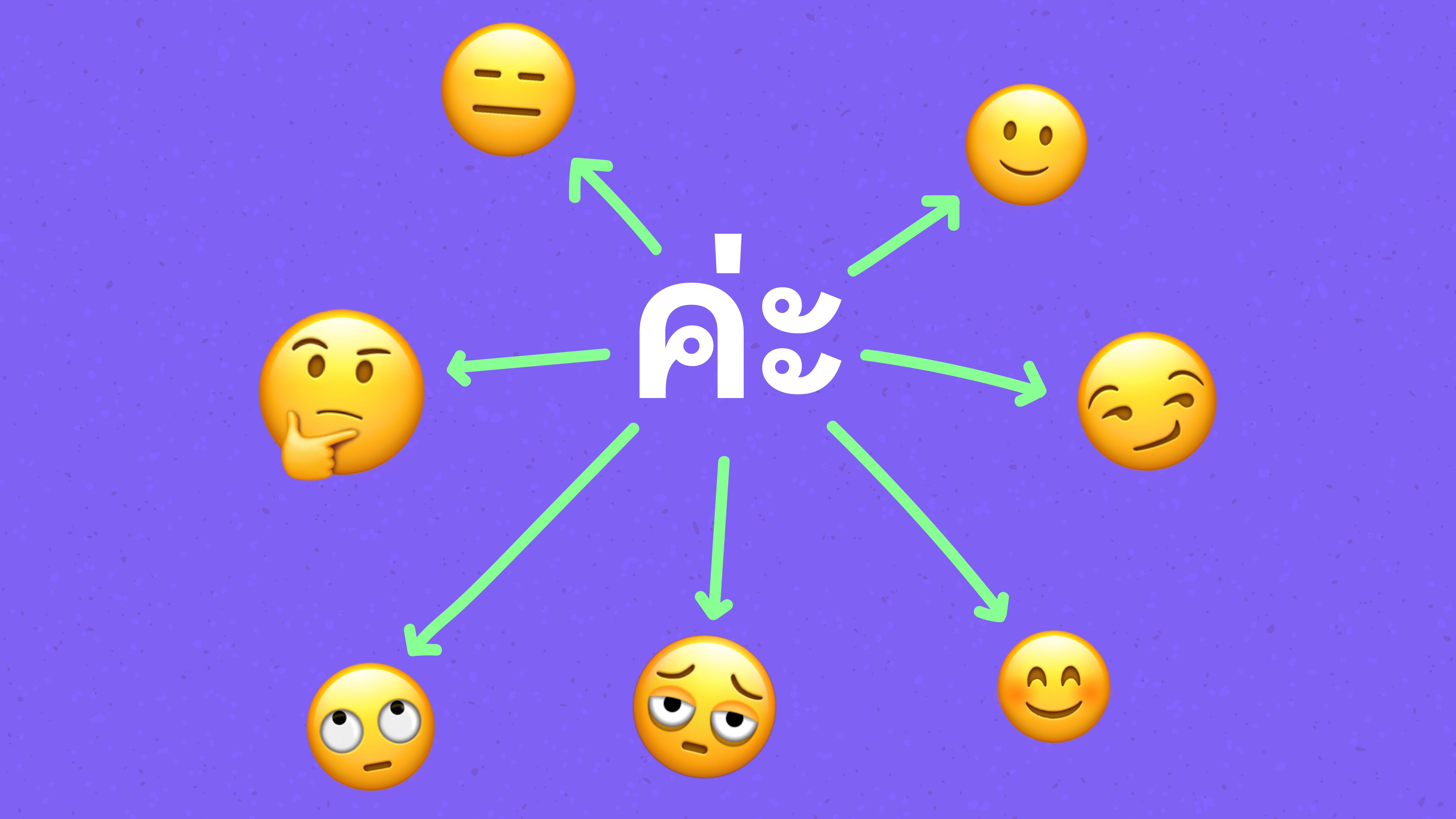
Have you ever noticed that common sentence endings using extended vowels, consonants, or even tonal markers—like 'ค่าาา,' 'ช่ายยย,' or 'น้าา'—have become essential in our chat conversations?
Because when we communicate only through text, we can't fully understand each other due to the lack of elements like facial expressions or vocal tone. We often cannot grasp the emotions behind the other person’s words—whether they agree, disagree, or are upset.
Especially nowadays, chatting has become a normal part of daily life, including work discussions, replying to supervisors, general debates, and sharing deep ideas. These types of communication typically require spoken language cues. As the content becomes more sensitive, we increasingly need to create a conversational atmosphere to prevent misunderstandings and help recipients fully understand our intent.
The same word in the same context might carry multiple meanings.
Consider a work chat where you ask if someone is available, and they reply “ไม่สะดวกค่ะ” (“Not available”). This phrase might sound blunt to some readers, changing the conversation’s tone, even though the sender might have meant it politely with a smile.
One word can be interpreted in many ways depending on the tone. Normal text communication risks misunderstanding, so extending vowels can serve as emotional cues in conversation. These long sounds help listeners understand our positive intentions more clearly.
The Thai language allows letters to have sound.
Thai naturally uses tonal markers that facilitate modification. When we type words with altered tones or use high or low sounds, readers’ brains automatically hear the pitch, as in “ห๊าาาา” (“Haaah”), “อะไรน้า” (“What?”), or “ค่าาา” (“Yes”). Although these forms may not follow strict grammar, they change the tone and let Thai speakers naturally simulate real-life speech rhythms and tones on screen.
Additionally, Thai has sentence-ending particles like 'นะ,' 'จ๊ะ,' 'สิ,' or 'เลย,' which don’t carry meaning themselves but indicate relationships, status, and emotions directly. In the digital world lacking nonverbal cues, these endings become key tools to express emotions, letting readers immediately perceive whether a sentence is a request, threat, or coaxing. Lengthening these particles makes the emotions and meanings even clearer.
Tone determines the level of politeness.
In Thai society, relationships and hierarchy are deeply intertwined. Even polite sentence endings alone can sometimes cause offense due to their brevity and directness; some words may sound sarcastic or convey hidden meanings of authority, command, or coldness—like “ทำเลยสิ” (“Just do it”) or “หรอ” (“Really?”). Thus, elongating sounds softens and makes messages friendlier.
Imagine needing to follow up with a boss—you might avoid saying “ขอคำตอบด้วยค่ะ” (“Please give me an answer”) and instead write “ขอคำตอบด้วยนะค้าาา” with a stretched ending. For many, this elongation helps preserve good relations better than a blunt phrase.
On the other hand, if elongation becomes a standard politeness norm, we might feel compelled to type these extended sounds constantly, even when tired. Then, sending a short reply like “ค่ะ” or “รับทราบ” might be immediately interpreted as showing anger or problems. Ultimately, typing elongated sounds to maintain relationships is not wrong but a matter of personal style and choice in conversation.