

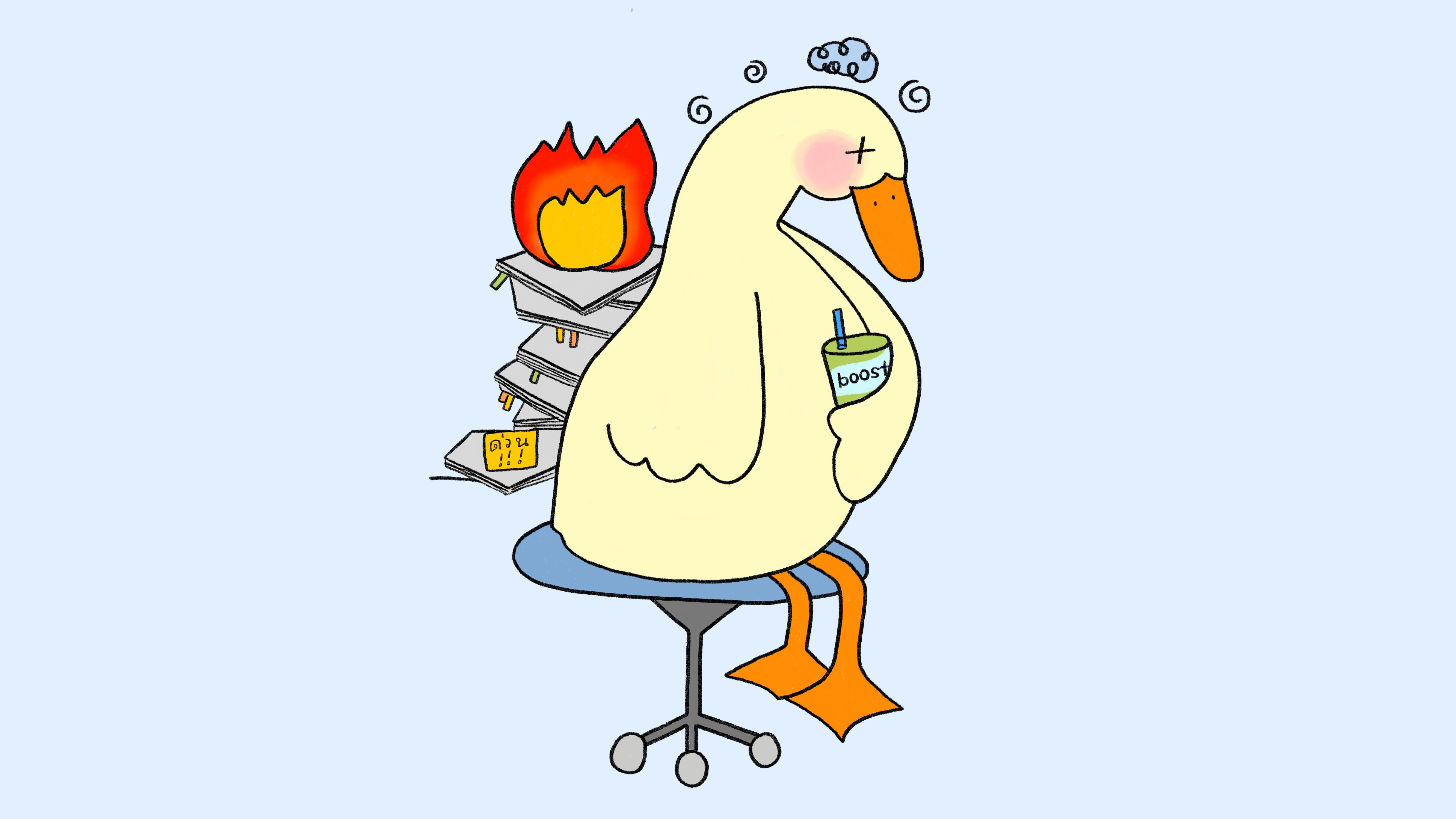
Today, Nong Ped wants to share something for friends who have to attend hours of back-to-back meetings until they’re drained, yet after the meetings, their own work still awaits in full—emails to reply to, documents to revise, and tasks to submit before the evening deadline.
Some days, we spend most of our time listening, sharing opinions, and making decisions with others, leaving almost no time for our own work. By afternoon, the brain tires and concentration wanes. Taking a break feels risky because work won’t get done, but pushing through only causes more exhaustion.
Anyone who has experienced such a day knows it’s extremely tough and tiring. And to clarify, this feeling isn’t imagined. A survey found that over half of office workers in many countries feel drained by meetings and report insufficient focus to continue working, as noted in the Microsoft Work Trend Index report for 2023.
But it doesn’t have to end with us being defeated by work alone. Nong Ped has ways to handle packed meeting days—from preparing before meetings, finding time to rest during the day, to prioritizing tasks—so we use our energy more efficiently without carrying everything to the point of exhaustion.
What should you prepare or do? Follow Nong Ped’s checklist below.
If you know in advance that you’ll have meetings almost all day tomorrow or on certain days, review your calendar one by one to see each meeting’s purpose and your role in it. Do you need to help make decisions, share opinions, or just receive information by reading documents?
If it’s just a general progress report, you might ask the organizer to send information beforehand or provide a summary afterward instead. Save your energy for meetings where you need to actively participate. Attend only meetings where joint decisions must be made.
If you’re new or lack authority to decide whether to skip meetings, ask your supervisor if you need to be present throughout or if it’s sufficient to join only the parts related to your work.
Though meetings don’t physically demand much, your brain must listen, note key points, think of answers, and make decisions continuously. Especially in important meetings or those with unexpected questions, fatigue can build quickly. So preparing your body is just as crucial as anything else.
Nong Ped recommends that before a meeting day, eat suitably for yourself, keep water nearby, and don’t let yourself get too hungry. During breaks between meetings, try standing, walking briefly, or stretching instead of scrolling on your phone. Coffee is fine if it suits you, but avoid increasing caffeine continuously to fight sleepiness if it harms your nighttime sleep.
You don’t need a full balanced meal before meetings—just don’t skip breakfast, drink water, and change your posture during the day; these help you take better care of yourself.
Many have experienced meetings starting while you’re still searching for files, microphone not working when you speak, or forgetting which document contains the numbers being asked about. These minor issues happen in all meetings, wasting time and focus, especially if repeated multiple times in a day, and make you look unprofessional.
So before work, organize all needed documents in one folder, check meeting links, headphones, microphone, and battery levels. If you’re presenting, open your files before the meeting starts.
Also helpful are summaries from previous meetings—such as agreements, key figures, and unresolved questions—so you don’t waste time recalling details every time or scrambling when asked suddenly, which only adds to your fatigue.
If you can schedule meetings, Nong Ped recommends leaving breaks between sessions, especially for meetings requiring thinking or multiple decisions. Don’t rush into a new meeting immediately.
Microsoft Human Factors Lab data from 2021 showed that after four consecutive 30-minute online meetings without breaks, brainwave signals linked to stress increased. On days with 10-minute breaks between meetings, these signals stayed stable, and participants began the next meeting more relaxed.
If possible, set aside time to rest before the next meeting. During breaks, stand up, drink water, use the restroom, stretch, or be quiet for a moment. Short rests help increase alertness and reduce fatigue—not much, but better than pushing on.
One of the biggest causes of exhaustion from many meetings is that beyond a full schedule, other work piles up. The first step is to organize task priorities.
Nong Ped suggests dividing tasks into three groups: (1) urgent, high-impact work like documents due to clients today; (2) important tasks requiring focus like writing reports or analyzing data; and (3) minor tasks that take little time such as replying to general messages or organizing files.
If you know you’ll have little work time due to meetings, prioritization must come with communication to your supervisor, not just taking on everything and hoping to finish by sacrificing sleep.
Importantly, don’t work during meetings, as this may cause you to miss key points or misremember details. If the meeting requires focus, multitasking with work can cause mistakes because attention is split.
If meetings repeatedly interfere with work, the solution may need to involve the team—reviewing number of meetings, each meeting’s purpose, and workload distribution.
Meeting fatigue arises from many causes: constantly needing to express opinions, fear of being unable to answer questions, handling conflicting views, or uncertainty about your role in the meeting.
If you anticipate such days, try setting clear goals for each meeting. You don’t have to speak the most or answer everything; just know you’re there to provide information, help decide, listen to conclusions, or report issues requiring joint resolution.
If questions arise that you cannot answer, say you will check and report back later. There’s no need to rush answers just to prove yourself when information is incomplete. Distinguish what needs immediate action and what can wait until after the meeting.
Importantly, don’t blame yourself for not being skilled or patient just because your thinking slows or you don’t want to listen in the afternoon. Fatigue signals your body and brain need recovery time—not a reason to self-criticize.
After the last meeting, many rush to open emails and start pending work immediately, feeling the whole day was lost to meetings. Before diving back in, Nong Ped suggests spending five minutes reviewing conclusions, listing follow-up tasks, and setting priorities for tomorrow.
If you often work overtime because meetings consume all your work time, discuss with your supervisor to adjust the system—don’t let after-hours work become a daily fix. If some tasks remain unfinished despite proper prioritization, record that honestly; you don’t have to sacrifice rest every night.
Nong Ped wants friends to know that days packed with meetings can be more exhausting than regular workdays because attention must be divided constantly while your own work waits. Good preparation begins with using your energy wisely—knowing when to focus, when to rest, and when to ask the team to reprioritize.
If tomorrow’s calendar is filled with back-to-back meetings, try this checklist first, then start work feeling prepared and balanced.
With care from Nong Ped 閭
[ ] Review the agenda and necessity of each meeting
[ ] Prepare files, information, and equipment
[ ] Eat and have water nearby
[ ] Schedule breaks between meetings as much as possible
[ ] Reserve time for focused work
[ ] Prioritize tasks and inform your supervisor if time is insufficient
References