

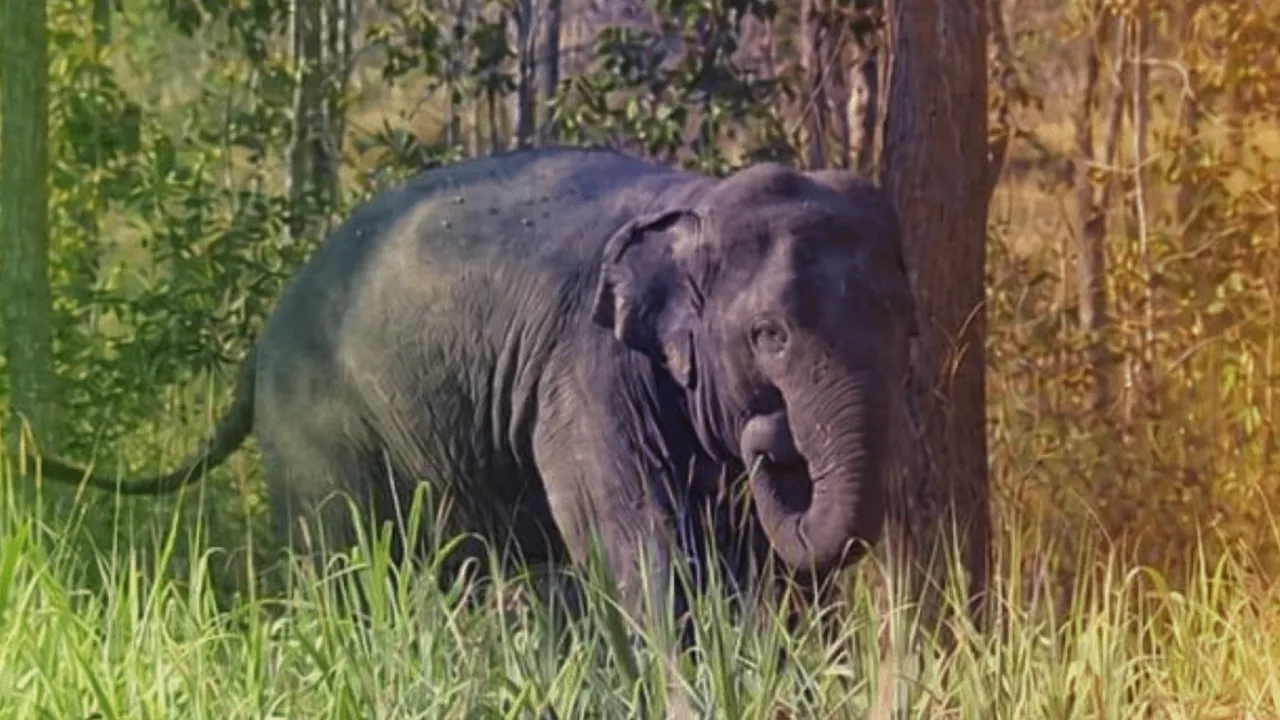
Following the death of the wild elephant 'Si Do Hu Phap' during relocation from Phu Wiang National Park in Khon Kaen Province to the Elephant Food Restoration Project area in Phu Luang, Loei Province, this conflict is not new but has persisted for decades. It brings to mind the 'Elephant in the room' phenomenon, reflecting how most people choose not to talk about problems that are clearly visible in society, pretending they never happened—like seeing a large elephant standing in a room but deliberately ignoring and refusing to mention it.
Over nearly 60 years, conflicts between humans and wildlife have continued and worsened, especially wild elephants leaving protected areas, resulting in 'Human-Elephant Conflict.' This problem stems from the overlapping of protected zones with expanding communities, particularly at the interface between forests and agricultural lands. The more such boundaries exist, the higher the chance of conflicts between people and wild elephants.
Additionally, habitat degradation and restriction occur due to forest land being converted into agricultural areas, road construction through forests, or dam building in protected zones. These activities reduce forest cover, forcing wild elephants to leave their habitats and feed on crops in communities near forest boundaries, escalating conflicts.
According to statistics from the Center for Assisting People Affected by Wildlife, data on injuries and deaths from human-elephant conflicts from 2012 to the present show 274 human deaths and 252 injuries caused by wild elephants. Meanwhile, 260 wild elephants have died and 95 were injured. The latest data from 2026 report 7 human deaths, 16 injuries, 16 elephant deaths, and 8 elephant injuries.
These figures highlight the negative impacts on both sides: people suffer injury or death from elephant attacks, and elephants damage crops and property, affecting the livelihoods and incomes of communities living near wild elephant habitats.
Moreover, this underlines that the conflict problem is chronic and ongoing, yet has seen little serious resolution. Most responses have been limited to mitigating consequences or addressing symptoms rather than root causes.
On another societal front, forest officers and community volunteers face and bear the significant responsibility of monitoring and pushing wild elephants back into the forest. This illustrates sacrifice, bravery, and efforts to find sustainable ways for humans and wildlife to coexist.
The tragedy involving 'Si Do Hu Phap' and other wild elephants reflects a deep-rooted structural failure in Thailand's natural resource management. This includes centralized authority, bureaucratic rigidity, legal views treating wildlife as state property rather than valuable living beings, justice processes neglecting animal welfare, and development models disconnected from nature and community ways of life.
The key challenge for the government is how Thai society can redesign systems for human-wildlife coexistence based on fairness, sustainability, and equal dignity for all lives.