

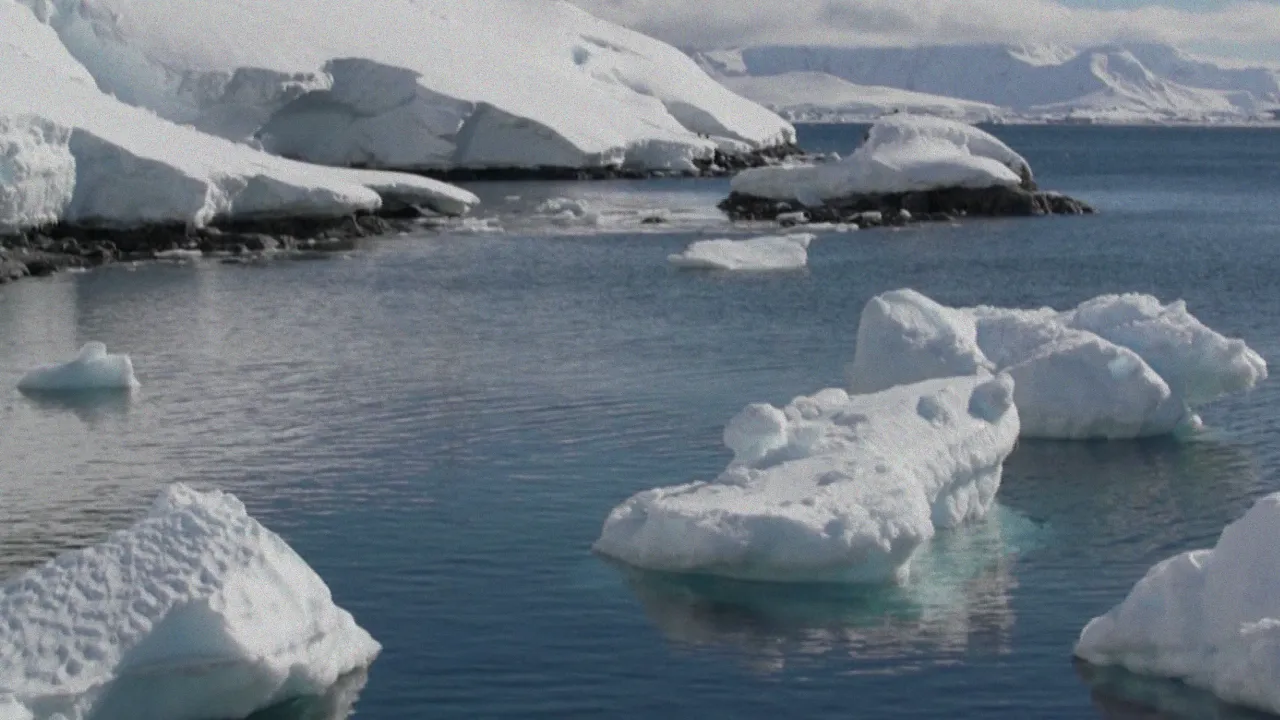
This is the "Doomsday Glacier," officially known as the Thwaites Glacier, which is melting at an alarming rate of 50 billion tons per year—far faster than previously estimated. It serves as a clear warning sign of the global warming crisis emerging from Antarctica, the coldest continent on Earth.
The glacier spans nearly 200,000 square kilometers, roughly the size of the entire United Kingdom. Should this entire ice mass collapse, the massive influx of water would raise global sea levels by up to 65 centimeters—enough to submerge numerous island nations such as the Maldives, Kiribati, and the Bahamas. Beyond that, major coastal cities like Tokyo, Shanghai, Miami, and Bangkok would face significant flooding risks.
A multinational group of scientists and engineers from institutions including Cambridge University, Chicago, and New York, among others, have jointly proposed a "Seabed Curtain": an 80-kilometer-long, 150-meter-high underwater barrier designed to encircle and protect this glacier. The goal is to halt the looming global catastrophe that is counting down daily. The construction cost is estimated to exceed 80 million US dollars, or nearly 2.5 billion baht.
The giant wall's purpose is to act as a shield blocking warm ocean currents from flowing underneath and eroding the glacier’s base—the most vulnerable area. By preventing warm water intrusion, it would help maintain a cold temperature around the glacier’s base, slow its melting rate, and reduce the risk of collapse.
Building an underwater barrier in one of the world's harshest environments might sound like science fiction and pose significant engineering challenges. However, within the scientific community, this project is being seriously studied as it could represent one of humanity’s last chances to confront the climate crisis.
David Holland, a climate scientist involved in the project, said that we must stop expecting a "clean exit" from this problem and instead decide on the least harmful option for the planet.
At the very least, this effort to block natural forces raises vital questions for all of us: Does the struggle to invest massive budgets and advanced technology to patch the world’s crisis reflect that we have pushed nature beyond normal recovery? And ultimately, how long can this towering wall hold back the damage caused by human activity?
ReferencesEuronews,Dailymail,The Week,IFL Science
#ThairathPlus #Thairath #DoomsdayGlacier #GlobalWarming