

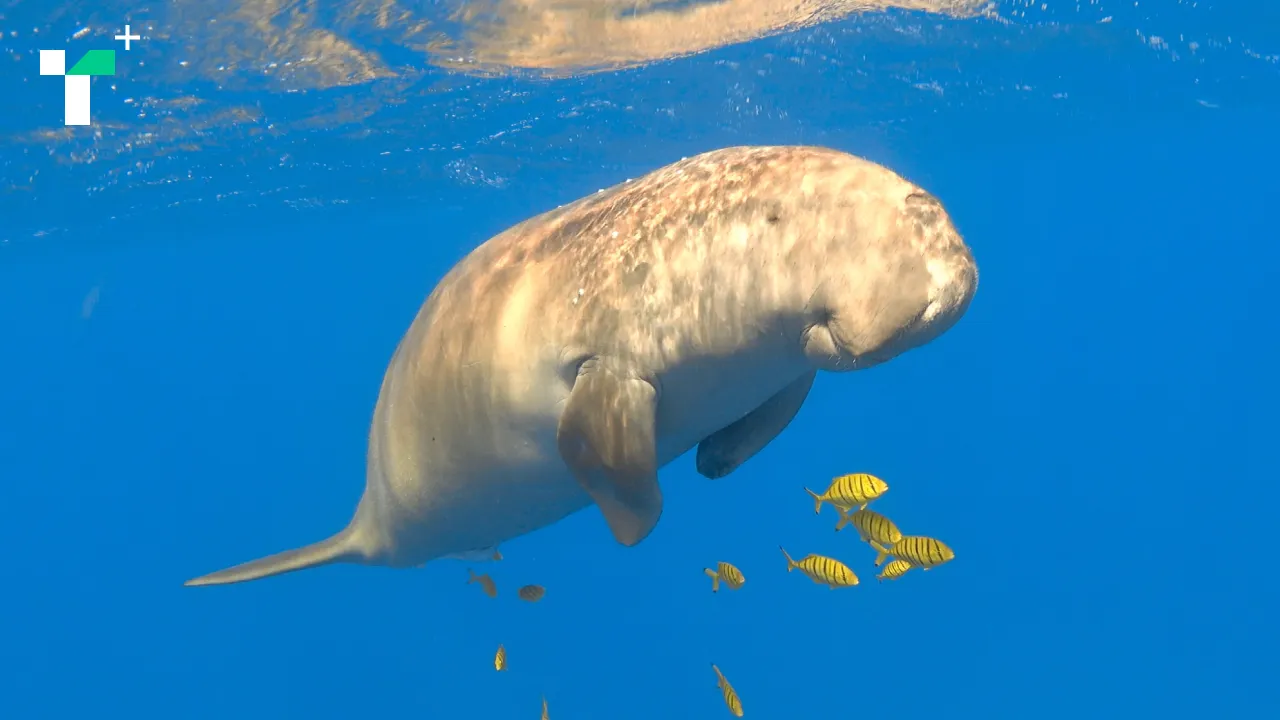
Thairath Plus invites everyone to learn 7 philosophies from dugong behaviors as a reflection of humanity, to live more deeply and meaningfully, and to reconnect with our own hearts once again.
In a rapidly spinning world, dugongs live at a slow, calm pace with mindfulness at every moment. Their slow, continuous feeding on seagrass reflects being present and using energy in the most efficient way.
The gradual behavior of dugongs prompts us to reconsider our unnecessarily rushed lives by reducing unimportant chaos, focusing mindfully on what is in front of us, allowing rest to recharge instead of rushing, and permitting ourselves to truly immerse in the present moment.
Dugongs are mammals practicing maternal care, where the mother closely nurses and cares for her calf. This parenting behavior reflects deep and pure bonds.
The calf swims alongside its mother throughout the first years to learn feeding and survival skills. Communication through touch, hugging, and the dugong's soft calls helps build psychological security and a sense of safety for the young.
This steadfast love teaches us to value family and loved ones because a stable emotional foundation helps us build a strong psychological shield when facing obstacles. Amid life's chaos, what heals emotional wounds best may not be material success but having a safe space and people beside us ready to stay through both joyful days and life’s storms.
Dugongs are peaceful animals with almost no aggressive behavior toward other species. They communicate using low-frequency sounds similar to whistles or bird calls to signal each other instead of using violence or displays of power, fostering friendship rather than competition or resource fighting.
The dugong’s choice of peaceful methods reminds us of the importance of calm and gentle communication to resolve conflicts in daily life, reducing clashes and creating a harmonious atmosphere. Understanding communication promotes better social skills and emotional maturity.
Although dugongs sometimes gather in groups, they can live independently without constantly needing group acceptance, which is vital in today’s social media era where many feel lonely when alone.
Lessons from dugongs encourage us to build a good relationship with ourselves, learning to enjoy quiet moments for reflection and inner exploration. When we can fully fill ourselves with self-love, we can wholeheartedly share that love with others.
Dugongs require protection and care because they are highly vulnerable in the ecosystem. Yet within that vulnerability lies a connection prompting humans to care for the environment.
Weakness or vulnerability in human life is the link that enables us to empathize with others and care for one another. Without vulnerability,the worldmight lack love and goodwill among people.
Dugongs are indicators of the richness of marine and coastal ecosystems because they can only live where seagrass beds are abundant. Seagrass is vital for other marine life as it provides oxygen, food, habitat, spawning and hiding places, reduces marine pollution, improves water quality, and helps prevent coastal erosion.
The presence of dugongs helps maintain balance in seagrass beds, which serve as home and safe space for various marine species, ensuring a sustainable marine ecosystem.
We should learn and realize the importance of living interdependently because good growth does not come from competing to be the sole winner or exploiting others, but from growing while caring for each other and supporting the surrounding environment. Ultimately, nature will care for and embrace us in a livable world as well.
Although dugongs are not defined as 'cute' or fitting societal beauty standards, many may overlook them due to their appearance, yet in reality, dugongs are critically important to ecosystems and the environment.
Often, society confines us with standards of success or images to look good in others' eyes, causing us to forget that 'our value is not defined by appearance.' Like dugongs, which do not need to be beautiful by anyone’s expectations, we too have the right to be valuable and dignified as we are.
The nature of dugongs teaches us to reflect on ourselves—from slowing our breath, loving wholeheartedly, maintaining gentleness amid conflict, to accepting that we all 'have value' as we are, regardless of the outside world.
Ultimately, when we learn from dugong behaviors to apply in life, the crucial question is not just what else we can learn from dugongs but 'how much longer will this world still have dugongs for us to learn from?'
Protecting dugongs and seagrass beds is not solely the mission of conservationists but the duty of all of us responsible for the ecosystem and environment, which is the only 'home' we have.
Beneath the Azure Waters: Stories of the Dugong
Exciting! Dugong Calls Used for Communication Within the Group