


Today, terms like Eco-Friendly, Low Carbon Footprint, or other 'green phrases' commonly displayed on business walls may lead us to feel these words are mere clichés used by companies adopting green marketing policies to attract customers, rather than reflecting genuine operations. As a result, many people in our society tend to overlook these claims.
This is not because Thais are indifferent to the environment, but because 'eco-friendly' messages from brands have lacked substantial weight due to the absence of centralized standards and no serious auditing agencies. The vagueness of these 'green phrases' partly encourages some Thai consumers to treat Eco-Friendly labels as optional—nice to have but not essential when choosing restaurants, products, or hotels.
However, in Thailand, a platform created through cooperation with the Tourism Authority of Thailand called CF-Hotels, or Carbon Footprint Hotels, has emerged. This online platform collects and measures environmental data from the hotel sector, covering energy use, water consumption, waste volume, and greenhouse gas emissions, all under the ISO 14064-1 international standard for quantifying, accounting, and reporting greenhouse gases.
What reassures consumers that these 'green data' are genuine and not neglected is that the platform employs staff to rigorously monitor and verify the numerical data. Statistics are regularly updated; if any hotel falls below standards, updates are promptly reflected. This also motivates hotels to continuously follow the checklist standards to avoid falling behind.
Becoming a 'green' hotel often involves costs, and for hotels outside large chains, providing environmentally friendly services can be challenging. CF-Hotels recognizes this and thus also functions to connect operators with funding groups. Additionally, it collaborates with banks to offer environmental loans to hotels that partner with the platform.
To illustrate these efforts, Thairath Plus invites readers to explore three hotels with sustainable resource management: Modena by Fraser Bangkok, a mid-sized city hotel in the business district; Waldorf Astoria Bangkok, a 5-star hotel in Ratchaprasong; and Mövenpick BDMS Wellness Resort Bangkok, a holistic health resort in the heart of Witthayu Road.
 Modena by Fraser Bangkok
This mid-sized hotel opposite the Queen Sirikit National Convention Center manages internal systems and encourages consumer behavior aligned with sustainability. Its highlight is the use of an Energy Recovery System that recycles cooling energy from the hot water system in guest rooms to power the elevator lobby, reducing energy loss and saving about 10,000 baht monthly on electricity.
Another interesting aspect is the incentive for guests to save energy through an Earth Card. Guests placing this card signal refusal of linen changes, helping the hotel save water. Importantly, guests receive 'tokens' redeemable for drinks or food discounts, making them feel rewarded for their eco-friendly actions.
Furthermore, the hotel uses LED lighting throughout, installs motion sensor lighting in guest rooms and common areas, employs AI to manage water efficiently to reduce losses, and has initiated a chemical-free vegetable garden to supply its restaurant, thereby lowering the carbon footprint from ingredient transportation.

Waldorf Astoria Bangkok
This 5-star hotel prioritizes sustainability from waste management to supporting community enterprises. A signature policy is using paper water bottles within the hotel, which are later recycled into roofing sheets for the 'Green Shelter Project' by Tetra Pak (Thailand), aiding the underprivileged.
Addressing a major issue in large hotels—leftover buffet food—the hotel partners with the Scholars of Sustenance (SOS) Foundation Thailand to redistribute nutritious food to communities, schools, and underprivileged groups, providing over 50,000 meals so far.
For menu ingredients, staff select food from environmentally friendly community sources to support local enterprises. Eggs come from cage-free systems promoting hen welfare and larger eggs, and salmon is sourced from sustainable fisheries.
Within the building, all lighting has been switched to LEDs, accompanied by motion sensors controlling lights and curtains that activate only with movement. Air conditioning is set to 25°C, and technologies are employed to minimize water discharge.
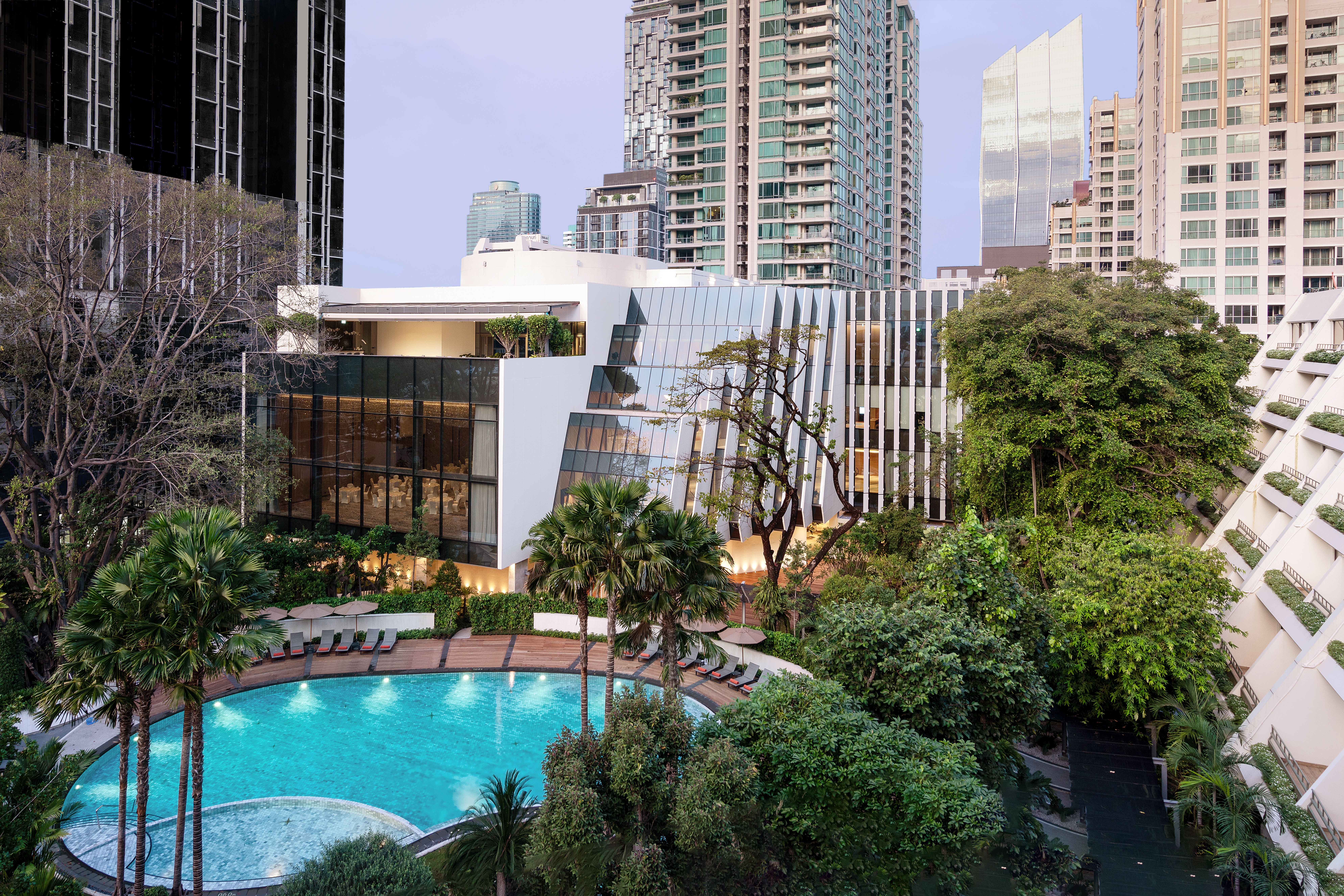
Mövenpick BDMS Wellness Resort Bangkok
This holistic wellness resort integrates environmental care into every experience under the concept Sleep Well, Eat Well, Meet Well, and Live Well. It eliminates single-use plastics throughout the hotel, replacing plastic bags, straws, and bottles with glass alternatives, and provides clean, safe filtered drinking water.
The hotel has adjusted its plumbing valves to reduce water usage without guests noticing pressure changes, saving water equivalent to filling 25,086 bathtubs. On the roof, solar power generation systems are installed.
In its restaurants, the hotel uses a bio-compost machine to manage food waste, reducing it by up to 70% within 24 hours and converting waste into 1,416 kilograms of organic fertilizer.
The hotel also partners with the Klimato platform to display carbon footprint levels on menus and collaborates with Humane Society International to promote plant-based dishes, which cut carbon emissions by 46,284 kilograms.
Beyond dining, the resort's meeting area features floor carpets that at first glance look ordinary but are actually made from upcycled PET plastic bottles—202,850 bottles transformed into carpeting for every floor.
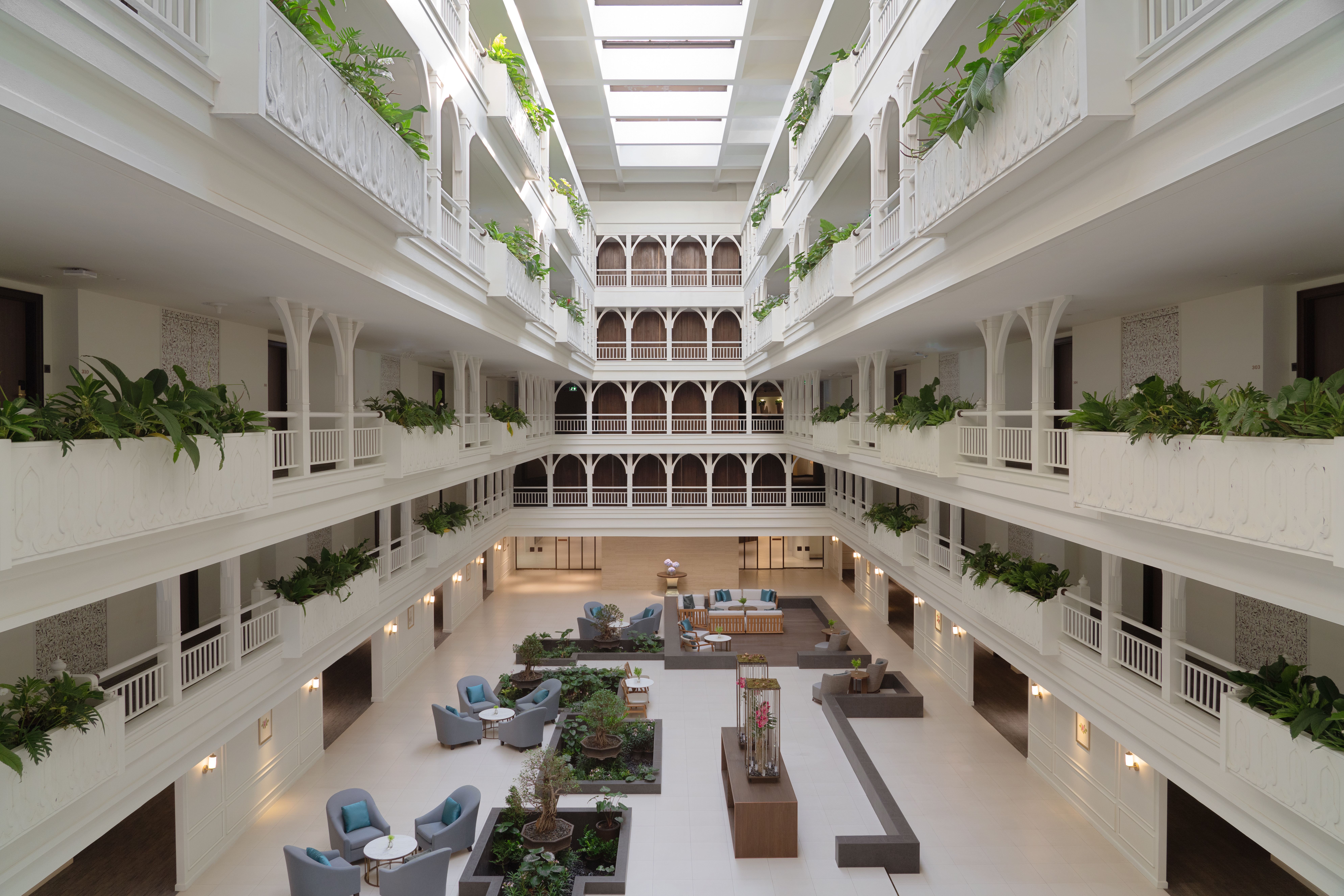 Visiting these three hotels clearly shows that as consumers, we can truly choose sustainability when we have sufficient, transparent information. This empowers many to make eco-friendly choices easily and naturally.
Thus, 'green phrases' or Eco-Friendly labels, once dismissed as mere marketing jargon, may no longer seem vague if referenced by tangible, verifiable standards. Having empirical data to guide decisions not only dispels skepticism about greenwashing but also makes environmental attributes a key factor in service selection.
Yet, despite platforms that facilitate and measure data well, the ultimate power to drive change remains with consumers. As the world urgently signals worsening climate crises, we as inhabitants who will bear future consequences can no longer ignore our responsibility.