

Mr. Suchat also emphasized that the Thap Lan issue is a complex, long-accumulated problem, thus it is considered a‘case-specific issue’and will not be used as a‘Thap Lan model’for other conservation areas nationwide.
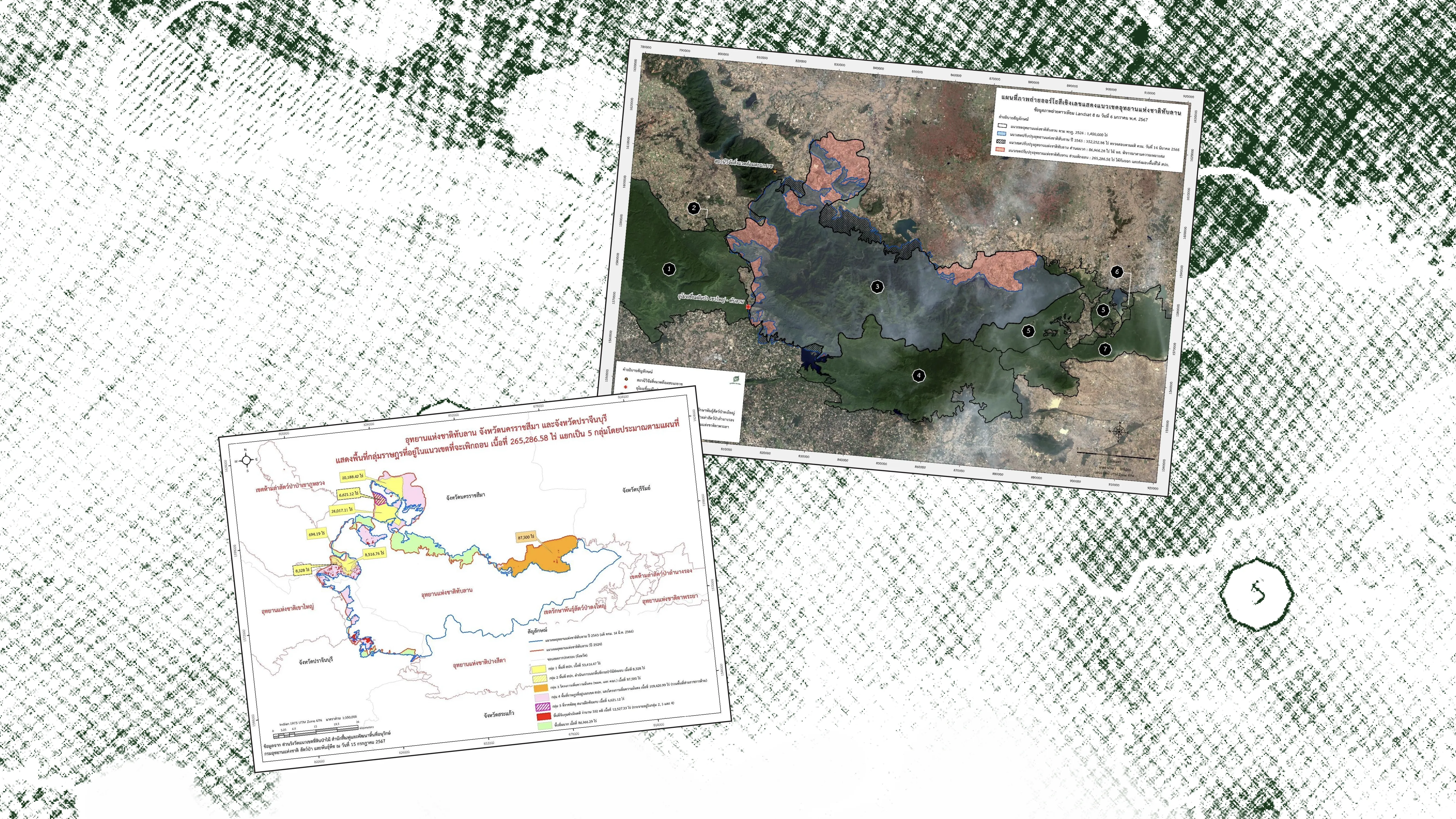
However, another important question concerns the plan to incorporate an additional 86,966.29 rai into Thap Lan National Park. Many may assume this added area is pristine forest, but in reality, it could become a new overlapping land problem because parts of it still hold statuses as community areas, community forests, and reserved forests managed by the Royal Forest Department.
This raises concerns about future management: whether integrating areas with different statuses into a national park will create even more complex problems, despite the area being small compared to Thap Lan overall. Thairath Plus has thus compiled three key issues that may warrant ongoing attention.
The announcement to add over 86,000 rai is not only about increased area but also the quality of that land. In fact, some parts have become degraded forest, established community settlements, transportation routes, or have long been converted from forest to agricultural land.
Even if some areas no longer qualify as forest by definition, ecologically they remain used by wildlife such as wild elephants, deer species, gaur, and tigers have also been reported in the planned addition. This confirms the added areas remain important as habitat, food sources, and migration corridors. Nevertheless, the Department of National Parks may need to develop management and restoration plans suitable for national park standards.
Meanwhile, the National Parks Committee confirms that adjusting Thap Lan National Park boundaries will not affect the Dong Phayayen-Khao Yai Forest Complex's World Heritage status. However, adhering to the 2000 boundaries could cause forest fragmentation, impacting wildlife movement and potentially intensifying human-wildlife conflicts as animals leave protected areas, leading to future loss of forest abundance. This issue may require the Department to reconsider the establishment or design of buffer zones.
A complexity in Thailand’s land management is overlapping agencies and laws. Although the Thap Lan case addresses a large-scale overlapping land issue, some areas to be added remain community settlements or maintain statuses as community forests or national reserved forests managed by the Royal Forest Department, allowing sustainable local stewardship and use.
However, if these areas are converted to national park status, communities may need to alter traditional lifestyles, potentially triggering conflicts and new overlapping land issues between state officials and local residents. This prompts the question: will incorporating these areas into the national park simply create new but similar overlapping land problems?
Expanding national park boundaries is not just about redrawing maps but involves long-term management. To effectively care for over 86,000 additional rai, the Department may need to establish new ranger stations, requiring budget for setup, equipment, vehicles, staffing, and quality smart patrols.
Environmental budget allocations must distribute resources and personnel to care for the newly added areas. If the budget for forest management and ranger welfare is limited or insufficient, it could affect work efficiency and morale, ultimately impacting the overall protection of Thap Lan’s natural resources and environment.