

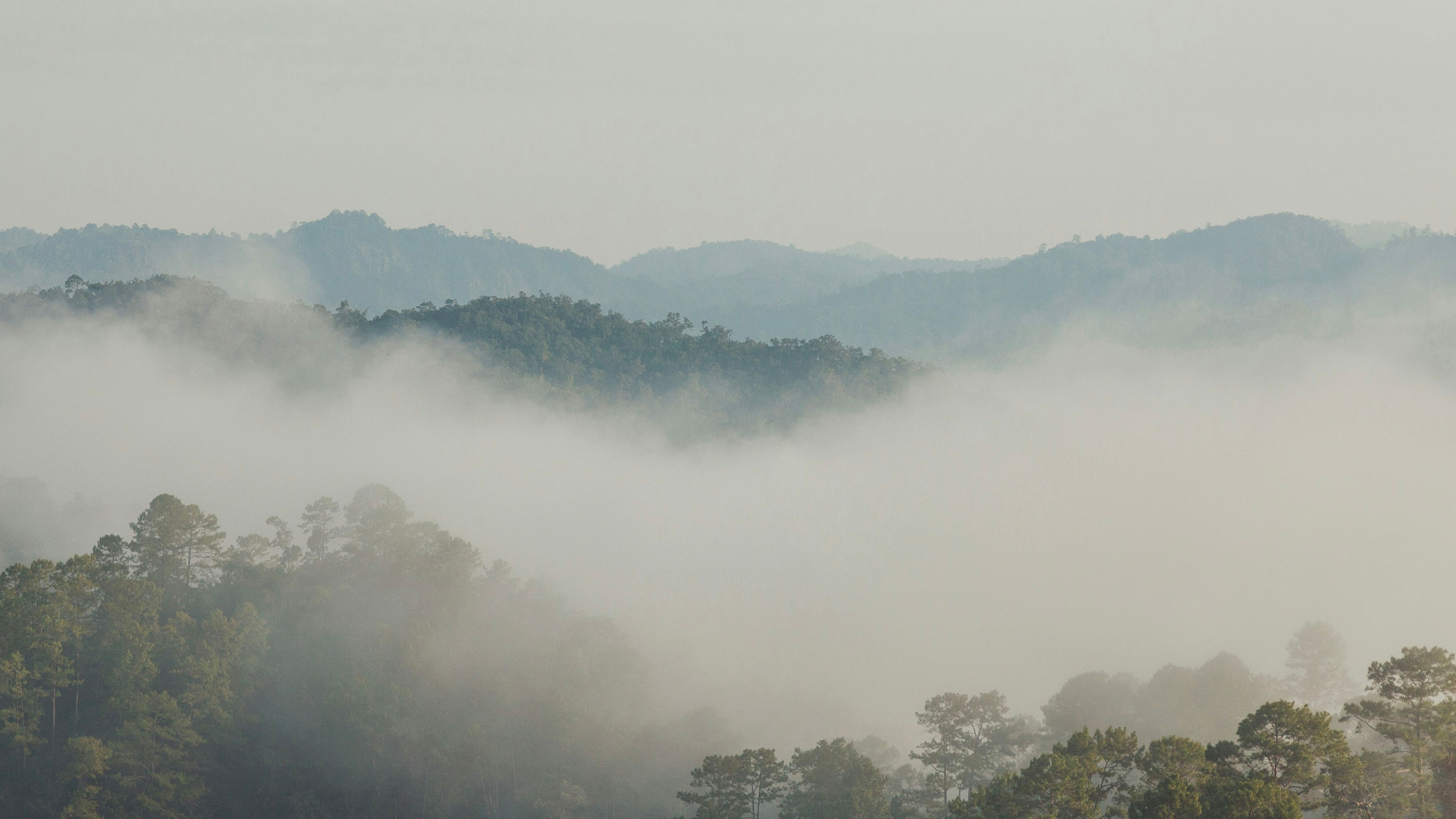
So why has Thailand not officially entered winter yet? Thairath Plus explores the global climate crisis, focusing on the Super El Niño phenomenon that disrupts weather patterns, causing Thailand’s winter to arrive later than usual and making its timing increasingly unpredictable each year amid ongoing environmental crises and climate change.
Looking back to 2023, which experienced a strong El Niño, heavy rains continued from October well into early November before temperatures began to drop significantly in the latter half of the month. This caused the Meteorological Department to postpone the official winter start declaration until 14 November 2023.
Currently, the accumulated heat is intensifying into a 'Super El Niño' event. Normally, El Niño warms surface waters abnormally in the equatorial Pacific Ocean, disrupting global atmospheric circulation and altering wind patterns.
However, combined with global warming, sea surface temperatures have risen beyond tolerance levels, becoming a massive reservoir and emitter of heat energy, resulting in increasingly severe and unstable global weather conditions.
Recent research published in the journal Nature Communications titled 'Super El Niño events drive climate regime shifts with enhanced risks under global warming' confirms that Super El Niño events are key accelerators pushing the global climate system into sudden, sustained extreme states.
Specifically, atmospheric heat and water cycle fluctuations align with an international study in The Innovation Geoscience, which explains that the current El Niño intensity is driving unprecedented increases in global surface and Asian regional temperatures, drastically altering normal seasonal patterns.
The Meteorological Department's official winter declaration does not depend on subjective feelings of cold or localized temperature drops but requires all three meteorological criteria to be met consistently.
First, the minimum temperature in upper Thailand must continuously drop below 23 degrees Celsius, covering most areas—not just mountain peaks or valleys.
Second, wind direction must fully shift: lower-level winds from 100 to 3,500 meters must blow from the northeast or east, bringing dry, cool air from the continent, while upper-level winds above 5,000 meters must shift to westerlies.
Finally, rainfall in upper Thailand must show a clear, sustained decrease. Currently, this last criterion is unmet because upper Thailand still experiences continuous rain from October into early November, especially in the central and eastern regions where moisture remains dense, preventing a sustained surface temperature drop.
Reviewing Thailand's winter declarations over the past decade shows continual variability. In 2016, winter was declared on 30 October; in 2017, on 23 October; 2018 on 27 October; and in 2019, winter arrived earlier on 17 October.
However, in recent years, timing has become more irregular: 2020’s winter was declared on 22 October; 2021 delayed to 2 November; 2022 on 29 October; 2023 postponed to 14 November due to Super El Niño effects; 2024 declared on 3 November; and 2025 shifted back to 23 October.
These statistics suggest that traditional theories about seasonal timing no longer apply to the modern world. Heat accumulation in oceans, wind pattern fluctuations, and escalating climate crises—driven by biodiversity loss, environmental degradation, and global warming—are forcing increasingly unstable and unpredictable weather every year.
Ultimately, although this year's winter onset is delayed, the Meteorological Department expects that once the monsoon and rains subside, a true cold wave will arrive immediately, with winter lasting until mid-February.