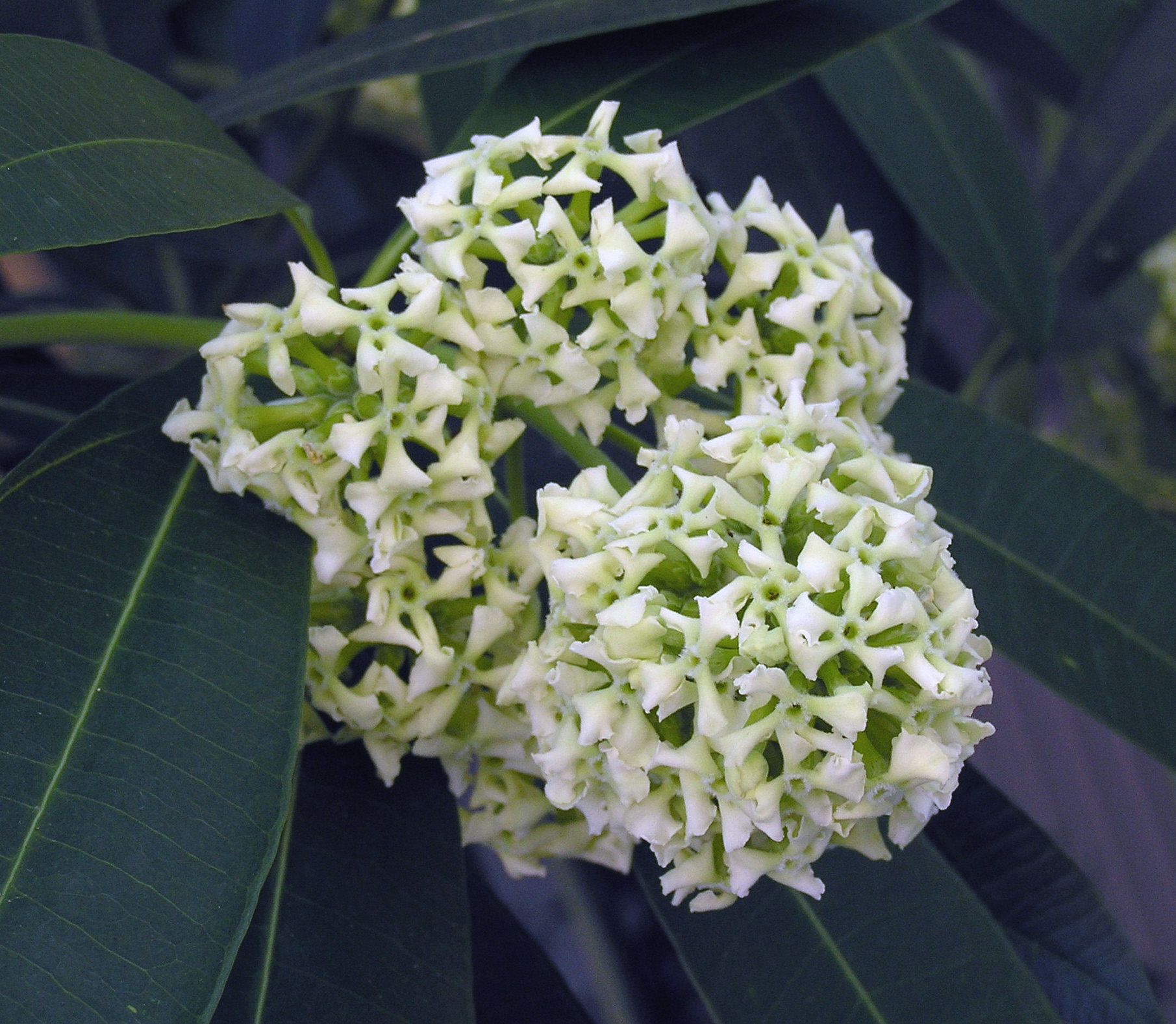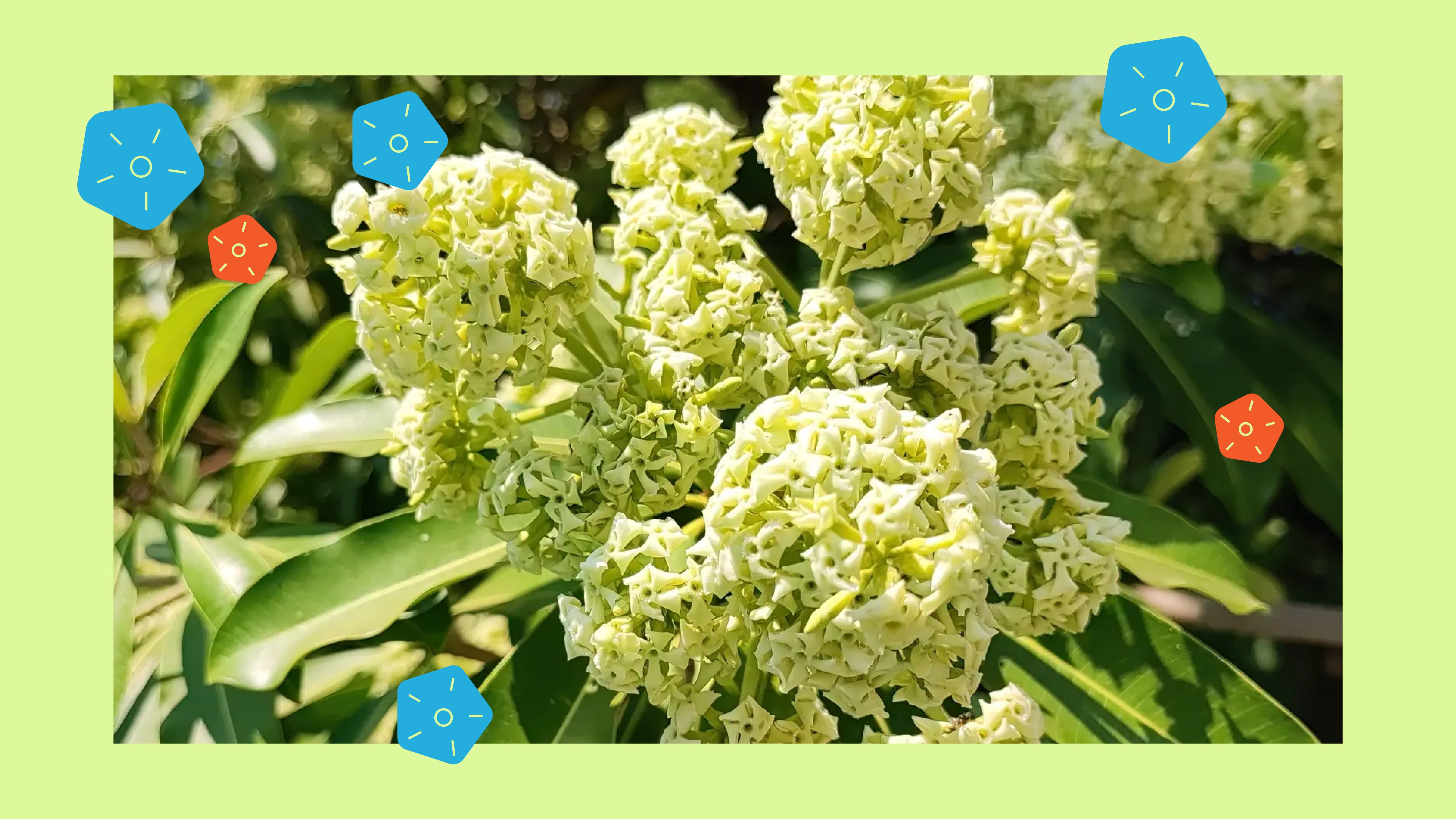
Winter has arrived, although this year the cold came late due to the super El Niño, causing unexpected rainfall. Yet, when we look up at the sky, we still see the Alstonia scholaris flowers blooming profusely on the tree, clustering like mushrooms and filling the neighborhood with a heady scent. Some people enjoy the fragrance, saying it reminds them of childhood or signifies the arrival of cool, dry air—a true marker of winter. It is somewhat odd, however, to encounter Alstonia scholaris blooming amid the hot and humid weather this year.
Alstonia scholaris, also known as Ton Teen Ped, is a long-standing evergreen tree in Thailand, found across various provinces, including the capital, Bangkok. Its popularity stems mainly from its buttress roots, which do not spread as widely underground as those of the Pterocarpus macrocarpus tree, though it can still damage buildings. Its broad, dense canopy provides ample shade. Foreigners might find it unfamiliar because this tree is native only to tropical regions of Southeast Asia, South Asia, parts of the Solomon Islands, and northern Australia.
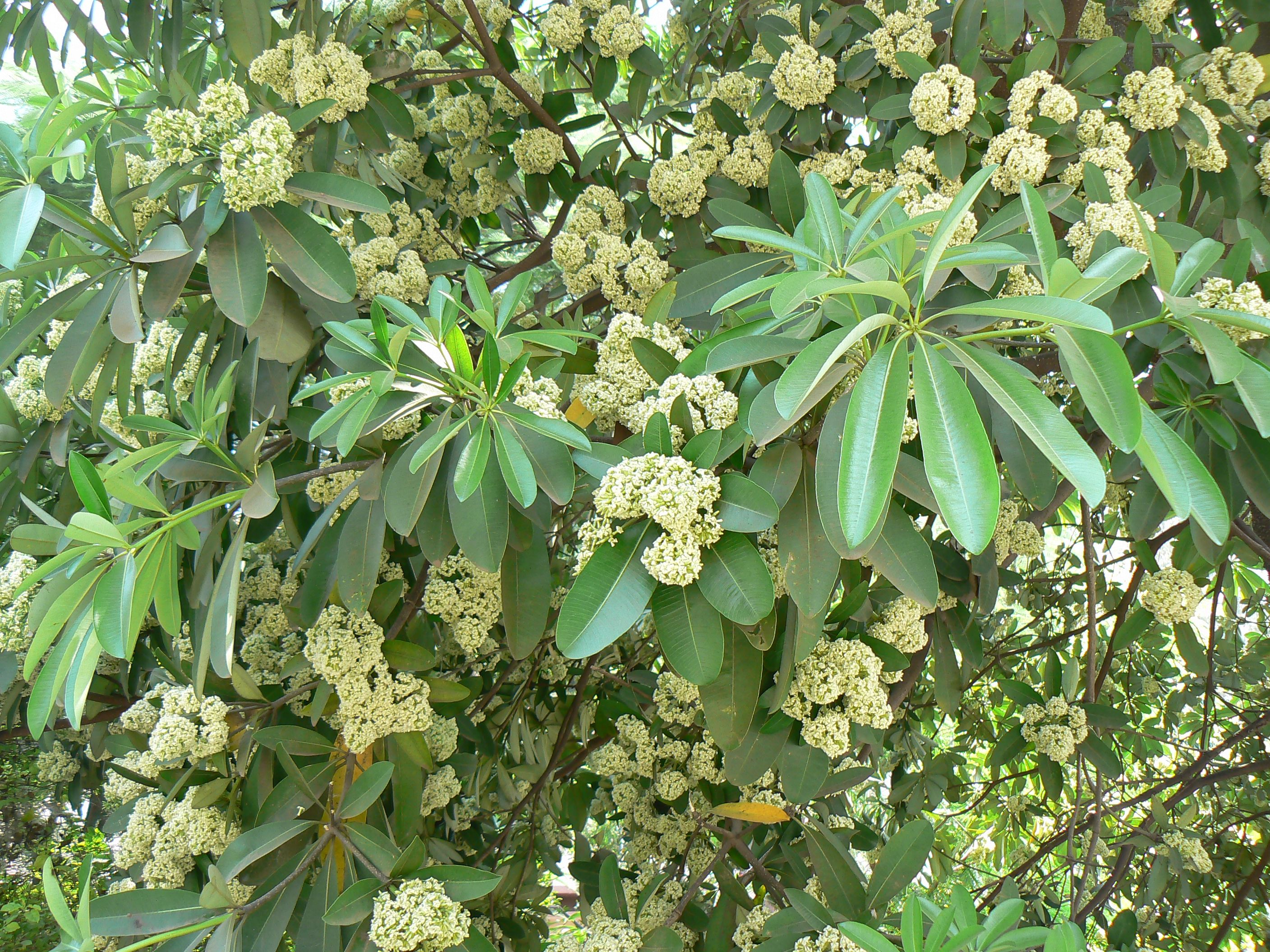
In Thai, it is officially called Phaya Sataban (from the Indian name Saptaparni), with 'Satta' meaning seven and 'Parni' meaning leaves, referring to the seven leaves arranged around each branch node. Its nickname, Ton Teen Ped, comes from the branching pattern resembling a duck's foot. The official English name, Alstonia scholaris, honors botanist Dr. Charles Alston, who studied the tree. The species name 'scholaris' comes from Latin, meaning school, student, or scholarly, reflecting the tree's historical use in India and Southeast Asia to make wooden slates or boards for students, thanks to its soft yet tough, smooth white wood. Hence, it is also called the Scholar Tree or Blackboard Tree in English.
Coincidentally, the name aligns with the Indian Nobel laureate poet Rabindranath Tagore’s admiration for the Alstonia scholaris, which he regarded as the tree of wisdom. Tagore often meditated and taught beneath its shade. After founding Visva-Bharati University, the graduation ceremony included the honored tradition of presenting graduates with "seven-leaf Sataban" as a symbolic diploma and a mark of knowledge. This association certainly elevates the stature of our Alstonia scholaris.

Additionally, the tree’s bark is used in traditional medicine in India and Australia, brewed to treat dysentery, colds, or diarrhea. The bark contains important compounds like ditamine, echitamine, and echitenine, which have antibacterial, anti-inflammatory, and antiparasitic effects but can be toxic in large doses. Historically, Alstonia scholaris bark was used as a quinine substitute to reduce fever and treat malaria. In Thailand, however, this use is uncommon, and the idea of consuming its bitter bark as medicine may seem strange, especially since its white latex can irritate the skin and cause blindness if it splashes into the eyes.
Now, regarding the star of our story, the Alstonia scholaris flower: there is an explanation for why its scent is so strong and unusual compared to the typical sweet aroma expected of flowers. The difference lies in its high concentration of linalool, a volatile terpene alcohol found in about 200 plants, including lavender, mint, and cannabis. So why doesn’t the Alstonia scholaris flower smell pleasant like those plants?
That is because, although many flowers contain linalool, the scent depends significantly on other compounds present. Lavender, for example, combines linalool with 30-50% linalyl acetate, which promotes relaxation. In contrast, Alstonia scholaris combines linalool with indole compounds, commonly found in decay, secretions, or animal waste. This gives the flower a heavy, dense odor that can be headache-inducing. High linalool levels allow the scent to spread far and wide, and the profuse flowering (almost replacing leaves) intensifies the aroma, marking its territory like a dominant native. Humans unaccustomed to such concentrations may experience nervous system overstimulation, causing dizziness or headaches, varying by individual.
The strong scent of the Alstonia scholaris flower has led to local beliefs in India that this tree is a demon tree, especially in the Western Ghats and Assam. Ancient indigenous tribes believed the tree was inhabited by spirits or evil ghosts and forbade anyone from resting or sleeping beneath it, fearing possession or madness. In reality, these effects likely stem from the intense nighttime scent causing dizziness, delirium, nausea, or fainting in those exposed too long.
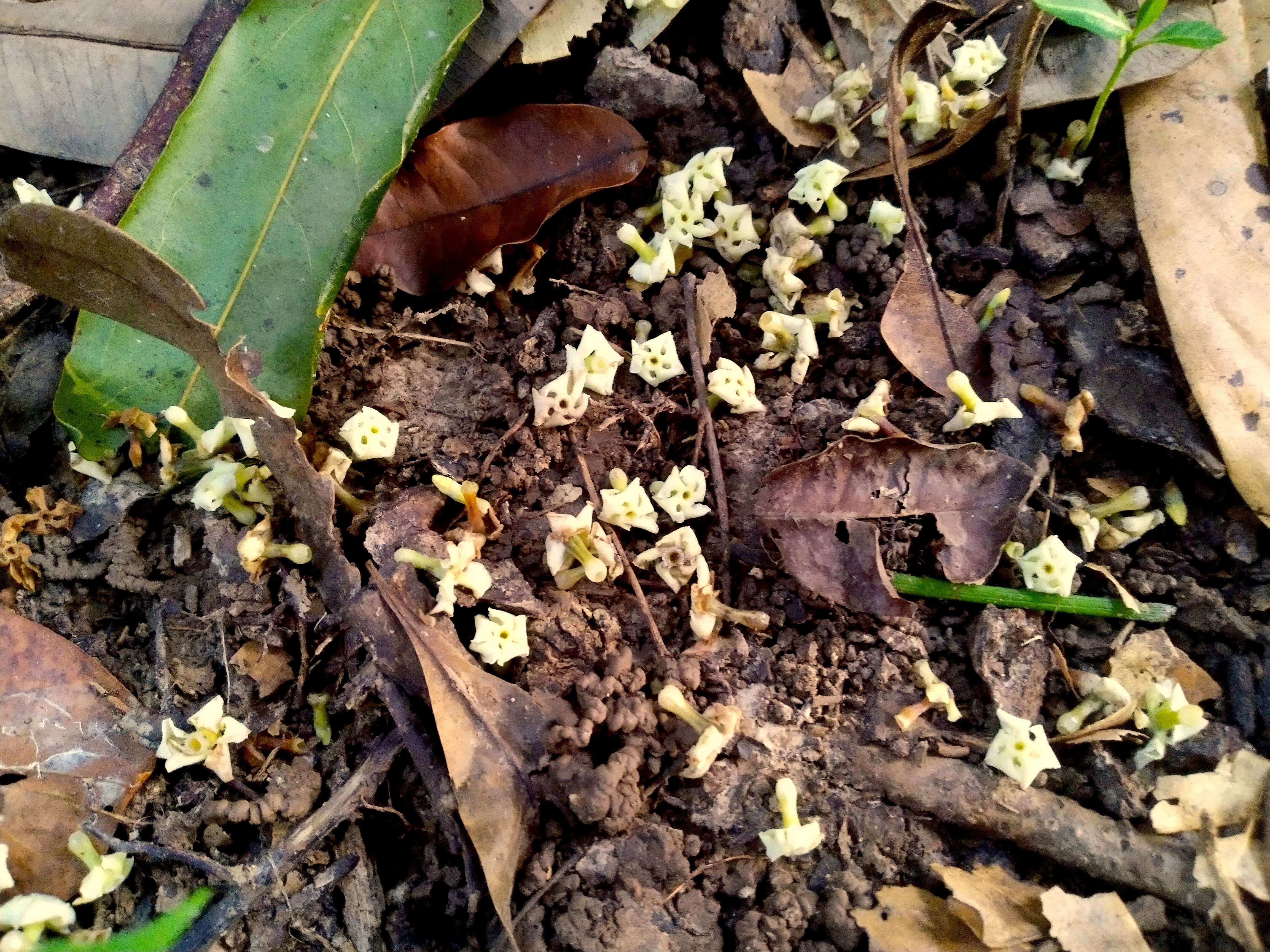
Why do some people like the Alstonia scholaris scent while others dislike it?
This difference lies in genetics and olfactory receptors, which vary between individuals. Those who find the scent pleasant likely perceive more of the linalool and less of the indole compounds, while those who find it foul may detect indole more strongly than linalool. Regardless, inhaling large amounts can cause dizziness for anyone. Another factor is that scent preferences relate to memory associations; people with positive childhood memories linked to the Alstonia scholaris scent tend to like it more.
In Thailand, the Alstonia scholaris tree’s role is more urban and lifestyle-related. Although it is not commonly used medicinally here, it serves as a seasonal indicator signaling the arrival of cold winds and the annual transition. Its scent triggers memories, whether positive or negative, symbolizing life’s turning points and prompting reflection on the past year’s journey. Hopefully, inhaling the Alstonia scholaris scent this year will mark a year filled with happiness, so that next year we can fondly recall that good times once occurred in our lives.