

In contemporary times, women rising to political prominence on the global stage is not particularly surprising. However, when this issue is considered in North Korea—the so-called 'world's most secretive country'—the story of women there raises even more questions.
Though North Korea is remembered as a rigid communist dictatorship governed by the Juche philosophy of self-reliance, the social foundations on the Korean Peninsula remain clearly linked to Confucian ideas driven by a strongly patriarchal system.
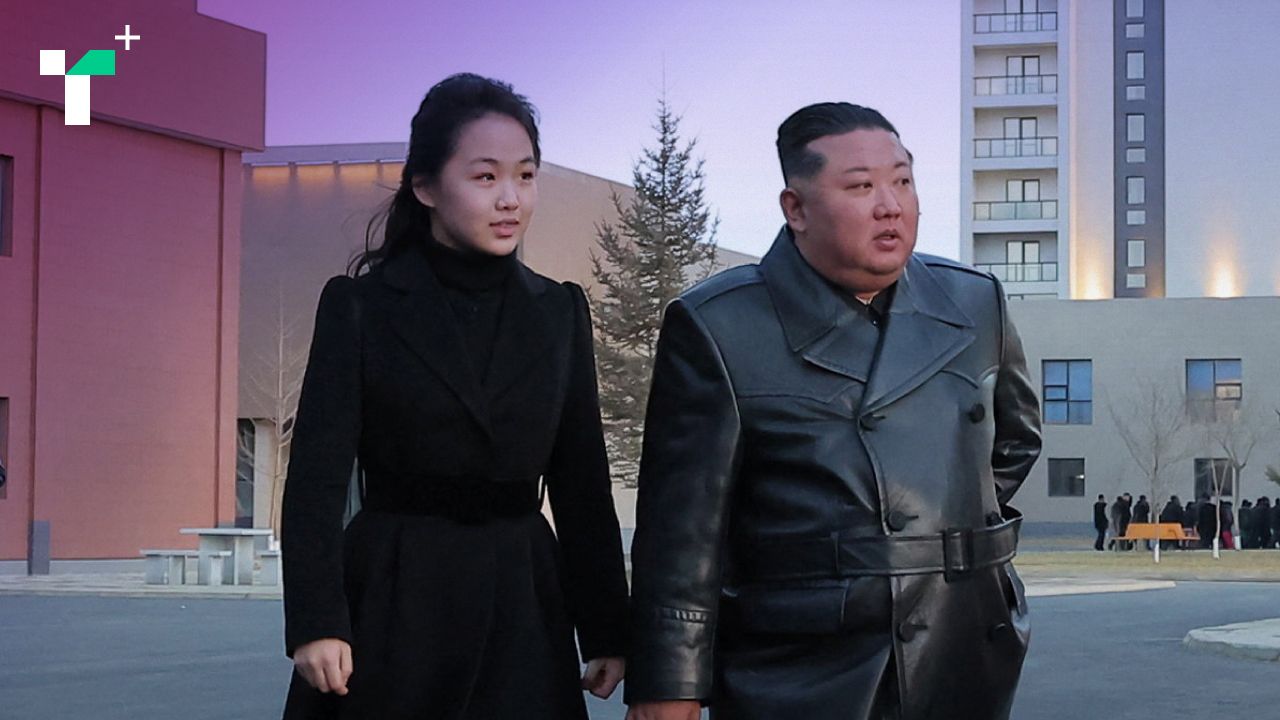
Interest intensified when South Korea's National Intelligence Service (NIS) assessed that Kim Ju-ae, a 13-year-old girl, is very likely being positioned as the next supreme leader. This has made the role of women in the Kim family an especially notable political paradox.
Thairath Plus revisits the journey of women in the Kim family—from Kim Jong-suk, the revered mother of the sacred Paektu bloodline; to Kim Kyong-hui, once a close ally of the leader; then Kim Yo-jong, a significant figure on the international political stage; and most recently Kim Ju-ae, a young girl who may lead in the future.
Kim Jong-suk: Revolutionary heroine or victim of violence?
At North Korea's founding, Kim Il-sung rose as the first supreme leader, accompanied by Kim Jong-suk, his first wife, mother of Kim Jong-il, and grandmother to current leader Kim Jong-un.
North Korea's main media outlet, KCNA, often portrays Kim Jong-suk as a 'Revolutionary Heroine'—a brave woman who fought alongside her husband against the Japanese army and gave birth to the sacred 'Paektu bloodline' of the Kim family. Yet behind this grand image, her life story is full of gaps and unresolved debates.
Various sources note that between 1940 and 1945, Kim Il-sung and Kim Jong-suk stayed near Khabarovsk in the Soviet Union after fleeing Japanese repression. While North Korean history emphasizes her combat role, some scholars and analyses—including from Kyunghyang Shinmun—argue that during her life, she was more a supportive wife caring for her husband than a standout heroine.
The cult of personality venerating Kim Jong-suk intensified in the 1970s when her son Kim Jong-il came to power. He revived and expanded her image as a symbol legitimizing the bloodline. Elevating her status served not only to honor a family member but as a political tool to reinforce the sacredness of power succession in the Kim family, shaping her into the foundation of the regime—the so-called mother of the Paektu bloodline.
However, Kim Jong-suk’s death in 1949 remains mysterious. North Korean history claims she died from childbirth complications in her early 30s. Yet some media, like the North Korea research center NK Chosun—supported by conservative South Korean outlet The Chosun Ilbo—report, citing defectors, that she may have died from domestic violence, allegedly kicked in the abdomen by Kim Il-sung while pregnant. These accusations are based solely on limited testimonies and cannot be confirmed as entirely true.
The lives of leaders and key figures in North Korea are often shrouded in ambiguity—from birthdates to causes of death—with many details fabricated for political purposes. Meanwhile, external media reports are frequently mixed with speculation.
Kim Kyong-hui: Powerful woman or merely a pawn protecting the throne?
Kim Kyong-hui is the daughter of Kim Jong-suk and Kim Il-sung, the biological sister of Kim Jong-il, and the aunt of current leader Kim Jong-un. Notably, she was the first woman in North Korean history to receive a four-star general rank and once held supreme power alongside her brother, with Kim Jong-il declaring in a party meeting that his sister’s words were equivalent to his own orders.
Her power peaked in the late 2000s when Kim Jong-il fell ill. Analysis indicates that her 2010 appointment as a four-star general alongside the inexperienced grandson Kim Jong-un was less about military expertise and more about Kim Jong-il leveraging her bloodline and her husband Jang Song-thaek's connections as a 'safety net' to support and secure his son's succession. Though a patriarchal society, for the Kim family, bloodline apparently outweighs gender.
However, after Kim Jong-un fully assumed power in 2013, Jang Song-thaek—Kim Kyong-hui’s husband and the country’s second most powerful figure—was executed on charges of treason.
Reuters analysis described Kim Kyong-hui and Jang Song-thaek as initially appointed as caretakers of power, but over time Jang accumulated influence and expanded his network, becoming the second most powerful man as vice chairman of the State Defense Commission and key controller of North Korea's secret funds domestically and abroad. This growing influence threatened the absolute authority of the supreme leader.
Following Jang's execution, Kim Kyong-hui’s image and name were erased from all North Korean media and documentaries, as if she never existed in history—reflecting a ruthless political purge willing to eliminate even close relatives deemed threats.
During her disappearance, far-right conservative South Korean media and Western tabloids heavily speculated, citing defectors, that Kim Kyong-hui might have died of heartbreak, suicide, or even poisoning ordered by Kim Jong-un to silence her.
However, such reports are often biased and intended to portray the Kim family in the worst light, frequently based on unsubstantiated assumptions.
This uncertainty was underscored in 2020 when Kim Kyong-hui reappeared at a concert alongside Kim Jong-un, exhibiting a calm demeanor devoid of political aggression. Her return was less a reclaiming of power and more a symbol affirming family unity and kindness.
Kim Yo-jong: Pioneer of female power in the Kim family
If Kim Kyong-hui supported Kim Jong-il’s power, today the equivalent role belongs to Kim Yo-jong, Kim Jong-un’s biological sister. She is one of the few women in North Korean history to openly hold front-line political roles nationally and internationally.
Kim Yo-jong first drew global attention in 2018 as the North Korean government’s representative at the Winter Olympics in South Korea. Her official title is deputy director of the Central Committee of the Workers’ Party of Korea, also overseeing North Korea’s propaganda department.
An ABC News article speculated that the roles of Kim family siblings might be performative: Kim Jong-un often projects a softer image through public interactions and praise of youth, while Kim Yo-jong plays a tougher role, issuing statements condemning or threatening South Korea and the U.S. over military drills and diplomatic issues.
Her power was evident in June 2020 when she threatened to destroy the inter-Korean liaison office in Kaesong, which was subsequently blown up just days later.
Some analysts view Kim Yo-jong’s actions as efforts to build credibility and influence among the military and elite, possibly positioning her as a future successor or increasing her internal sway. Yet questions remain whether this is part of a domestic political strategy to control Kim family power.
As North Korea began publicly presenting Kim Ju-ae, Kim Jong-un’s daughter, Kim Yo-jong’s role came under scrutiny. North Korean media photos from parades and ceremonies often exclude her, instead prominently featuring the young granddaughter alongside the leader.
Some political analysts suggest Kim Yo-jong’s decade-long influence may have been primarily to pave the way, breaking gender biases in the military and society, acclimating North Koreans to female power holders.
Kim Ju-ae: The (potential) leader of North Korea
Previously, the introduction of Kim Jong-un’s daughter was widely speculated by media and analysts. Some saw the young girl, barely into her teens, as a symbol to portray Kim Jong-un as a warm father, while others believed she was likely being positioned as a successor to her father.
This speculation became clearer on 12 February 2026, when South Korea’s National Intelligence Service stated that Kim Ju-ae, about 13 years old and daughter of current leader Kim Jong-un and his wife Ri Sol-ju, is the next political successor.
Kim Ju-ae stunned observers with her appearance in November 2022 at the Hwaseong-17 intercontinental ballistic missile testing site. The released images showed a small girl in a white sweater holding her father’s hand amid the world’s most destructive nuclear weapons, a highly symbolic political debut.
The signals of succession preparation became clearer when North Korean authorities reportedly banned citizens from using the name Ju-ae, a practice previously established since the eras of Kim Il-sung and Kim Jong-il to prevent common use of the leader family members’ names, thus elevating their status and reverence.
Though South Korean intelligence weighs that she is the heir, this decision raises major questions in a Confucian society deeply rooted in patriarchy: why select a daughter as successor, especially when unconfirmed intelligence suggests Kim Jong-un may have a hidden eldest son? This makes her selection even more intriguing.
Previously, defectors and analysts dismissed the idea of a woman ascending as North Korea’s supreme leader. However, Kim Yo-jong’s rise and consolidation of power as aunt serve as a precedent demonstrating that women can hold authority in this regime.
Nonetheless, much information about North Korea remains uncertain and often presented through foreign media perspectives, sometimes aiming to craft particular narratives. Ultimately, the trajectory of women in the Kim family reflects the reality that in this patriarchal land, gender norms may be altered if one carries the sacred Paektu bloodline.
For Kim Ju-ae, the real test is just beginning. To rise as the first female leader, she must survive political struggles and confront the old guard in the male-dominated conservative military. The challenge is whether she can transform her bloodline legitimacy into genuinely accepted power when she ascends.
References: