

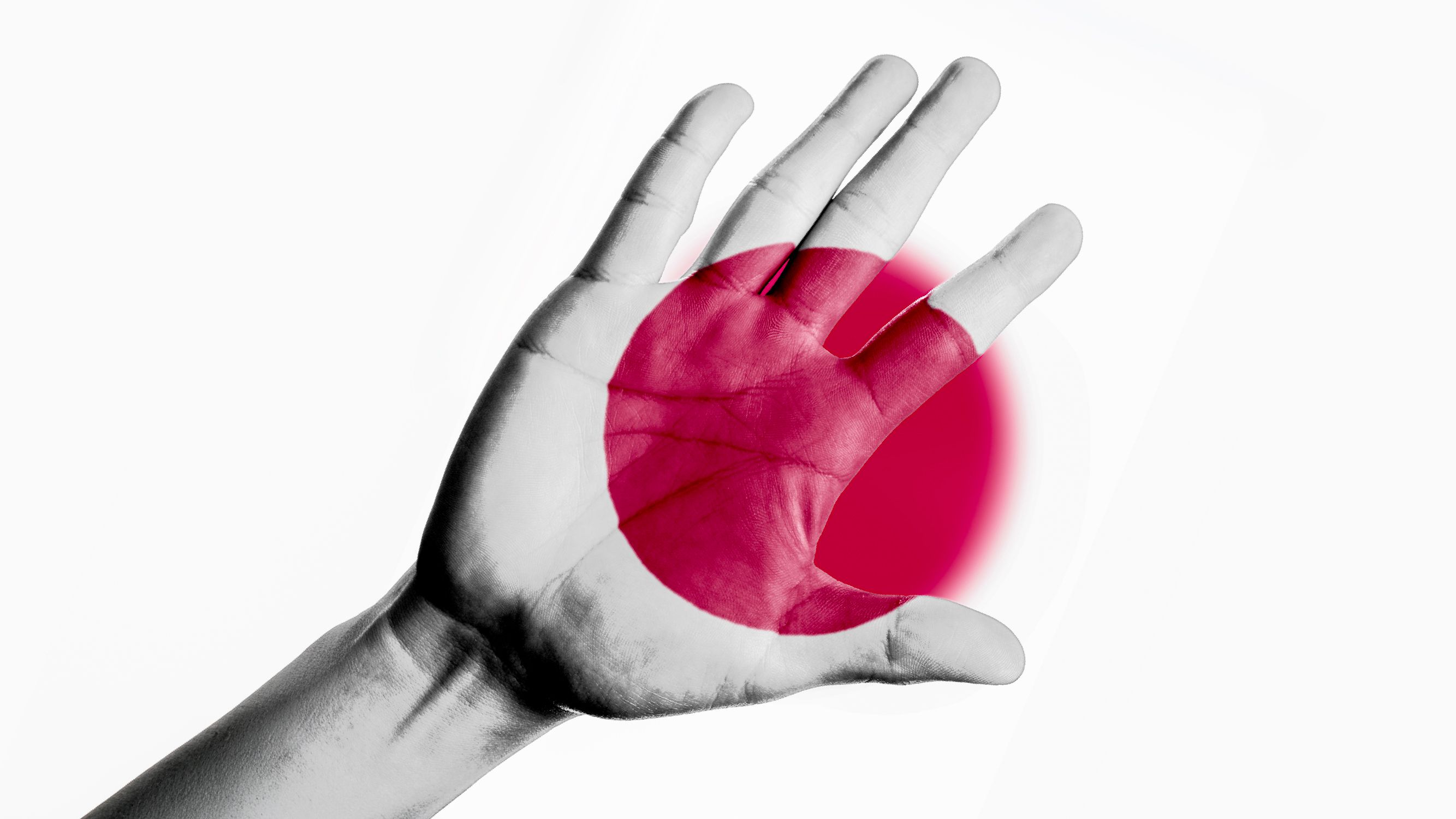
Since the recent surge of anti-foreigner sentiment in Japan and the significant milestone of right-wing political party victories, Japan has once again come under close international scrutiny as a nation where right-wing ideologies are rising.
Recently, social media discussions have focused on the translation system on platform X, which has brought the views of the Netto Uyoku group into global view by breaking down the language barrier that once hid this group.
Netto Uyoku refers to the online right-wing faction.
To understand the Netto Uyoku, we must look back at Japanese nationalism, which did not just arise recently but has roots going back historically. Nationalism was once closely tied to organized groups with clear leadership, exemplified by the traditional far-right Uyoku dantai who drove black vans playing military marches and shouted slogans through megaphones along main streets.
However, after the economic bubble burst in the 1990s and a prolonged stagnation lasting over a decade, nationalist ideology began to transform. From being centralized and visible on the streets, it became fragmented and retreated into small corners of society, notably the internet.
The term Netto Uyoku originated as internet slang in Japan in the late 1990s and became widely used in the early 2000s on anonymous web boards like 2channel to describe groups that frequently banded together to attack liberals or foreigners online.
Looking back to the 2002 World Cup co-hosted by Japan and South Korea, while mainstream media presented positive coverage to maintain good relations, nationalist groups were dissatisfied that these outlets did not highlight perceived unfair play by the South Korean national team. Their anger and frustration were vented on web boards, making the internet the sole space where they could freely criticize these issues.
This event became a pivotal trigger for Japan's right-wing groups to distrust mainstream media, a sentiment that has become ingrained DNA and a key foundation of today’s online far-right groups.
Later in 2009, Netto Uyoku were discussed again when a video showing protesters shouting at South Korean tourists on Tsushima Island was uploaded to YouTube. Some Japanese netizens praised these actions, marking a milestone that led Rumi Sakamoto, a researcher at the University of Auckland, to document and analyze this in a 2011 academic paper, illustrating how cyber nationalism had become a powerful and frightening subculture.
What makes the Netto Uyoku subculture distinct and more dangerous than past far-right groups is that they do not drive their views with deep political ideology but rather view online hatred as entertainment.
It is called a subculture because they have created an ecosystem with their own language, slang, and symbols, such as memes that mock and dehumanize foreigners. When a thread targets someone, members often collectively attack in unison, a behavior they call Matsuri, meaning 'festival'.
They also use the term Dentotsu, meaning coordinated phone campaigns to complain and pressure government agencies or media. For them, spreading hateful rhetoric is a gratifying game that gives them a sense of power and community without accountability for real-life consequences.
Who are these people?
Previously, Japanese society imagined Netto Uyoku as unemployed, failed individuals who isolate themselves at home and vent frustrations online. However, research from the University of Tokyo by Associate Professor Kikuko Nagayoshi found this image inaccurate.
In reality, these individuals are ordinary people we might meet on the street. Studies show most Netto Uyoku are middle-class salaried workers with good education, stable jobs, moderate to high incomes, and are not socially marginalized or on society's fringes as often assumed.
Their fixation on nationalism and creating imaginary enemies like foreigners or tourists is an effort to forge a shared identity in virtual space. Ultimately, acting as 'guardians of justice' and leading online attacks functions as a social glue connecting strangers.
In the end, this builds a sense of belonging in a community where they are accepted and can establish themselves as gatekeepers, turning hateful rhetoric into a hobby and form of entertainment.
References:
Nippon.com. Netto Uyoku: The World of Japan’s Online Rightists. https://www.nippon.com/en/currents/d00208/
The Cyberspace of Nationalists: Japan’s Net Rightists and Online Hate Speech. Asia-Pacific Journal: Japan Focus. https://apjjf.org/2025/7/schafer
Cyberspace Nationalists and the ‘Zaitokukai’. Asia-Pacific Journal: Japan Focus. https://apjjf.org/wp-content/uploads/2023/11/article-2815.pdf