

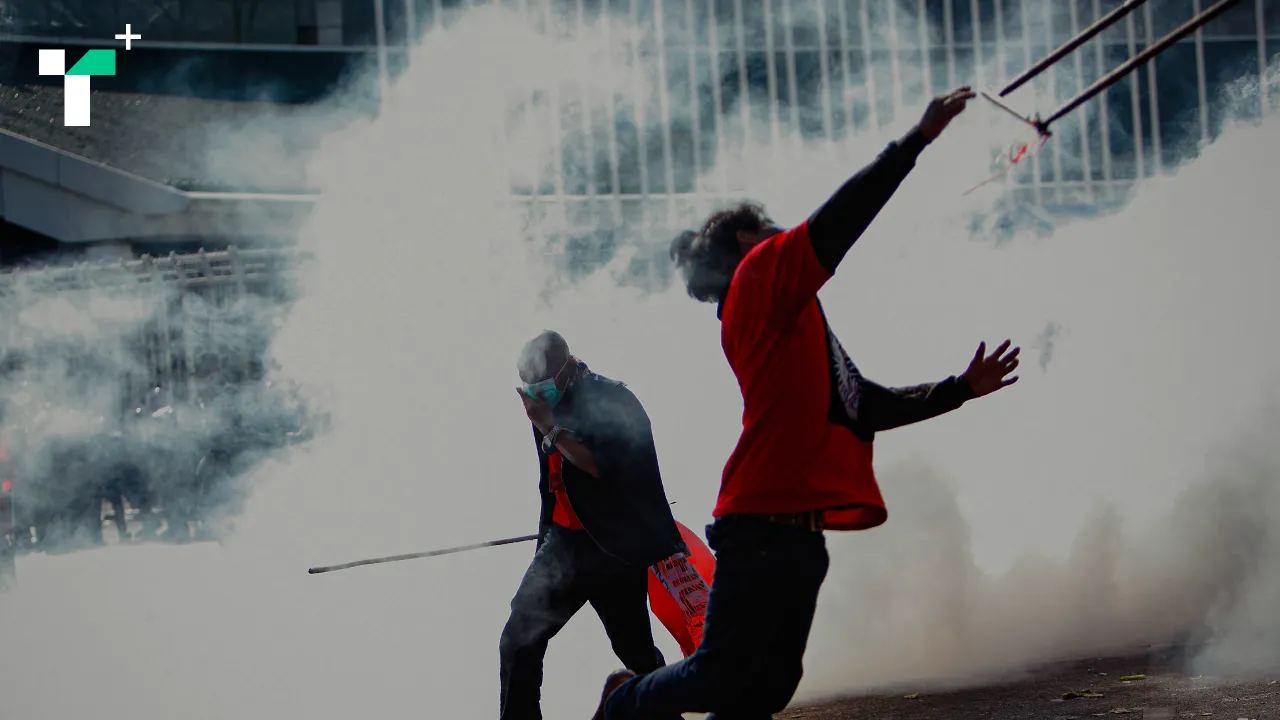
On the afternoon of 10 April 2010, the 'Reclaiming the Space' operation began to disperse the Red Shirt (UDD) protesters from Phan Fa Lilat Bridge to the Khok Wua intersection. The situation escalated from pushing crowds back with shields and tear gas during the day to clashes involving live ammunition and armed forces later on, resulting in deaths among protesters, soldiers, and foreign journalists that day. The violence then spread the following month to Ratchaprasong intersection, leading to the events being called the 'Bloody April-May,' with over 90 deaths and more than 2,000 injuries overall.
Today, 16 years have passed. Many may prefer not to recall the brutality that took place, yet it is essential that society must 'never forget.' The historical wounds caused by state violence cannot be healed through forgetting or by rhetoric urging to 'move beyond conflict' simply because time has passed.
To advance towards a stable democracy, we cannot hide the truth beneath the surface. Instead, we must rely on mechanisms grounded in universal human rights, such as 'Transitional Justice,' which is a process that leads society out of the quagmire of conflict and severe human rights violations.
The United Nations (UN) has established four key pillars of Transitional Justice: Truth, Justice, Reparation, and Guarantees of Non-Recurrence. These four pillars are interconnected and mutually reinforcing.
It begins with 'Truth,' an indispensable first step, which means openly establishing and acknowledging what happened, so victims and their families receive answers, and society as a whole has the right to know the truth about past events.
In Thailand’s case, although the National Reconciliation Commission (NRC) was appointed in 2010 to investigate and seek truth, it was fraught with contradictions. Established under the Prime Minister’s Office regulations, it lacked legal authority to summon witnesses or prosecute, leading to a dead end in truth-seeking, as the military and security agencies provided little cooperation in revealing in-depth information. Thus, Thailand’s truth-seeking under Transitional Justice principles has effectively not occurred.
The second pillar is 'Justice,' meaning bringing perpetrators to criminal justice fairly, with no one above the law regardless of position. In reality, this pillar has utterly failed in Thailand. Even though courts ruled in several cases that bullets came from officials, no state officials, military commanders, or soldiers have been punished for the 2010 events.
Former Prime Minister Abhisit Vejjajiva and former Deputy Prime Minister Suthep Thaugsuban, who held command authority during the events, were charged but acquitted by the Supreme Court in 2017, while many protest leaders and participants faced severe criminal charges.
The third pillar is 'Reparation,' covering financial compensation, restoration of dignity, and official recognition of victims’ suffering. Although the Thai government provided some compensation to families of the deceased, reparation without legal accountability and truth recognition amounts to buying silence.
Lastly, 'Guarantees of Non-Recurrence' is the heart of the entire process, requiring institutional, military, legal, and political culture reforms. Over the past 16 years, no meaningful reform has occurred; the power structures that led to the 2010 events remain intact, exemplified by the 2014 coup and the 2017 constitution criticized for entrenching power. These facts indicate society has yet to reach this final pillar.
What has happened in Thailand since 2010 has been termed by human rights advocates as a 'culture of impunity,' which not only lets perpetrators evade punishment but also signals to future generations that state violence can be committed without consequences.
Today marks 16 years that Thai society remains with unanswered questions. Therefore, we must demand the necessary 'Transitional Justice.' This is not about settling grievances of any side but about drawing new lines to pave the way for a fully democratic society. The violence, though deeply scarring and 'hard to recall,' must never be forgotten, as forgetting may mean ignoring the injustice inflicted on fellow human beings.
References