

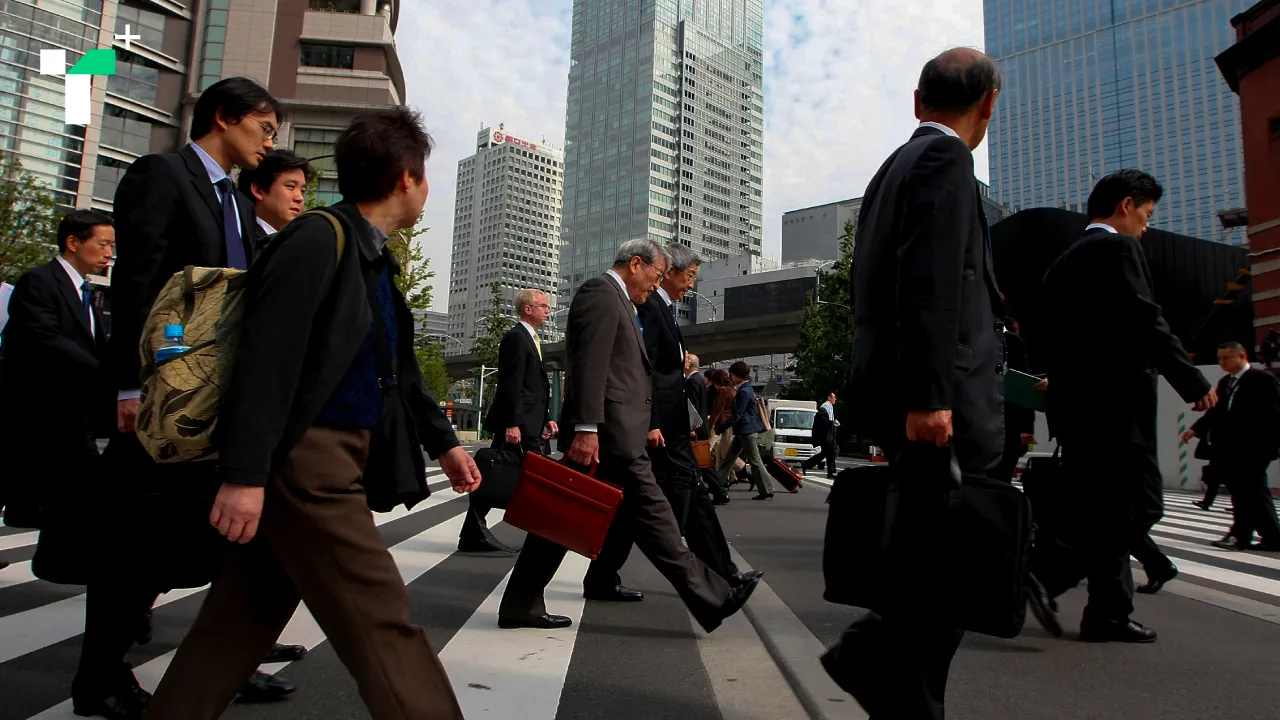
Imagine graduating today and stepping into the workforce just as the economy collapses. Large companies stop hiring, leaving only short-term contracts with low wages and no benefits. Many may accept this temporarily, expecting the hardship to pass, yet 30 years later, they remain in part-time jobs, unchanged.
This scenario has affected about 17 million people in Japan, now around 50 years old, who still have no savings, lack pension benefits, cannot financially support families, and many still live with their parents who are now in their 80s.
These individuals are known as the “Lost Generation” or Shuushoku Hyogaki, referring to those entering the workforce during Japan’s Lost Decade. The key cause was entering the labor market in the 1990s amid the burst bubble economy. Large companies that once provided stability stopped hiring, especially new graduates, pushing many out of regular employment and denying them wealth accumulation opportunities their predecessors had.
The economic scars run deep in Japanese society today. Amid widespread discussion of Japan’s ongoing economic crisis, this group may become a ticking time bomb as essential workforce members approach retirement without sufficient social safety nets.
From Economic Miracle to Yen Freeze
In the 1980s, Japan was a rapidly growing powerhouse. Rising from wartime devastation, it became the world’s second-largest economy within decades. Japanese-made products were dominant, even Americans preferred Japanese cars, undermining U.S. automotive and electronics industries and causing massive trade deficits favoring Japan.
Consequently, the U.S. pressured Japan into the 1985 Plaza Accord, threatening strict tariffs if Japan did not address its trade advantage. Dependent on the U.S. market, Japan reluctantly agreed, leading to a rapid yen appreciation to reduce export competitiveness. Simply put, Japanese goods suddenly doubled in price abroad — a $10,000 car now cost $20,000 in the U.S., deterring buyers and collapsing Japan’s export sector.
With exports stalled and the economy slowing, the Japanese government and Bank of Japan responded by cutting interest rates and injecting massive liquidity. Easy loans and low rates fueled a speculative bubble in land and stock prices, creating one of history’s largest asset bubbles.
Zombie Companies and Labor Market Freeze
When the bubble burst in the early 1990s, many companies were heavily indebted and should have closed naturally. However, banks, fearing domino failures from bad debts, extended new loans to help companies pay interest on old debts, keeping them afloat on paper.
This directly impacted the labor market since these companies merely serviced debts without funds to innovate or hire permanent staff. Their survival blocked economic space, preventing new businesses from emerging and harming the overall economy.
Additionally, major companies collectively stopped hiring large numbers of new graduates, who had previously been key pillars supporting Japanese society’s stability.
Analysis from the Japan Institute for Labour Policy and Training (JILPT) shows that regular employment rates for new graduates plummeted during the Lost Decade, especially male university graduates in 1999, dropping below 60% for the first time. Female high school graduates’ employment rates never recovered to bubble-era levels. These unemployment wounds have long-term negative effects on workers’ future careers, incomes, and well-being.
Those graduating between 1993-2004 became victims of a broken system, pushed into informal labor, part-time jobs, or unemployment. This led to a generation realizing that degrees no longer guaranteed success, efforts didn’t yield upward mobility like their parents, and unstable incomes caused them to abandon traditional aspirations such as owning homes, cars, or having children.
From the Ice Age to a Present-Day Time Bomb
Thirty years later, those once-new graduates are now in their 50s, asset-poor and often without heirs. While some eventually secured regular employment, aggregate statistics mask that their incomes have stagnated despite aging.
Labor economist Professor Genda Yūji of the University of Tokyo notes that during their critical 20s, a prime learning period, the Lost Generation lacked resources due to unemployment, part-time work, and reduced government training budgets. This deprived them of crucial skills for career advancement, leaving wages stagnant even when changing jobs later.
Worsening matters, they entered a labor market shifting from seniority-based to merit-based pay, preventing wage increases tied to age as previous generations experienced.
Average monthly earnings for men aged 40-44 in this Lost Generation hover around 450,000 yen, compared to 500,000 yen for previous generations, undermining financial security in later life.
Looking ahead, the financial outlook is troubling. The Nippon Institute for Research Advancement (NIRA) highlights a looming crisis, especially for single women relying only on basic pensions with annual incomes of just 1.7 million yen — insufficient for living expenses.
Most concerning is the stark asset inequality. Older generations, despite lower incomes, accumulated assets like homes and savings. In contrast, the Lost Generation, surviving on low wages, had no chance to build assets. Equal incomes at retirement mask the vast gap between those owning property and those with nothing.
An Expensive Lesson Thailand Must Heed
Japan’s Lost Generation fate mirrors a potential future for Thailand, given our economic and social context is following a similar path.
Thai new graduates and workers face tough job markets, wages lagging behind living costs, and many trapped in the gig economy (riders, freelancers) without social benefits. If the government allows large labor segments to remain outside social safety nets, in 20-30 years, these workers may become asset-poor retirees like Japan’s 50-year-olds.
Moreover, Thailand’s rapid aging surpasses Japan’s pace, coupled with far weaker pension and savings systems. If today’s workforce cannot accumulate wealth due to structural economic constraints, the burden falls on the state, risking an intractable public debt crisis.
Ultimately, if we continue allowing workers and youth to endure economic crises unchecked, the Lost Decade will not remain just Japanese history, and the next social time bomb may be counting down in Thailand.
References: